Author: admin

  • La salvaguardia dei diritti Non è un gioco da ragazzi.
    La salvaguardia dei diritti Non è un gioco da ragazzi.

    Il 20 dicembre 2013 l’Assemblea generale delle Nazioni Unite (UNGA) ha proclamato il 3 marzo – giorno della firma della Convenzione sul commercio internazionale delle specie di flora e fauna selvatiche minacciate di estinzione nel 1973 – come UN World Wildlife Day per celebrare e preservare gli animali e le piante del mondo.

    Per rendere le famiglie consapevoli della scomparsa delle specie nel mondo e  di incoraggiare genitori e bambini a usare la propria capacità immaginativa per trovare soluzioni, in Francia, DDB crea per Play-Doh una campagna che celebra il potere dell’immaginazione dei più piccoli, ma ha anche un sottotesto: nel mondo reale le creature stanno scomparendo a causa della perdita di habitat e del degrado ambientale. e allora che fare ? i bambini possono introdurre nuove “specie” con la pasta Play Doh!

    Forse non tutti sanno che quando fu prodotto per la prima volta negli anni ’30, il composto per modellare veniva venduto come detergente per carta da parati. Dopo aver scoperto che alcuni insegnanti stavano usando il prodotto per far giocare i bambini, i fondatori si sono resi conto che aveva un potenziale in un modo molto diverso ed è stato rielaborato e commercializzato nelle scuole negli anni ’50.

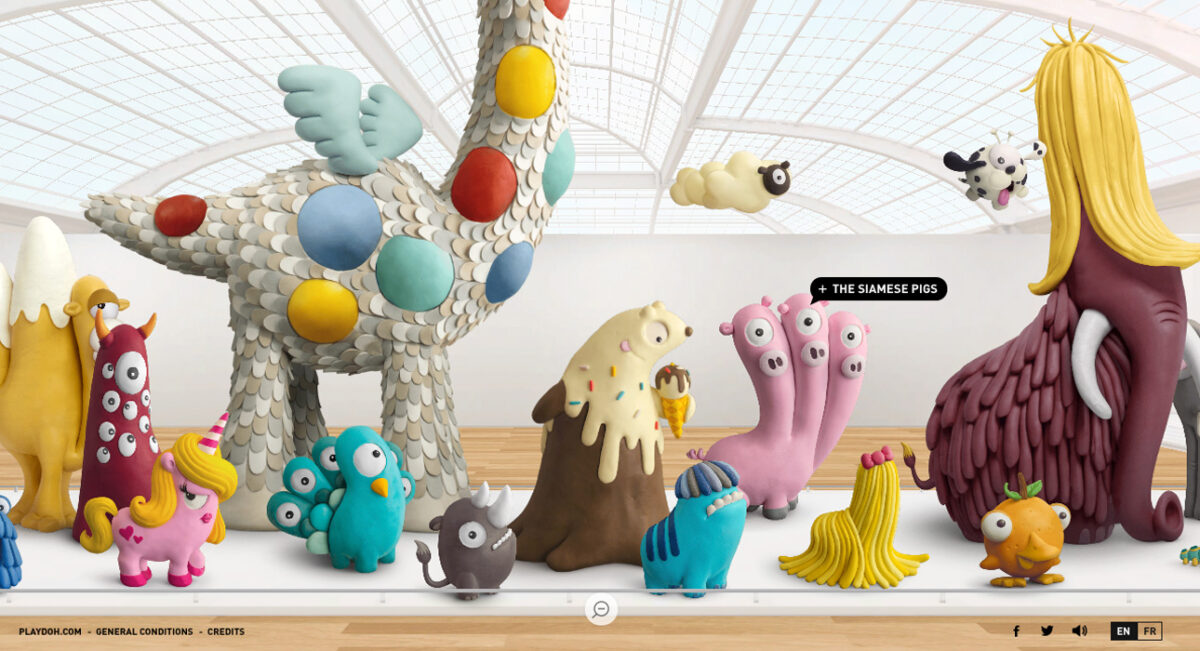
    Quella stessa pasta da modellare è servita per creare decine di creature immaginarie, tutte fatte a mano e poi animate una ad una, successivamente ‘esposte’ online in una specie di divertente Museo di Storia Naturale: la Galleria delle Specie Emergenti.

    La campagna (che ha ricevuto numerosi riconoscimenti) declina ulteriormente il concept ‘A can of Imagination’,  lanciata dal brand nel 2016, per il suo 60 ° anniversario, con l’obiettivo di ricordare a tutti che modellare la pasta è ancora un modo meraviglioso per i bambini di esprimersi e sviluppare la loro immaginazione.

    Nella Galleria delle Specie Emergenti ogni nuova specie è accompagnata da una breve descrizione su habitat, stile di vita, dieta e temperamento, narrata in stile documentaristico sia in inglese che in francese. Da una parte i bambini sono ingaggiati attraverso una promessa di divertimento, dall’altra gli adulti scovano giochi di parole e battute ammiccanti che restano oscure ai più piccoli. Ad esempio, la descrizione delle creature “Bigbrother” cita artisti del calibro di Kim Jong Il, e una nota dice che questa specie è stata soprannominata lo “Stalin della campagna”. La creatura è nota per la sua capacità di sorveglianza a 360 gradi, sia di giorno che di notte, un omaggio al BigBrother di George Orwell nel romanzo 1984 da cui è ispirato il personaggio.

    Buffo che venga utilizzato il personaggio di Orwell, metafora per antonomasia della sorveglianza senza limiti. Play-doh è uno dei marchi inclusi nel portafoglio marchi di Hasbro. Diversi anni fa, lo stato di New York ha perseguito Hasbro e altre tre società per aver consentito il monitoraggio dell’attività che i  bambini (età inferiore ai 13 anni) svolgevano mentre visitavano le loro piattaforme Web consentendo a  terze parti  l’uso dei dati raccolti per scopi di targeting pubblicitario. Hasbro avrebbe raccolto dati sui visitatori di Nerf.com al fine di retargetarli in futuro, quando avrebbero visitato altri siti. Gli accordi legali hanno previsto che Viacom pagasse $ 500,00, Mattel $ 250.000 e Jumpstart $ 85.000. Hasbro, che ha partecipato a un programma di “safe harbor” approvato dalla Federal Trade Commission, non è stato multato.

    Quello sulla violazione della privacy non è l’unico incidente che Hasbro ha dovuto affrontare. Secondo un’indagine, gli operai cinesi che producono giocattoli per Hasbro, Disney e Mattel sono soggetti a condizioni di lavoro “da incubo” nel periodo che precede il Natale.

    Il rapporto, intitolato “The dark side of a glittering world” mostra i risultati delle organizzazioni China Labor Watch, ActionAid, CiR e Solidar Suisse, che hanno inviato investigatori sotto copertura a quattro fabbriche che producono giocattoli in China. Dall’inchiesta è emerso che nella stagione di alta produzione, i dipendenti lavoravano fino a 175 ore di straordinario al mese. Il diritto del lavoro cinese limita gli straordinari mensili a 36 ore al mese, ma il rapporto sostiene che le fabbriche chiedono spesso ai governi locali di attuare un “orario di lavoro completo” per annullare la legislazione esistente. l’indagine sostiene inoltre che i datori di lavoro non fornivano formazione di base sulla sicurezza e che i lavoratori spesso maneggiavano sostanze velenose e cancerogene come il benzene. Gli investigatori avrebbero anche scoperto che i lavoratori erano costretti a firmare contratti di lavoro in bianco e dormivano in alloggi di fortuna, che spesso ospitavano otto persone in una stanza con strutture antigeniche e senza acqua calda.

    A workers' dormitory at the Wah Tung factory. 

    Hasbro ha confermato in un’e-mail che i suoi prodotti sono stati prodotti in due delle strutture citate nel rapporto, ma ha rifiutato le accuse: 

    Le accuse contenute nel rapporto non sono suffragate dall’ampio monitoraggio e dagli audit condotti da Hasbro nel corso del 2018 ed entrambi i fornitori sono in regola con i solidi requisiti di approvvigionamento etico di Hasbro”, ha detto un portavoce alla CNBC.

    Difficile immaginare in effetti come tali violazioni possano coesistere con un payoff aziendale che declama: “At Hasbro, we play with purpose. We are using our business as a force for good and building a safer,  more sustainable and inclusive company and world for all” 

    Per Hasbro è fondamentale “rendere il mondo un posto migliore per i bambini e le loro famiglie attraverso la responsabilità sociale di impresa e la filantropia”. Il loro sito web comunica con successo questo messaggio con il senso di giocosità e gioia che ci si aspetta dal loro marchio. Le quattro aree principali su cui si concentrano nella comunicazione degli obiettivi sono: sicurezza dei prodotti, sostenibilità ambientale, diritti umani e sourcing etico, diversità e inclusione. Per quanto riguarda la sicurezza dei prodotti, Hasbro promette di testare la qualità e la sicurezza dei propri giocattoli in ogni singola fase del ciclo di vita del prodotto. Oltre a soddisfare tutti gli standard nazionali e internazionali, l’azienda ha un proprio standard che ciascuno dei suoi prodotti deve superare prima di arrivare al consumatore.

    Per quanto concerne la sostenibilità ambientale, Hasbro riconosce i danni che la propria attività può avere sull’ambiente, per questo l’azienda sta concentrando i propri sforzi nella creazione di imballaggi sostenibili, innovando i materiali, ottimizzando il proprio sistema di distribuzione per ridurre l’impatto ambientale. Nel 2019, Hasbro ha iniziato a utilizzare la plastica bioPET, che è composta da materiale vegetale derivato da sottoprodotti agricoli, oltre a lanciare un programma con TerraCycle incentrato sul riciclaggio di giocattoli e giochi.  Hasbro si unisce ad altre società – tra cui Mattel – nel boicottare la società indonesiana Asia Pulp and Paper (APP), un gruppo che Greenpeace sostiene sia coinvolto nell’abbattimento delle foreste asiatiche. Entro il 2025 l’azienda si è data obiettivi ambientali specifici da raggiungere: riduzione del 25% dei consumi energetici, riduzione del 50% dei rifiuti in discarica, riduzione del 20% delle emissioni di gas serra e 15% riduzione del consumo di acqua. Oggi Hasbro afferma di aver raggiunto il 100% di energia rinnovabile e la carbon neutrality nelle fabbriche statunitensi di proprietà e gestite. dichiarano inoltre di compiere molti sforzi per educare i propri dipendenti sull’importanza di vivere una vita sostenibile non solo nel lavoro ma nella loro vita quotidiana. 

    Per quanto riguarda la supply chain, l’azienda riconosce che la sua catena è responsabile della maggior parte dell’impatto ambientale causato dall’azienda. Hasbro richiede che tutte le società terze che producono e confezionano i loro prodotti seguano i criteri di sostenibilità dell’azienda.

    Grazie a tutti questi sfrozi, Hasbro ha ricevuto alcuni importanti riconoscimenti tra cui:

    • il primo posto nella lista 100 Best Corporate Citizens, che classifica le aziende più trasparenti e responsabili negli Stati Uniti.per  il terzo anno consecutivo si è classificata nella Top five;
    • riconosciuta come una delle aziende più etiche al mondo da Ethisphere per l’ottavo anno consecutivo;
    • classificata terza nella Green Rankings 2017 di Newsweek, con punteggi perfetti in termini di produttività di energia, rifiuti, acqua e carbonio.

    Insomma, un’azienda così impegnata, non può proprio permettersi accuse di violazione di diritti. Giusto?

    Dal momento che sei arrivato fino a qui
    La missione del nostro magazine online è scrivere di come le aziende stanno comunicando il loro impegno per affrontare le grandi sfide del Nuovo Millennio. Dall’emergenza climatica all’ineguaglianza sociale passando per tutte le tematiche incluse nell’Agenda degli Obiettivi di Sviluppo Sostenibile, grazie ad algoritmi di intelligenza artificiale, monitoriamo la congruità delle loro affermazioni, cioè se fanno quello che dicono. In un mondo in cui l’informazione veritiera è una merce sempre più rara, pensiamo che i cittadini meritino di avere accesso ad analisi accurate che hanno al centro l’integrità. La nostra indipendenza editoriale significa che la nostra agenda di contenuti viene declinata soltanto per dare voce alle nostre opinioni, sostenute da ricerche approfondite, liberi dall’influenza politica e commerciale di shareholders e proprietari milionari (che non abbiamo). Questo significa che possiamo esprimere opinioni in controtendenza e dare voce a chi ne ha di meno.  Speriamo che questo possa motivarti a sostenerci ogni giorno. Il contributo di ogni lettore, piccolo o grande che sia, è estremamente utile. Supporta BeIntelligent anche con un piccolo contributo. Grazie!

    Sostieni BeIntelligent

    Author: elena grinta

    Mi occupo di comunicazione da 20 anni, ho lavorato nel marketing di grandi aziende internazionali e italiane e conosco i meccanismi della persuasione pubblicitaria. Ho deciso di investire il mio know how e le mie competenze per usare le risorse che hanno a disposizione le aziende (investimenti ma anche capitale umano) nella trasformazione positiva. Perché agli studenti di tutto il mondo a cui insegno Purpose Brands in Università Cattolica voglio poter dare sempre più esempi di aziende virtuose che hanno investito per il futuro, di tutti (e ce ne sono già molte!). Perché se stiamo a guardare, senza agire, senza responsabilizzarci, non abbiamo scuse.


    COMUNICAZIONE CHE FA BENE / Tendenze
  • Creattivismo

    Creattivismo | L’Advertising contro i prodotti che fanno male

    In un recente articolo sulla Creative Review, Naresh Ramchandani, un copywriter autorevole e influente, ha chiesto all’intero settore se non sia  giunto il momento di introdurre un divieto simile a quello sulle sigarette, sui prodotti che danneggiano il nostro pianeta, dicendo:

    “By being production-heavy, or CO2-intensive, or non-reusable or non-recyclable, many of the products we’re paid to promote have an irrefutably negative effect on the environment. When an ad sells another one of these products, it advances its client’s profitability, but also harms the prospects of humanity. Which brings us to an extremely inconvenient truth for our industry that wasn’t raised at Cannes – in fact, I’m not sure I’ve seen it raised anywhere: that products like these shouldn’t be allowed to advertise.”

    Responsabilità Personale e Responsabilità Sociale

    Due anni fa, quando mi sono chiesta perché mi appassionavo di pubblicità e content marketing, ho avuto una chiara e profonda rivelazione: la responsabilità. Dirigere l’Associazione OBE in Italia mi ha chiarito che non ci sono più limiti alla capacità persuasiva di un brand, poiché ora il messaggio pubblicitario è perfettamente realizzato sottoforma di contenuti veri e propri, il che è una grande opportunità per le aziende ma implica anche una maggiore responsabilità etica

    LEGGI ANCHE: Branded content & Entertainment – il senso del dono

    Questa epifania mi ha portato a chiedermi come le aziende potrebbero svolgere un “ruolo migliore” nella società. Ad esempio, se dovessero dirigere i loro sforzi (investimenti, know-how, capitale umano …) per “fare  bene”.

    Comunicazione che fa bene per Aziende che vogliono fare bene

    La comunicazione ‘purpose driven‘ (comunicazione ‘che fa Bene’, guidata da una valida intenzione) è il modo per raccontare una storia vera e unica ben al di là  rispetto al singolo prodotto o persino alla storia dell’azienda. Ci sono molti modi per raccontare una storia, ma non tutti sono sempre adatti.

    #CreActivism è un termine che prendo in prestito da Pascal Gielen che indica una forma di azione, un processo critico di riflessione sui problemi che affliggono la contemporaneità con un approccio attivo per migliorare le condizioni quotidianamente attraverso la creatività. È la sincrasi perfetta di #Creatività (che è un atto primordiale, nascita fisica, prima ancora di speculazione astratta) e #Attivismo nei suoi significati più contemporanei e pacifisti.

    Applicato alla pubblicità, il CreAttivismo si combina perfettamente con un paio di altre tendenze di marketing: brand purposing brand activism; il primo riguarda l’obiettivo aziendale, la sua missione e visione, il secondo riguarda le azioni concrete.

    Quello che considero CreAttivismo è un perfetto unisono tra lo scopo del marchio, le azioni del marchio, la comunicazione del marchio.
    Per avere una migliore comprensione di ciò che è CreAttivismo, prendiamo Patagonia come esempio. CreAttivismo per Patagonia ha significato la creazione di una campagna pubblicitaria dirompente “Non comprare questa giacca” e allo stesso tempo l’attuazione di azioni sostanziali per proteggere l’ambiente (investimenti in Ricerca e Sviluppo contro il polimero C8 inquinante dopo la campagna di GreenPeace) . Sebbene il loro approccio fosse rischioso per i risultati d’azienda, il messaggio intendeva incoraggiare le persone a riflettere sull’effetto delle loro pratiche di consumo sull’ambiente. Di conseguenza, Patagonia è riuscita a creare una forte comunità di consumatori fedeli che apprezzano i prodotti del marchio, ma soprattutto i suoi valori.

    Certo, non è sempre facile trovare un “perché” autentico e credibile dietro a un prodotto / azienda. E questo può significare un potenziale ostacolo per i marchi che si espongono con comunicazioni ‘cause related‘.

    Guarda il settore tessile – il più inquinante dopo l’industria Oil & Gas – e campagne come “Conscious Exclusive” di H&M: un esempio di “green washing“, dato che solo l’1% degli abiti riciclati diventa un nuovo capo d’abbigliamento

    Oppure l’industria alimentare, responsabile di oltre il 25% delle emissioni di gas serra, e l’epico fallimento di Chipotle Mexican Grill, per non aver supportato con i fatti il suo sostegno alla agricoltura sostenibile e le dichiarazioni anti-OGM (ricorderete ‘Back to the start’ campagna pluripremiata nel 2012), e alla pandemia di E-coli che ha portato a un crollo della reputazione del brand, che deve ancora essere ricostruita diversi anni dopo la crisi.

    LEGGI ANCHE: Comunicazione che fa Bene Opportunità o minaccia?

    Come tutti sappiamo, l’obiettivo finale delle aziende è  vendere più prodotti, se però a tale scopo “monetizzano” i valori umani si presenterebbe una grande questione etica.

    LEGGI ANCHE: Scopri di più sul cause related marketing 2.0 con Burger King e Mattel

    Seguici sui nostri canali sociale e Iscriviti alla Newsletter per restare aggironato!

    Dal momento che sei arrivato fino a qui
    La missione del nostro magazine online è scrivere di come le aziende stanno comunicando il loro impegno per affrontare le grandi sfide del Nuovo Millennio. Dall’emergenza climatica all’ineguaglianza sociale passando per tutte le tematiche incluse nell’Agenda degli Obiettivi di Sviluppo Sostenibile, grazie ad algoritmi di intelligenza artificiale, monitoriamo la congruità delle loro affermazioni, cioè se fanno quello che dicono. In un mondo in cui l’informazione veritiera è una merce sempre più rara, pensiamo che i cittadini meritino di avere accesso ad analisi accurate che hanno al centro l’integrità. La nostra indipendenza editoriale significa che la nostra agenda di contenuti viene declinata soltanto per dare voce alle nostre opinioni, sostenute da ricerche approfondite, liberi dall’influenza politica e commerciale di shareholders e proprietari milionari (che non abbiamo). Questo significa che possiamo esprimere opinioni in controtendenza e dare voce a chi ne ha di meno.  Speriamo che questo possa motivarti a sostenerci ogni giorno. Il contributo di ogni lettore, piccolo o grande che sia, è estremamente utile. Supporta BeIntelligent anche con un piccolo contributo. Grazie!

    Sostieni BeIntelligent

    Author: elena grinta

    Mi occupo di comunicazione da 20 anni, ho lavorato nel marketing di grandi aziende internazionali e italiane e conosco i meccanismi della persuasione pubblicitaria. Ho deciso di investire il mio know how e le mie competenze per usare le risorse che hanno a disposizione le aziende (investimenti ma anche capitale umano) nella trasformazione positiva. Perché agli studenti di tutto il mondo a cui insegno Purpose Brands in Università Cattolica voglio poter dare sempre più esempi di aziende virtuose che hanno investito per il futuro, di tutti (e ce ne sono già molte!). Perché se stiamo a guardare, senza agire, senza responsabilizzarci, non abbiamo scuse.


    COMUNICAZIONE CHE FA BENE / Tendenze
  • Welcome To The H2H Era! Danone as a Bcorp

    Welcome To The H2H Era! Danone as a Bcorp

    Danone, the French food giant, has decided to undergo the BCorp certification, which is a real challange, considering that  Danone is listed on the stock exchange  and that failure to achieve this goal could have negative repercussions on the company, adding only “paperwork and unnecessary restrictions” [1] . Instead, the CEO Emmanuel Faber has announced to want to reach the necessary parameters to the certification and to become a B Corp within 2030 , after that also Danone North America – the eighth branch of Danone (and the largest) – has become a B Corporation certified. Danone North America is Danone’s 8th subsidiary to become a Certified B Corporation. Some critics say that filing as a B adds unnecessary paperwork and restrictions. But for brands looking to connect with growing consumers, B Corp’s status establishes integrity and builds consumer goodwill.

    A danger that is worth running, Faber said, because ” certification has received great support from employees and has won over skeptical investors” [2], as well as having instilled confidence in the banks, which they renegotiated at a lower loan of two billion euros [3] .

    Emmanuel Faber fully embodies the role of the corporate activist , when he declares that he wants to be a promoter of a “Food Revolution”[4] and urges the industry to join a “movement” that aims to “the adoption of healthier products and of sustainable eating habits “[5] .

    ” Food sovereignty  for us means giving up control and restoring power to people, and how credible would we be to tell our consumers if we didn’t start with our employees?”[6] , Faber asks.

    To be credible as a ‘brand activist’, all stakeholders, starting with employees, should embody the values ​​of the company and its ideology. “The purpose can become marginal if you don’t work at it. Therefore, it is essential to give people the responsibility to make the brand responsible for its goals and philosophy. “[7]

    The new era of ‘people powered brands’ is no longer just a consumer at the center program, but a paradigmatic transformation from Business-to-Consumer to Human-to-Human (from B2C to H2H).

    Here’s how the ‘legal person’ can become a ‘natural person’: through the hundreds of faces, personalities, dreams that constitute the ‘workforce’ of every business reality. Bryan Kramer, who first used the expression H2H, says  Businesses do not have emotion. People do. People want to be part of something bigger than themselves. People want to feel something. People want to be included  [8] It is not just a ‘social media’ strategy [9] where it is sufficient to show the team behind the product and the magic is done. No. All human resources must be involved and treated as Resources, and Humans. One of the biggest mistakes you can make is investing huge budgets in campaigns to activate your customers and not invest effectively in internal communication, making little effort to tell your story and your progress within the company. Showing the social impact that the company is having can be highly effective when it is measurable and closely linked to the company’s operations.

    We hope that Danone, once he has obtained the B Lab certification, will promote a 360 ° sustainable revolution, setting the pace for the other players, perhaps starting from the plastic issue. Perhaps then they will think twice about launching “innovative products” like Eletrolytes Evian for millennials [10] or Mickey Mouse water for children . The oceans will be thankful.

    [1] https://www.forbes.com/sites/simonmainwaring/2018/09/28/business-building-lessons-from-the-largest-b-corp-in-the-world/#70e5f19379f4

    [2]  https://it.businessinsider.com/b-corp-un-new-model-of-capitalism-good-for-state-that-create-value-for- all-the-societa-only-only -for-the-shareholders /

    [3] https://www.reuters.com/companies/DANO.D

    [4] https://www.just-food.com/interview/how-danones-manifesto-is-shaping-its-corporate-activity-just-food-interview-part-two_id137131.aspx

    [5] https://www.marketingweek.com/danone-repositioning-manifesto-brand/

    [6] The whole concept behind food sovereignty is for us to surrender control and give the power back to people, and how credible would it be to say to our consumers if we don’t start with our employees? “

    [7] https://www.marketingweek.com/danone-repositioning-manifesto-brand/

    [8] https://bryankramer.com/there-is-no-more-b2b-or-b2c-its-human-to-human-h2h/

    [9] The Value of Getting Personal on Social Media

    [10] We re-ignited our evian brands in the US through the innovative #Iwanna campaign featuring Maria Sharapova, Madison Keys, Luka Sabbat and many inspiring micro-influencers across the country. Engagement was 20 times higher than traditional campaigns, reaching over 18 million consumers.

    Author: elena grinta

    I have been dealing with communication for 20 years, I have worked in marketing for large international and Italian companies and I know the mechanisms of advertising persuasion. I decided to invest my know-how and my skills to use the available resources of companies (budgets but also human capital) in positive transformation. Because to students from all over the world I teach at Purpose Brands in Catholic University I wish to give more and more examples of virtuous companies that have invested for the future, of everyone (and there are already many!). Because if we watch, without acting, without taking responsibility, we have no excuse.

  • Hello world! – Il mio blog

    Hello world!

    Welcome to WordPress. This is your first post. Edit or delete it, then start writing!

    Un commento su “Hello world!”

  • 13 soluzioni per creare pubblicità veritiere e fidelizzare il consumatore

    Decoupling e Attention Deflection: il caso ENI

    This content is for Annual subscription e Editors subscription members only.
    Login Join Now

    Autore:

    Sono giornalista con una passione per le nuove tendenze. Ho oltre 20 anni di esperienza nella comunicazione. Far nascere una start-up “for benefit” ha cambiato per sempre la mia vita professionale (e personale). Ho lavorato in diversi reparti di marketing e ho capito che meglio facevo il mio lavoro, peggio impattavo sulle persone e sul pianeta. Ho quindi considerato il Marketing un’”arma” che poteva essere usata a beneficio di tutti gli esseri umani (Cialdini è stato estremamente utile in quel momento ;-)). Ho lasciato il mio lavoro ben retribuito come direttore e ho avviato una start-up innovativa disposta a far sapere meglio alle persone se quando i marchi parlano della loro responsabilità sociale o ambientale dicono la verità. Tutti possono cercare e indagare sul web ma nessuno lo fa! perché è noioso e prende tempo. E se potessimo farlo noi per te ?! Ecco come è nato BeIntelligent! Perché se stiamo a guardare, senza agire, senza responsabilizzarci, non abbiamo scuse.


    COMUNICAZIONE CHE FA BENE / Tendenze
  • Gender Inequality. Storytelling through images

    Gender Inequality Storytelling Through Images and the Role of Brands

    Stefano Stranges is a photographer from Turin who was born in 1978. In 2012, he attended the master class of the Magnum agency focused on reportage photography with particular interest in social projects.
    In one of his exhibitions called “Le bambine salvate,” Stranges was able to help raise awareness of the gender inequality problem in India by showing the lives of Indian girls. Some of the problems he shed light on included violence against women, forced marriages, rape, and general discrimination. Stranges has visited the villages where most of them come from and portrayed intimate, dramatic, and unexpectedly joyful moments.

    “My projects and my work start with the social and sociological approach and are determined by the empathy between my subject and me.”

    His photos are not posed. On the contrary, he portrays the typical day of an Indian girl at her house. In all of them you see young teenagers taking care of two or three children in their homes while their husbands are not around. They all share the same dream: to become successful independent working women.

    If a fourth child is a female, a popular superstition regards it as a sign of misfortune: Indhumati, born after a male and two females, would have been sacrificed if Terre des Hommes had not intervened. She today is 19 years old and studies computer science. She wants to become a teacher and devote herself to the children of less well-off families. She is very proud of her personal story. “The infamy of killing little girls must never be repeated,” she says.

    Karthiga, an 18-year-old girl and child of four, had another destiny: she got married with the boy next door and for this she had to interrupt her studies. Her day is divided between the child, the domestic tasks, and the calf to be cared for, all under the supervision of her mother-in-law.

    Harini, last of three sisters, lives with her parents in two rooms without windows built on the back of her father’s barber shop. Her passion for the studio transformed the house walls into sheets for notes. She studied civil engineering and dreamed of becoming governor of the Salem District. “God blessed us when he changed our mind and did not allow us to kill her as soon as she was born,” says her mother, who works for Terre des Hommes today.

    This dream for an Indian girl is very challenging to obtain; and for Stranges, it was not an easy task to describe.

    Two of my students from Università Cattolica had the opportunity to see “Le bambine salvate” exhibition on the field trip study during my course. One is from Germany, the other from Ecuador: two completely different countries and realities. Coming from diverse backgrounds made them perceive the exhibition in different ways and awakened different feelings.

    Constanze (German) said, “For me it was sad to see how gender inequality is still so strong and inclement in some corners of the world that it can even get to the point to kill little girls just to avoid paying for their education and life. However, when I saw the picture of the founder and director of Terre des Hommes Core, I felt a glimpse of hope for the Indian women. I knew that just the fact that one organization was already stepping up for women and their cause is already a good sign and way of getting to a better world. Coming from Germany where there are many independent and successful working women, it is really shocking to see these. I remember I was walking one day into a kindergarten to pick up one of my nieces and was surprised of the important number of fathers picking up the kids. I thought I was going to see more mothers, but this was not the case. I think people from India deserve to achieve this equity standard that Germany enjoys nowadays. In Germany women and men are almost equal. There are a lot of women who are responsible for their own works, families, and houses, just as men in India.”

    Isabel replied “For me, coming from Ecuador, the images of Stranges were realities I see everyday when walking around my city. The exhibition reminded me of the town where I go to the beach. Once, on a Saturday morning, I went to a bakery and there were only women working in the neighborhood. I found this weird and then I heard they were all complaining about how lazy their husbands were. I think gender inequality in Ecuador is different than in India, but it is still present. In this small-town, men take advantage of women in every way. They go out to party and get very drunk. As a consequence the following day they cannot work, and their wives must take care of their houses, children, the mess from last night, and even their work responsibilities. They think they are the rulers and because of this their wives must do all they asked them to. This is very wrong, because responsibilities should be divided equally. It should be as in Germany, where both women and men work, clean, and pick up children from school. A place where men also do laundry and go grocery shopping.”

    After discussing our different points of views, students mentioned the United Colors of Benetton campaign called #Unitedbyhalf that is committed to fighting gender inequality around the world, especially in Indian. It is a gender equality campaign that shows the many capabilities of Indian women and how they are the other half of the country. This means that not only the half of the country made up by men is able to achieve wonderful things, but women, the other half, are also capable of achieving highly.

    They also mentioned Ariel’s #sharetheload campaign about men sharing the laundry load with women. These two big brands are notable examples of gender equality promotions. Also, they incentive oppressed women to fight for themselves and their rights and give hope of a better and more equal world.

    While listening to their discussion, I thought both Ariel and Benetton are examples of ‘Purposewashing.’ I do prefer brands like Patagonia against Benetton because of its purpose (and I’m not alone), which is not just a matter of cause related marketing: Patagonia really does believe in what it does, because the company was born with it in its DNA. But at the same time I think we need to distinguish marketing/communication strategies and business strategies/processes.

    I have then shared with all my students this question: Considering communication as a persuasive tool, what should brands do? Should they try more efficient ways to sell their products (even with AI, etc.) or could they also create debate on social issues (eg. Dove, Ariel, etc.)? In other words, should brands create more meaningful ads (like Persil “Free the Kids”) even while they still have horrible impacts on the environment (with plastic waste, water consumption, etc.)?

    Le Bambine salvate Exhibition 2nd-8th  March 2019|  Fabbrica del Vapore

    Author: elena grinta

    I have been dealing with communication for 20 years, I have worked in marketing for large international and Italian companies and I know the mechanisms of advertising persuasion. I decided to invest my know-how and my skills to use the available resources of companies (budgets but also human capital) in positive transformation. Because to students from all over the world I teach at Purpose Brands in Catholic University I wish to give more and more examples of virtuous companies that have invested for the future, of everyone (and there are already many!). Because if we watch, without acting, without taking responsibility, we have no excuse.

  • 8 out 10 of consumers expect that CEO share their own vision

    8 out 10 of consumers expect that CEOs share their own vision
    CEOs have become new heros
    CEOs are no longer perceived as chiefs but as leaders.
    The essential role of the CEOs in assessing the sustainability of the company business is undeniable and is fundamental to its success
    Patagonia is an great example of purpose brand

    8 out 10 of Consumers Expect That CEOs Share Their Own Vision

    CEOs are no longer perceived as chiefs but as leaders. The ability to accept risks and direct decision-making processes are some of the distinctive points of today’s CEOs. An exemplary case of leadership is that of Bob Chapman, CEO of Barry-Wehmiller, who had to face the 2008 crisis and the consequent downsizing of personnel. Surprising everyone, he decided not to dismiss anyone, stating that people matter more than anything else and that there was probably a better solution that did not imply that workers were being diverted. He even came to declare:

    “What would a caring family do in the face of a crisis? The answer came easily to me: family members would all make a little effort to prevent anyone from suffering a dramatic loss. “

    They needed to save $10 million, but Bob refused to fire anyone. So he devised a solution in which each employee, from the secretary to the CEO, had to take a 4-week unpaid vacation. But it was the way Bob announced the program that surprised everyone. He said, “We should all suffer a bit so none of us has to suffer a lot.” They ended up saving $20 million.

    Patagonia as a Purpose Brand

    Look at Patagonia, a well-known sports apparel brand with nearly 1300 people, founded in the 1970s by Yvon Chouinard, as an example of a “humanist imprint.” In 2011 during Black Friday, Patagonia invited consumers to “Don’t buy this jacket,” a revolutionary and counter-current slogan that promoted responsible consumption in response to the Greenpeace ‘detox’ campaign aimed at discouraging the use of toxic products (DWR, PFOA) in the outdoor clothing industry.

    While waiting to find a valid alternative to the highly polluting C8 polymer used for repelling water, the Chouinard company discouraged the purchase (and therefore the production) of new garments. To support the print campaign, Patagonia promoted “The Stories We Wear,” a content platform that reinforced the message for responsible consumption. Even if Patagonia is relatively new to branded content, its content strategy has been tied into its sustainable vision since the beginning. 

    In “The Responsible Company,” Chouinard offers a number of examples of how to successfully lead your business without causing damage to the planet, stating:

    “I never even wanted to be in business. But I hang onto Patagonia because it’s my resource to do something good. It’s a way to demonstrate that corporations can lead examined lives.”

    8 out 10 of Consumers Expect That CEOs Share Their Own Vision

    The essential role of Chouinard in assessing the importance of sustainability in his own business is undeniable, and it is critical for success: research by Edelman shows that “79% of consumers expect a company’s CEO to be personally visible in sharing its purpose and vision.”

    So it’s extremely important for CEOs to take a position on social issues. They should also clearly be the driving force behind sustainability within the organization, as shown by analysis from The Drum and global B2B marketing agency Gyro, titled “Mind The Gap: How Marketers Feel About Sustainability.”

    Many companies are demonstrating that they have the necessary resources and leadership to make the difference in a global society where problems seem to increase. The ‘power games’ of the political parties do not allow governments to be sufficiently strong or credible in the eyes of their citizens or even able to solve universal emergencies, from poverty to environmental problems. 

    Now is the time for brands to step in.

    Related content: Do Goodvertising And Purposeful Communication Need A Code Of Ethics?

    If you are interested in joining the conversation, please join our community!

    Since you’re here…
    Our mission is to monitor Advertising to make certain that companies obey ethical standards of trustworthiness and transparency while communicating their commitment to addressing the great challenges of the New Millennium. From climate emergency to social inequality through all the issues included in the Sustainable Development Goals Agenda, we monitor the consistency of their statements, if they are ‘walking the talk’. With rising misinformation and commercial ownership, independent information is more and more rare. We think citizens deserve access to accurate analyses with integrity at their heart, so we can all make critical decisions about our lives, health and enviroment – based on fact, not fiction.
    Our editorial independence means our content agenda is set only to voice our opinions, supported by in-depth research, free from any political and commercial bias, never influenced by interested owners or shareholders (which we don’t have). It means we can stand up to mainstream and give a voice to those less heard. We hope this will motivate you to make a contribution in support of our open, independent journalism. Every reader contribution, however big or small, is so valuable. Support BeIntelligent from as little as €5 – and it only takes a minute. Thank you.

    Support BeIntellgent

    Author: elena grinta

    I have been dealing with communication for 20 years, I have worked in marketing for large international and Italian companies and I know the mechanisms of advertising persuasion. I decided to invest my know-how and my skills to use the available resources of companies (budgets but also human capital) in positive transformation. Because to students from all over the world I teach at Purpose Brands in Catholic University I wish to give more and more examples of virtuous companies that have invested for the future, of everyone (and there are already many!). Because if we watch, without acting, without taking responsibility, we have no excuse.


    Purpose Brand / Trends
  • Wandering in the city

    Wandering in the city

    Those pictures were taken in the middle of a walk in the city. These clearly show that from footwear to cosmetics to the most natural attraction humans have, food, the excess, hubris if you want to push it, is what characterizes the consumerist society. On the one hand, it shows the lack of responsibility in individual consumption as in the run for the new trend as well as it is considered as a sign of wealth and even development. On the other hand, those pictures raise a real sustainability issue in terms of production : for most of the products depicted, we know that terrible work conditions – going to child slavery in some cases, are methods put to use to get to the mass production and fit the consumerist society.

    Note

    The material excesses to which we are pushed in our society is what I chose to show is this contest with the help of my boyfriend who is as concerned as I am in those matters. In the picture, one can clearly distinguish different means of consumption that appeal to all genders and ages. What we wanted to emphasize here is the superficiality and hubris in the ranges and products on the shelves. As a couple, we try to be responsible consumption-wise, which is the reason why the pictures were taken very spontaneously.

    Since you’re here…
    Our mission is to monitor Advertising to make certain that companies obey ethical standards of trustworthiness and transparency while communicating their commitment to addressing the great challenges of the New Millennium. From climate emergency to social inequality through all the issues included in the Sustainable Development Goals Agenda, we monitor the consistency of their statements, if they are ‘walking the talk’. With rising misinformation and commercial ownership, independent information is more and more rare. We think citizens deserve access to accurate analyses with integrity at their heart, so we can all make critical decisions about our lives, health and enviroment – based on fact, not fiction.
    Our editorial independence means our content agenda is set only to voice our opinions, supported by in-depth research, free from any political and commercial bias, never influenced by interested owners or shareholders (which we don’t have). It means we can stand up to mainstream and give a voice to those less heard. We hope this will motivate you to make a contribution in support of our open, independent journalism. Every reader contribution, however big or small, is so valuable. Support BeIntelligent from as little as €5 – and it only takes a minute. Thank you.

    Support BeIntellgent

    Author: Sarah Le Corff

    I am 22 years old and I am finishing my master’s degree in Management in June. I was born and raised in Paris, France, yet I have lived in Amsterdam and in Milan in the years 2018 and 2019. I think it is time for my generation and the generation before us to realize the struggles of our century. My biggest concern is the fight for gender equality, and most importantly nowadays the rights of women to dispose of their own bodies, which is far from being acquired. Mass consumption is another concern of mine, I think the problems linked to mass consumption and body image are tightly linked and it is something everyone could realize if they stopped for a second in front of a retail shop shelf.


    contest
  • responsible production and consumption

    Responsible Production and Consumption

    SUSTAINABLE FISHING

    With fishing tools becoming more and more effective, fishing activities across the globe are more intensive than ever. To maximise their profit, fishermen often go beyond what is environmentally sustainable. Fish populations cannot recover fast enough and in turn the sea’s natural resources are becoming depleted.

    Sustainable fishing is the act of using fishing tools that minimize the impact on marine habitats and endangered species, as well as conserving the resources that are so important to human life.

    TRAVELING RESPONSIBLY

    “Develop and implement tools to monitor sustainable development impacts for sustainable tourism that creates jobs and promotes local culture and products” – #Envision2030

    Tourism will never be completely sustainable as every industry has its impact, but it can work towards reducing the negative effects on the enviornment.


    HOW?

    – Give, the right way.

    – Say no to plastic.

    – Research your tour operators.

    – Support the true local economy.

    – Never buy wildlife products—period.

    LIVE IN HARMONY WITH NATURE

    “Ensure that people everywhere have the relevant information and awareness for sustainable development and lifestyles in harmony with nature”

    Since you’re here…
    Our mission is to monitor Advertising to make certain that companies obey ethical standards of trustworthiness and transparency while communicating their commitment to addressing the great challenges of the New Millennium. From climate emergency to social inequality through all the issues included in the Sustainable Development Goals Agenda, we monitor the consistency of their statements, if they are ‘walking the talk’. With rising misinformation and commercial ownership, independent information is more and more rare. We think citizens deserve access to accurate analyses with integrity at their heart, so we can all make critical decisions about our lives, health and enviroment – based on fact, not fiction.
    Our editorial independence means our content agenda is set only to voice our opinions, supported by in-depth research, free from any political and commercial bias, never influenced by interested owners or shareholders (which we don’t have). It means we can stand up to mainstream and give a voice to those less heard. We hope this will motivate you to make a contribution in support of our open, independent journalism. Every reader contribution, however big or small, is so valuable. Support BeIntelligent from as little as €5 – and it only takes a minute. Thank you.

    Support BeIntellgent

    Author: chaunguyen

    I’m a Vietnamese student and I’m currently studying in the Netherlands major in Business Communication Keen on how to live sustainable, I’m interested in anthropology, sciences and arts. My purpose is to spread the awareness about Sustainable and how to live more sustainability


    contest
  • Vive a lo organico!

    Vive a lo organico!

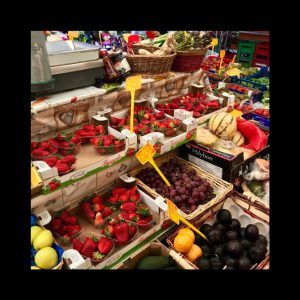
    This series of five photos is meant to represent the beauty in the simplicity of the organic and healthy grown produce. “La Boqueria” is a perfect example of the epitome of sustainability in terms of food consumption and production. This photo reportage aims to represent the market in the most pleasant way possible, showcasing the foods bright colors and appealing presentation, while also representing how locals interact with the environment and how rewarding shopping locally and organically can be. The photos were taken in a sunny Saturday morning, my goal is that the viewer can sense the freshness and brightness of the fruits and nuts as I did in person.

    Since you’re here…
    Our mission is to monitor Advertising to make certain that companies obey ethical standards of trustworthiness and transparency while communicating their commitment to addressing the great challenges of the New Millennium. From climate emergency to social inequality through all the issues included in the Sustainable Development Goals Agenda, we monitor the consistency of their statements, if they are ‘walking the talk’. With rising misinformation and commercial ownership, independent information is more and more rare. We think citizens deserve access to accurate analyses with integrity at their heart, so we can all make critical decisions about our lives, health and enviroment – based on fact, not fiction.
    Our editorial independence means our content agenda is set only to voice our opinions, supported by in-depth research, free from any political and commercial bias, never influenced by interested owners or shareholders (which we don’t have). It means we can stand up to mainstream and give a voice to those less heard. We hope this will motivate you to make a contribution in support of our open, independent journalism. Every reader contribution, however big or small, is so valuable. Support BeIntelligent from as little as €5 – and it only takes a minute. Thank you.

    Support BeIntellgent


    contest