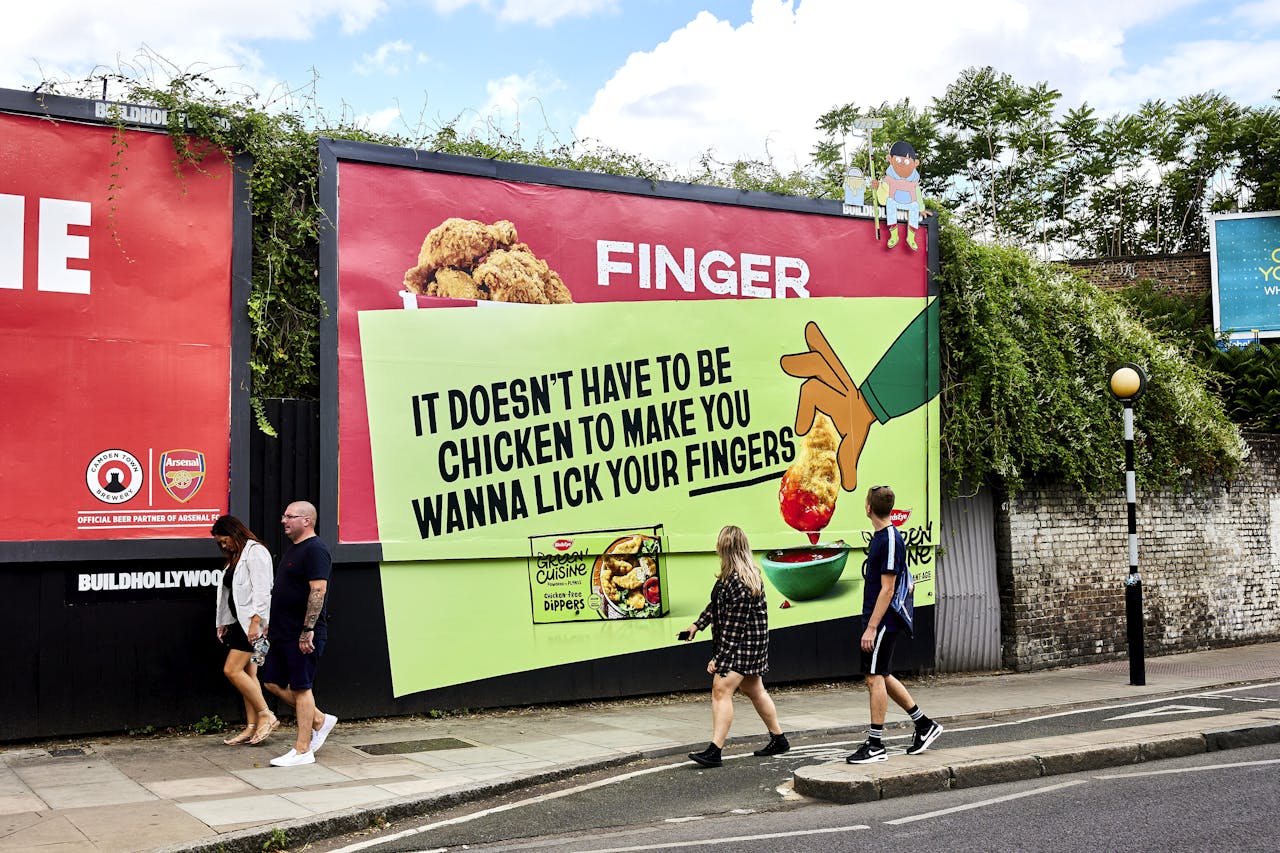
For Good Campaigns #11 Break The Pattern – Electrolux Forsman & Bodenfors initiated the Break The Pattern campaign together with Electrolux. They are using technology and up-cycling designers to create a new life for garments, by turning them into new creations. In this video, they depict heartbreaking views of the Atacama Desert in Chile where more than 59,000 tons of garment waste from Europe, the United States, and Asia end up, making it the second largest clothing graveyard in the world. Except For Me – World Rises In the Except For Me campaign, EP+Co and Worth Rises are working together to minimalize the information gap concerning the 13th Amendment, which legalizes the enslavement of incarcerated people. Between the days of 1 to 17 September 2022, they will share a different narrative. In addition to this, photographs of Johnny Perez were published in New York and Philadelphia. Perez shares the perspective of an incarcerated person, based on his own experiences. On the final day of the campaign, Mural Arts Philadelphia, Anti-Coalition Against Recidivism, and LatinoJustice are organizing an event. This will include a public art installation designed to showcase the stories, faces, and voices of those who were formerly legally enslaved in the United States. Queens – Golden Days Festival This year, Queen Margrethe of Denmark celebrates 50 years on the throne. Therefore, Accenture Song, Kunsthal Charlottenborg, Meta, Golden Days and design studio BIG are collaborating on the Golden Days Festival. An exhibition that highlights the history of the queen, as well as the female history of Denmark. The art is placed in the urban spaces of Copenhagen, and every story can be listened to and experienced via Instagram. #BiskuatSupportsDreams – Mondelez In collaboration with Leo Burnett Indonesia, the #BiskuatSupportsDreams campaign tells the story of Bang Aji, a Persigawa football club founder, who coaches underprivileged children without asking for anything in return. In addition to this, the campaign announces the return of the Mondelez Biskuat Academy, a sports marketing program that was launched in 2009 to provide training and mentoring for children. Welcome to The Plant Age – Birds Eye Together with the McCann Agency, Birds Eye created the Welcome to The Planet Age campaign to motivate viewers to choose vegan food. Communicating the message that it can be enjoyed in the same way as finger-licking chicken nuggets, but this time using vegan nuggets, of course. Since you’re here… Our mission is to monitor Advertising to make certain that companies obey ethical standards of trustworthiness and transparency while communicating their commitment to addressing the great challenges of the New Millennium. From climate emergency to social inequality through all the issues included in the Sustainable Development Goals Agenda, we monitor the consistency of their statements, if they are ‘walking the talk’. With rising misinformation and commercial ownership, independent information is more and more rare. We think citizens deserve access to accurate analyses with integrity at their heart, so we can all make critical decisions about our lives, health and enviroment – based on fact, not fiction. Our editorial independence means our content agenda is set only to voice our opinions, supported by in-depth research, free from any political and commercial bias, never influenced by interested owners or shareholders (which we don’t have). It means we can stand up to mainstream and give a voice to those less heard. We hope this will motivate you to make a contribution in support of our open, independent journalism. Every reader contribution, however big or small, is so valuable. Support BeIntelligent from as little as €5 – and it only takes a minute. Thank you. Support BeIntellgent Purposeful Communication / Trends #BiskuatSupportsDreams#EndTheExceptionAcademia Biskuat de MondelezAccenture SongAgencia McCannAnti-coalición contra la ReincidenciaBang AjiBIG design studioBirds EyeBreak The PatternCopenhaguedesierto de AtacamaElectroluxEnmienda 13EP+CoExcept For MeForsman & BodenforsGolden DaysJohnny PérezKunsthal CharlottenborgLatinoJusticeLeo BurnettMargarita ll de DinamarcaMetaMondelezMural Arts Philadelphianuggets veganosPersigawaQueensWelcome to The Plant AgeWorld Rises
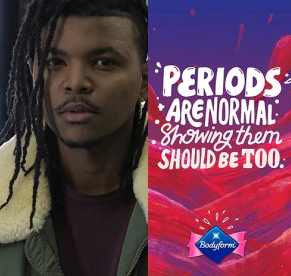
#BloodNormal: One Color Makes The Difference May 21st – Following the conversation on diversity issues, we would like to dedicate an article to the communication strategy of Essesity Feminine Care. Founded in Sweden, this company actively explores opportunities to improve well-being globally in Italy, the United Kingdom, France, Australia, Mexico Colombia, and many other countries. Essity Feminine Care circulates various brands, such as Saba and Nosotras in Southern America, Bodyform in the UK, Libresse in Scandinavia and The Netherlands, Nana in France, and Nuvenia in Italy. They compete with other big brands like Always (P&G), Johnson and Johnson, and Kimberly Clark, which are oftentimes equally committed to female empowerment.One of the brands that Essesity Feminine Care distributes named Bodyform incorporates a particularly engaging approach. They subverted the “rules” of communication within the feminine hygiene sector, simultaneously creating a precedent that competitors can no longer overlook.Also see: Mattel and Barbie “the little girl could be anything she wanted to be”.If it is normal, why not talk about it? In many countries today, women are still ashamed to talk about menstruation. They consider it inappropriate to discuss the topic with their father, boyfriend, and other men. How can a natural process like the cycle be considered taboo? And how have the companies that advertise menstrual products helped to fuel this taboo?Nicola Coronado, Marketing Director Bodyform (UK) stated that: “Menstruation is a natural process, but we still live in a society where we hide sanitary pads in our sleeves, where images of bloodstains are removed from social media, and female athletes are reluctant to talk about the impact of menstruation on their performance ”.Their objective is to generate a conversation on this “uncomfortable” topic and contribute to gender equality by giving women the right to express themselves on a phenomenon that society has always considered “dirty”, “madness”, “hormonal” or “disgusting”. Essity, through the feminine hygiene brands, organized several hygiene campaigns. Combined, their initiatives in 2012, in 2017 named #bloodnormal and Viva la Vulva in 2019 contributed to the fight against gender inequality and promoted the empowerment of women through the normalization of a natural process such as menstruation.The starting point is simple: women should not feel embarrassed about something that is perfectly natural and happens to every single woman in the world.Murders, fights, and surgeries are allowed on entertainment screens in all their bloody glory, on almost all channels and mediums. However, when it comes to menstrual blood, censorship is triggered. It wasn’t until 2017 that some red liquid was poured upon the sanitary napkin.In the blue, painted blue…Have you ever paid attention to the fact that feminine hygiene brands use an artificial blue liquid in product demonstrations? This ‘self-censorship’ has allowed taboos to prosper. According to research conducted by Libresse, 90% of women try to hide their periods, 42% of women have felt ashamed about it, and 56% of teenage girls around the world say they would rather be bullied than talk with their parents about their cycle.Libresse publicly challenged this stigma and managed to break the silence. With the #BloodNormal campaign they show the world that the only way to eliminate all taboos on menstruation is to make the invisible visible. Blood Normal Full Version AD filmThe film is directed by Daniel Wolfe, produced by Monika Lenczewska, and written by Nadja and Nick. It features women who shamelessly ask for a tampon at the dinner table, and students who pass tampons to their classmates, without embarrassment.The censorship strikes again when the video does not respect the cultural sensitivity of the market.However, other countries like the UK released a different version of the film. Why? In order to ensure that the global campaign respects the “cultural sensitivities” within each market. For that reason, the scene that illustrates a girl wearing a sanitary napkin is censored in the UK. Libresse decided to publicize it anyway, but pixelated, including the offical citation from the authorities: “The sight of menstrual blood is unacceptable”. Blood Normal Case StudyA couple of years later, the sight of a woman wearing underwear with blood flowing down her legs was considered “offensive” by some Australian viewers. The complaints ranged from bad taste to denigration as well as humiliation of women. These statements included a concern for children viewing the commercial, who were mentioned to be too young to see blood running down a woman’s leg in the shower.Interestingly, the Advertising Standards Authority declared that the commercial did not violate any code of ethics standards.The visualization of menstrual blood within a commercial challenged the status quo and initiated a process of normalization. Thanks to the power of representation and the engagement of a mainstream brand, which made it difficult for other players to ignore these incentives.However, the road to success remains to be an uphill battle. The Viva la Vulva campaign by Bodyform hardly saw the light after its release in 2018. Viva La Vulva Full Length AD film“Viva La Vulva,” a “joyful musical ode to vulvas in all their shapes and sizes,” faced many obstacles before being accepted. The first hurdle was winning over Essity’s internal stakeholders: as might be expected, it was difficult to convince management and the board of directors to implement a campaign full of vulvas. Followed by problems with communications regulators: after dealing with bans placed on bloodnormal, alliva, the brand noticed that the approval process eased.Even social media is implementing censorshipsWorst of all was dealing with standards and policies for disseminating sensitive content on social networks: decentralized approval policies of Facebook and Google meant that “Viva la vulva” was banned on social media in all countries where it was launched, and in some cases, the brand was unable to reverse this decision.At the end, when the launch succeeded, it would be worth it. The communication goals of #bloodnormal were ambitious: to increase levels of brand equity, positive perception, and brand favorability. Choosing a topic that could provoke a ‘shock’ in the audience, and thus, strongly impact customer perception is the exact risk Libresse decided to take with the #bloodnormal campaign, receiving many accolades, including at the Grand Prix at Cannes Lions.Bloodnormal and Viva La Vulva are not ‘casual campaigns’. Since 2012, in continuity with its mission purpose, the communication strategy has focused on female empowerment. With projects such as “Vagina Varsity,” a fun educational series in which a teenager can learn everything she should know about the vagina. As well as the six new “Femoji” in Unicode’s ‘menstruation’ themed emoji keyboard (from tampons to spotted pants and cramps), the goal is to enable girls to express their feelings in a natural way.SDGs Goal #5, #6, #12, #13, #15…It is through its communication strategy that the company is contributing to the achievement of Goal number 5 (Gender Equality) of the SGDs. But Goal #5 is not the only goal to which the company is committed.In relation to Goal #6, (Clean Water and Sanitation), Essity states that the company has reduced its water consumption by 4.7%. For Goal #12, (Responsible Consumption and Production), they contribute to a circular model, always following sustainable consumption and using safe and environmentally friendly products and services. To achieve Goal #13 (Climate Action), Essity reduced its greenhouse gas emissions by 17.9% between 2005 and 2017. For Goal #15 (Life on Earth) they declare a commitment to responsible forest management.Greenpeace versus SCA (Essity’s sister company)In 2017 Essity was the subject of a Greenpeace campaign against the partial destruction of the Great Northern Forest in Sweden, Finland, and Russia. With the launch of the report ‘Wiping Away the Boreal’, Greenpeace denounced the Swedish multinational Essity, Europe’s leading tissue producer, also known for its brand named Tempo in Italy. Essity procures its resources from SCA, the company formed by the demerger of the SCA Hygiene Products Spa group into two independent companies: SCA “Europe’s Largest Private Forest Owners” and Essity, which specializes in the production of handkerchiefs, toilet paper, kitchen towels, tampons, and napkins.In its 2019 report, SCA confirms that it has one of the most competitive fiber production facilities in the world.“SCA produces market pulp at Östrand pulp mill. The mill was expanded in 2018 to double its capacity. Östrand is now one of the most competitive production facilities for bleached softwood kraft pulp in the world. Together with chemical thermomechanical pulp production, Östrand’s annual capacity amounts to 1 million tonnes. SCA’s pulp has high strength properties, suitable for tissue and specialty paper“Greenpeace is demanding that the company increases the use of 100 percent post-consumer recycled and unbleached paper in its production. Moreover, they question if virgin fibers are necessary, and will prevent that these are from High Conservation Value Forest Landscapes.Essity’s response is that: “100 percent of the wood fiber has been certified or audited, which means that our suppliers support and safeguard principles on biodiversity and forest conservation.”Response of Essity SwedenOverexploitation of natural resources is leading to the depletion of soils and the disappearance of biodiversity.Truly responsible companies that produce in large industrial quantities, and that achieve growing revenues year after year (SCA sales grew by 4.5 percent while EBITDA increased by 1 percent), should be consistent in maintaining the sustainability of the ecosystem, otherwise any attempt to fight inequalities will be without success.Main references:http://www.bbc.co.uk/newsbeat/article/32793732/uks-fastest-growing-language-is-emojihttps://www.bodyform.co.uk/our-world/female- emoji /https://en.wikipedia.org/wiki/Libressehttps://www.libresse.com.my/our-world/Vagina Varsityhttps://www.campaignlive.co.uk/article/if-gets-harder-youre-track-something-great-bodyforms-taboo-breaking-journey/1588209https://www.adweek.com/brand-marketing/how-one-of-todays-boldest-marketers-is-shattering-stigmas-inflicted-on-women-worldwide/https://mumbrella.com.au/libra-takes-a-stand-to-normalise-periods-with-bloodnormal-campaign-594084https://www.essity.it/media/news-features/response-to-greenpeace-sweden-concerning-the-report-wiping-away-the-boreal/https://www.greenpeace.org/italy/storia/1804/stop-ai-prodotti-di-carta-che-usano-e-gettano-la-grande-foresta-del-nord/https://www.unece.org/fileadmin/DAM/timber/publications/FPAMR2018.pdfSince you’re here…Our mission is to monitor Advertising to make certain that companies obey ethical standards of trustworthiness and transparency while communicating their commitment to addressing the great challenges of the New Millennium. From climate emergency to social inequality through all the issues included in the Sustainable Development Goals Agenda, we monitor the consistency of their statements, if they are ‘walking the talk’. With rising misinformation and commercial ownership, independent information is more and more rare. We think citizens deserve access to accurate analyses with integrity at their heart, so we can all make critical decisions about our lives, health and enviroment – based on fact, not fiction. Our editorial independence means our content agenda is set only to voice our opinions, supported by in-depth research, free from any political and commercial bias, never influenced by interested owners or shareholders (which we don’t have). It means we can stand up to mainstream and give a voice to those less heard. We hope this will motivate you to make a contribution in support of our open, independent journalism. Every reader contribution, however big or small, is so valuable. Support BeIntelligent from as little as €5 – and it only takes a minute. Thank you.Support BeIntellgent Purposeful Communication #BloodNormal
Expert Interview: Luca Lorenzini Creative director of SMALL We interviewed Luca Lorenzini, co-Founder & Executive Creative Director, together with Luca Pannese of SMALL agency, founded in New York in 2019. Two years later, SMALL agency created ‘The Hiring Chain‘ for CoorDown, aiming to encourage companies around the world to hire people with Down syndrome. The video won 31 awards (at Cannes Lions, Eurobest, D&Ad, ADCI, ADCE, ADC, LIA, Cresta Awards, New York Festivals, Shark Awards, Epica) and communicates the power of representation and visualizes the positive impact that can result from seeing people with Down syndrome at work. The soundtrack is an original song performed by Sting inspired by children’s nursery rhymes, it is easy to memorize, and composed by the Stabbiolo Music team. Elena Grinta: The first topic I would like to discuss with you relates to the existing dialectic between profit and purpose. On the one hand, you have companies that advocate for the idea of ‘profit over all’ while their purpose only seems to matter at the time their reputation demands it. In these companies, it is difficult to change the narrative and the DNA of their business model. However, on the other hand, you have companies that believe in the balance of the infamous three P’s (people, planet, purpose) in a new economy model. I am curious to know which perspective you share, and how you and your agency added new value to building a balance between these three P’s.Luca Lorenzini: In this discussion, there are various business approaches and several types of communication. There are those who avoid this ‘new wave’ and focus exclusively on the products/services they offer, but you also have people who actively try to connect the two and pursue a kind of purpose-driven communication. Finally, there are NGOs that have been purpose-driven since the very beginning: this central perspective is the most interesting one at the current moment.Purpose-driven communication can either be done well or rather poorly, what makes the difference is what is behind the message they are trying to communicate. For instance, in the advertising world, someone might be excellent at storytelling and does so in the most exciting way possible. However, truly important is the question of whether what they are promoting, corresponds with their business reality. Unfortunately today, many brands seem to simply jump on the “sustainability train”, but fail to make decisions that express these beliefs. In this case, the communication is not only meaningless, but it is counterproductive as well.The brand Gillette once enhanced the promotion of toxic masculinity, which resulted in a large amount of criticism. The question that came to light was: if Gillette desires to have gender equality, why does it sell razors for women at a much higher price than razors for men, considering they are produced in a similar way? This is just one small example, but there are many others, especially in the climate change sphere. Here the issue is the same when what they are saying does not align with what they are actually doing.Elena Grinta: True, the Gillette case caused quite a stir; sometimes these ‘inconsistencies’ cost companies greatly. Would you say that companies should be obliged to state their purpose? Have you ever experienced cases in which you advised your client, at a strategic level, not to carry out a purpose-driven campaign?Luca Lorenzini: It happens quite often. Exhibiting oneself as a brand is currently the rule rather than the exception, while communication focuses on the opposite end, which is to speak to people when nobody else does to avoid the risk of being overshadowed. Ultimately, this is nothing more than a shortcut for most companies, as communication alone cannot be an act of change, it must always be supported by actions. For the past nine years, we have been working with CoorDown. This is an association that advocates for the rights of people with Down syndrome. In our commercial, these people are treated like anybody else and are fully incorporated into the larger narrative, which has the potential to educate people about inclusiveness.Like I said before, apart from a few exceptions, communication by itself is rarely resulting in an actual act of change. For instance, during the COVID pandemic, there were two types of different business approaches that were observed. On the one hand, some brands created commercials that advocated for notions of unity and closeness in difficult times: “all together we will make it”. While on the other hand, you had companies that focused on concrete and tangible initiatives, such as making donations to hospitals. It was a very difficult and complex situation where many words were often useless and rhetorical. This shows how silence is sometimes better when you really have nothing to contribute to the actual conversation.Elena Grinta: From a communications professional standpoint of view, I would say that this is a very strong message, it also makes me think of other questions. When you make a creative type of proposal to the client, do you also have KPIs on the proposal itself, and how much would this type of communication impact the cause brought forward? That is, how much does this message actually impact the behavior of the client-citizen?Luca Lorenzini: I don’t think that any type of communication by itself has the ability to change things, certainly, more ‘pieces’ of communication can help create a certain type of culture. For example, there is a major issue of diversity and inclusion in the United States, that includes various types of ethnicities, religions, and sexual orientations. Of course, one brand will not make a long-term impact on these issues. However, when more and more brands start to represent and communicate these topics, a more ethical universe is formed that could cause a chain reaction and slowly change the way things are seen. The ultimate goal of advertising is to sell products and goods, that is clear, but at the same time, it could play a key role in initiating positive changes that change the way people behave. Communication now is becoming increasingly more focused on purpose-driven models, as young people – today’s consumers – are much more attentive to these issues than my generation. Companies are being placed under a magnifying lens as these consumers are demanding that brands pay closer attention to these issues. With respect to your question about KPIs, we have never done that, but I think it is very interesting. Unfortunately, it is rarely the case that clients we get to work with genuinely want to change the world, except for nonprofits. Elena Grinta: One of the commitments of the Manifesto of Communication For Good is impact. Agencies can help with spreading a culture by measuring external impact. They can push companies to internalize ‘ad hoc metrics’ and thus obtain an additional element to build a solid reputation. But, how does an agency provide concrete answers and work on brand consistency?L.L. Ci affidiamo molto all’onestà del cliente stesso, quando ci viene richiesta una comunicazione purpose driven facciamo sempre la domanda: siete sicuri di poterlo affermare? Fate davvero qualcosa in favore della sostenibilità? Conviene al cliente essere onesto, se vuoi il lavoro dell’agenzia rimane più protetto rispetto al cliente stesso. Una volta che ci viene assegnato un brief, difficilmente è l’agenzia ad andare sotto accusa. È l’azienda stessa a dover prestare molta attenzione al messaggio che vuole veicolare rispetto a quello che effettivamente fa. Noi non possiamo far altro che ‘interrogare’ il cliente, più a fondo di così non possiamo andare e non è nemmeno il nostro ruolo, dobbiamo fidarci. Luca Lorenzini: We rely a lot on the genuine intentions of the client himself. For example, when we are asked to advise on purpose-driven communication we always ask the question: are you sure you can say that? Are you really wanting to do something that supports sustainability? It is in the client’s favor to answer truthfully as the agency is better protected than the client in any case of an indictment. Therefore, the brand itself has to pay close attention to the difference between the message it wants to convey versus what it actually does. All we can do is ‘question’ the client, deeper than that we cannot go. It is not even our role, we simply have to trust.Elena Grinta: What you say is very interesting and reminds me of the Marini agency’s advertisement for tuna (a nominee for the last Communication For Good Award). The company in that case was accused of not matching its message to its truth, and the agency also got caught in the middle.L.L. Capisco perfettamente quello che dici, ma è impossibile per l’agenzia verificare in profondità. Davvero tendiamo ad affidarci alla buona fede del clienteLuca Lorenzini: I completely understand what you are saying, but it is impossible for the agency to have in-depth verification. We really tend to rely on the good faith of the client.Elena Grinta: Absolutely, I mentioned it to you as an example. Because it is actually one of the first times that the agency became involved, which shows how increasingly complex the communication landscape is becoming. Perhaps something is changing. Since you’re here…Our mission is to monitor Advertising to make certain that companies obey ethical standards of trustworthiness and transparency while communicating their commitment to addressing the great challenges of the New Millennium. From climate emergency to social inequality through all the issues included in the Sustainable Development Goals Agenda, we monitor the consistency of their statements, if they are ‘walking the talk’. With rising misinformation and commercial ownership, independent information is more and more rare. We think citizens deserve access to accurate analyses with integrity at their heart, so we can all make critical decisions about our lives, health and enviroment – based on fact, not fiction. Our editorial independence means our content agenda is set only to voice our opinions, supported by in-depth research, free from any political and commercial bias, never influenced by interested owners or shareholders (which we don’t have). It means we can stand up to mainstream and give a voice to those less heard. We hope this will motivate you to make a contribution in support of our open, independent journalism. Every reader contribution, however big or small, is so valuable. Support BeIntelligent from as little as €5 – and it only takes a minute. Thank you.Support BeIntellgent INTERVIEWS / Trends ACIADCADCECoorDownCresta AwardsEpicaEurobestGiletteLIALuca PanneseNew York FestivalsShark AwardsSMALLStabbiolo MusicStingThe Hiring Chain






 different ways to view
#toxicmasculinity A campaign to revitalize an ancient payoff Bad PR
is…
different ways to view
#toxicmasculinity A campaign to revitalize an ancient payoff Bad PR
is…