Category: contest

  • wind is key

    wind is key. Without responsible production it is almost impossible for consumers to be able to be sustainable in their consumption methods.

    Wind is Key

    This photo represents responsible production because it shows how energy is being converted directly from wind. This photo was taken in the countryside.

    Responsible production is the one of the first steps to being sustainable. In this photo the windmills show how energy is being converted from wind into rotational energy. It was taken in the countryside where there were hundreds of other windmills.

    The image is in black and white to single out the figures in the photo, so the viewers focus solely on the windmills and not the colors of the field and sky.

    Wind energy is important as companies look for more sustainable ways to consume energy throughout their production process. This photo highlights how simple it can be.

    Without responsible production it is almost impossible for consumers to be able to be sustainable in their consumption methods.

    Since you’re here…
    Our mission is to monitor Advertising to make certain that companies obey ethical standards of trustworthiness and transparency while communicating their commitment to addressing the great challenges of the New Millennium. From climate emergency to social inequality through all the issues included in the Sustainable Development Goals Agenda, we monitor the consistency of their statements, if they are ‘walking the talk’. With rising misinformation and commercial ownership, independent information is more and more rare. We think citizens deserve access to accurate analyses with integrity at their heart, so we can all make critical decisions about our lives, health and enviroment – based on fact, not fiction.
    Our editorial independence means our content agenda is set only to voice our opinions, supported by in-depth research, free from any political and commercial bias, never influenced by interested owners or shareholders (which we don’t have). It means we can stand up to mainstream and give a voice to those less heard. We hope this will motivate you to make a contribution in support of our open, independent journalism. Every reader contribution, however big or small, is so valuable. Support BeIntelligent from as little as €5 – and it only takes a minute. Thank you.

    Support BeIntellgent

    Author: ColinDoerr

    I am from Kansas, USA and am studying marketing at the University of Kansas. I enjoy everything sports and spend most of my time either watching or playing them.


    contest
  • Diversity for Sustainability

    Diversity for Sustainability

    This image is a statement on diversity and the need for interracial and ethnical support, communication, collaboration and care. It’s a comment on the relationship between third world countries and first world countries. First world countries are represented by the paler hand that is slightly higher than the darker hand. The darker hand represents third world and developing countries. The rest of the bodies are not seen, only the hands so that the hands can properly represent a generalization of first world and third world countries and privileged majorities and underrepresented minorities. The picture speaks on where the world is with this important sustainability issue and yet how much further the world needs to go. The picture emphasizes the importance of diversity and its need for improvement worldwide. It calls first world countries to take action and raise up the third world countries and minorities in order to better the entirety of the world.

    The lighter hand is slightly higher than the darker hand in order to represent the advantages first world countries and majorities have over third world, struggling countries and minorities. First world countries and privileged majorities have the economic infrastructure and resources to aid third world countries and minorities and help raise them up economically, politically and overall. The two hands are holding each other in order to represent the cooperation, communication and relationship needed between these opposing groups.

    Since you’re here…
    Our mission is to monitor Advertising to make certain that companies obey ethical standards of trustworthiness and transparency while communicating their commitment to addressing the great challenges of the New Millennium. From climate emergency to social inequality through all the issues included in the Sustainable Development Goals Agenda, we monitor the consistency of their statements, if they are ‘walking the talk’. With rising misinformation and commercial ownership, independent information is more and more rare. We think citizens deserve access to accurate analyses with integrity at their heart, so we can all make critical decisions about our lives, health and enviroment – based on fact, not fiction.
    Our editorial independence means our content agenda is set only to voice our opinions, supported by in-depth research, free from any political and commercial bias, never influenced by interested owners or shareholders (which we don’t have). It means we can stand up to mainstream and give a voice to those less heard. We hope this will motivate you to make a contribution in support of our open, independent journalism. Every reader contribution, however big or small, is so valuable. Support BeIntelligent from as little as €5 – and it only takes a minute. Thank you.

    Support BeIntellgent

    Author: ksuare3

    I am a third year student at Louisiana State University in the USA. I am majoring in mass communication with a concentration in digital advertising along with minors in visual communication and business administration. I am currently studying abroad in Milan where I am pursuing a marketing internship. I love travel, culture and adventure. My purpose would be to live more sustainably and support women and minorities through bettering the marketing and advertising industry.


    contest
  • Wandering in the city

    Wandering in the city

    Those pictures were taken in the middle of a walk in the city. These clearly show that from footwear to cosmetics to the most natural attraction humans have, food, the excess, hubris if you want to push it, is what characterizes the consumerist society. On the one hand, it shows the lack of responsibility in individual consumption as in the run for the new trend as well as it is considered as a sign of wealth and even development. On the other hand, those pictures raise a real sustainability issue in terms of production : for most of the products depicted, we know that terrible work conditions – going to child slavery in some cases, are methods put to use to get to the mass production and fit the consumerist society.

    Note

    The material excesses to which we are pushed in our society is what I chose to show is this contest with the help of my boyfriend who is as concerned as I am in those matters. In the picture, one can clearly distinguish different means of consumption that appeal to all genders and ages. What we wanted to emphasize here is the superficiality and hubris in the ranges and products on the shelves. As a couple, we try to be responsible consumption-wise, which is the reason why the pictures were taken very spontaneously.

    Since you’re here…
    Our mission is to monitor Advertising to make certain that companies obey ethical standards of trustworthiness and transparency while communicating their commitment to addressing the great challenges of the New Millennium. From climate emergency to social inequality through all the issues included in the Sustainable Development Goals Agenda, we monitor the consistency of their statements, if they are ‘walking the talk’. With rising misinformation and commercial ownership, independent information is more and more rare. We think citizens deserve access to accurate analyses with integrity at their heart, so we can all make critical decisions about our lives, health and enviroment – based on fact, not fiction.
    Our editorial independence means our content agenda is set only to voice our opinions, supported by in-depth research, free from any political and commercial bias, never influenced by interested owners or shareholders (which we don’t have). It means we can stand up to mainstream and give a voice to those less heard. We hope this will motivate you to make a contribution in support of our open, independent journalism. Every reader contribution, however big or small, is so valuable. Support BeIntelligent from as little as €5 – and it only takes a minute. Thank you.

    Support BeIntellgent

    Author: Sarah Le Corff

    I am 22 years old and I am finishing my master’s degree in Management in June. I was born and raised in Paris, France, yet I have lived in Amsterdam and in Milan in the years 2018 and 2019. I think it is time for my generation and the generation before us to realize the struggles of our century. My biggest concern is the fight for gender equality, and most importantly nowadays the rights of women to dispose of their own bodies, which is far from being acquired. Mass consumption is another concern of mine, I think the problems linked to mass consumption and body image are tightly linked and it is something everyone could realize if they stopped for a second in front of a retail shop shelf.


    contest
  • responsible production and consumption

    Responsible Production and Consumption

    SUSTAINABLE FISHING

    With fishing tools becoming more and more effective, fishing activities across the globe are more intensive than ever. To maximise their profit, fishermen often go beyond what is environmentally sustainable. Fish populations cannot recover fast enough and in turn the sea’s natural resources are becoming depleted.

    Sustainable fishing is the act of using fishing tools that minimize the impact on marine habitats and endangered species, as well as conserving the resources that are so important to human life.

    TRAVELING RESPONSIBLY

    “Develop and implement tools to monitor sustainable development impacts for sustainable tourism that creates jobs and promotes local culture and products” – #Envision2030

    Tourism will never be completely sustainable as every industry has its impact, but it can work towards reducing the negative effects on the enviornment.


    HOW?

    – Give, the right way.

    – Say no to plastic.

    – Research your tour operators.

    – Support the true local economy.

    – Never buy wildlife products—period.

    LIVE IN HARMONY WITH NATURE

    “Ensure that people everywhere have the relevant information and awareness for sustainable development and lifestyles in harmony with nature”

    Since you’re here…
    Our mission is to monitor Advertising to make certain that companies obey ethical standards of trustworthiness and transparency while communicating their commitment to addressing the great challenges of the New Millennium. From climate emergency to social inequality through all the issues included in the Sustainable Development Goals Agenda, we monitor the consistency of their statements, if they are ‘walking the talk’. With rising misinformation and commercial ownership, independent information is more and more rare. We think citizens deserve access to accurate analyses with integrity at their heart, so we can all make critical decisions about our lives, health and enviroment – based on fact, not fiction.
    Our editorial independence means our content agenda is set only to voice our opinions, supported by in-depth research, free from any political and commercial bias, never influenced by interested owners or shareholders (which we don’t have). It means we can stand up to mainstream and give a voice to those less heard. We hope this will motivate you to make a contribution in support of our open, independent journalism. Every reader contribution, however big or small, is so valuable. Support BeIntelligent from as little as €5 – and it only takes a minute. Thank you.

    Support BeIntellgent

    Author: chaunguyen

    I’m a Vietnamese student and I’m currently studying in the Netherlands major in Business Communication Keen on how to live sustainable, I’m interested in anthropology, sciences and arts. My purpose is to spread the awareness about Sustainable and how to live more sustainability


    contest
  • Vive a lo organico!

    Vive a lo organico!

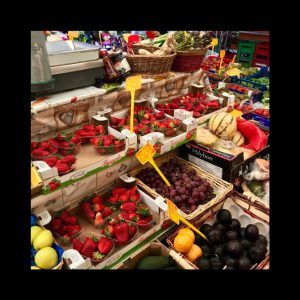
    This series of five photos is meant to represent the beauty in the simplicity of the organic and healthy grown produce. “La Boqueria” is a perfect example of the epitome of sustainability in terms of food consumption and production. This photo reportage aims to represent the market in the most pleasant way possible, showcasing the foods bright colors and appealing presentation, while also representing how locals interact with the environment and how rewarding shopping locally and organically can be. The photos were taken in a sunny Saturday morning, my goal is that the viewer can sense the freshness and brightness of the fruits and nuts as I did in person.

    Since you’re here…
    Our mission is to monitor Advertising to make certain that companies obey ethical standards of trustworthiness and transparency while communicating their commitment to addressing the great challenges of the New Millennium. From climate emergency to social inequality through all the issues included in the Sustainable Development Goals Agenda, we monitor the consistency of their statements, if they are ‘walking the talk’. With rising misinformation and commercial ownership, independent information is more and more rare. We think citizens deserve access to accurate analyses with integrity at their heart, so we can all make critical decisions about our lives, health and enviroment – based on fact, not fiction.
    Our editorial independence means our content agenda is set only to voice our opinions, supported by in-depth research, free from any political and commercial bias, never influenced by interested owners or shareholders (which we don’t have). It means we can stand up to mainstream and give a voice to those less heard. We hope this will motivate you to make a contribution in support of our open, independent journalism. Every reader contribution, however big or small, is so valuable. Support BeIntelligent from as little as €5 – and it only takes a minute. Thank you.

    Support BeIntellgent


    contest
  • put it in the trash

    put it in the trash

    I took this picture on my way home from dinner one night. I feel that while many of the agenda 2030’s goals are powerful, they may be difficult to achieve. However, I believe that bringing to people’s attention the damage that liter can cause will be able to make a significant difference in our world, with a small change, that will take very little effort by everyone in the population- simply “put it in the trash”. This photograph I captured has a lot of waste. However, what is so bad about this picture is not how much is on the ground, but rather that everything in this picture is recyclable. The materials that are primarily in this picture are cigarette butss, plastic cups, and the paper containers for the cigarettes. Extinguished cigarettes, cigarette filters, loose tobacco pouches, outer plastic packaging, inner foil packaging, rolling paper, and ash can all be recycled. In fact, there are many programs throughout the world that you can ship these materials, for free, in order for them to be recycled. The waste collected through these program is recycled into a variety of industrial products, such as plastic pallets, and any remaining tobacco is recycled as compost. The plastic cup in this photograph is also recyclable. When recycling plastic, it reduces high rates of plastic pollution while putting less pressure on virgin materials to produce brand new plastic products. Overall, recycling is essential to the goal of the Agenda 2030 because recycling allows for new useful products to be created by breaking down materials that no longer have any use. This approach helps to conserve resources and diverts plastics from landfills or unintended destinations such as oceans. In the United States, recycling is encourage, however, it is not taken as seriously as it is in Italy. In the Snited States, most homes do have a recycling bin, however, they are often not even used. In complete honesty, Americans often get lazy and do not feel the need to separate recyclable materials from non recyclables. While in Italy, I have learned that almost every home has to separate their garabare into four categories- glass, plastic, food, and paper, making it much easier to break down and recycle your waste. This seemed very inconvenient when I first came to italy, however, now I do it without thinking. If this new habit has become so natural, I think it is safe to say that avoiding littering and encouraging recycling is an extremely simple change that can be made that will have a huge impact on our world today and in the future.

    Since you’re here…
    Our mission is to monitor Advertising to make certain that companies obey ethical standards of trustworthiness and transparency while communicating their commitment to addressing the great challenges of the New Millennium. From climate emergency to social inequality through all the issues included in the Sustainable Development Goals Agenda, we monitor the consistency of their statements, if they are ‘walking the talk’. With rising misinformation and commercial ownership, independent information is more and more rare. We think citizens deserve access to accurate analyses with integrity at their heart, so we can all make critical decisions about our lives, health and enviroment – based on fact, not fiction.
    Our editorial independence means our content agenda is set only to voice our opinions, supported by in-depth research, free from any political and commercial bias, never influenced by interested owners or shareholders (which we don’t have). It means we can stand up to mainstream and give a voice to those less heard. We hope this will motivate you to make a contribution in support of our open, independent journalism. Every reader contribution, however big or small, is so valuable. Support BeIntelligent from as little as €5 – and it only takes a minute. Thank you.

    Support BeIntellgent


    contest
  • Duomo

    Duomo

    Fast fashion as the business model that has a major negative impact on environment on society and environment. It may be hard to see why this business is generating much harm to our planet, so here are just some examples of it.
    – The increase of carbon footprint generated by the widespread use of synthetic fiber and polyester and also the hundreds of years it can take to degrade.
    – Water consumption and Pollution
    – The rate in which we are consuming and discarding clothes is contributing to mass waste.
    – Unfair labor practices
    – Health danger, our clothes are usually made from synthetic material created with toxic chemicals.

    In the picture, you can see a sideboard of a well known fast fashion company. At thThe fashion industry is based on an business model that generates a massive detrimental impact on our planet, and even more damage is made by the fast fashion industry. The linear fashion model of buying, wearing and quickly discarding clothes negative affects people and planet resources.
    e same time you can see a homeless man asking for money to eat. And if you see carefully the image, you may be able to observe in the mirror reflection the Duomo of Milano, that is established on the city of Milan which is recognized internationally as one of the worlds most important fashion capitals.

    The sideboard and the clothes in it represent clearly the fast fashion industry, the homeless man asking for money is the damage that the industry is making and the Duomo of Milano as the planet where everything is taking place.

    Since you’re here…
    Our mission is to monitor Advertising to make certain that companies obey ethical standards of trustworthiness and transparency while communicating their commitment to addressing the great challenges of the New Millennium. From climate emergency to social inequality through all the issues included in the Sustainable Development Goals Agenda, we monitor the consistency of their statements, if they are ‘walking the talk’. With rising misinformation and commercial ownership, independent information is more and more rare. We think citizens deserve access to accurate analyses with integrity at their heart, so we can all make critical decisions about our lives, health and enviroment – based on fact, not fiction.
    Our editorial independence means our content agenda is set only to voice our opinions, supported by in-depth research, free from any political and commercial bias, never influenced by interested owners or shareholders (which we don’t have). It means we can stand up to mainstream and give a voice to those less heard. We hope this will motivate you to make a contribution in support of our open, independent journalism. Every reader contribution, however big or small, is so valuable. Support BeIntelligent from as little as €5 – and it only takes a minute. Thank you.

    Support BeIntellgent

    Author: Mariana Guajardo

    I’m Mexican and I’m 20 years old. I’m a Law student and I have always been interested with problems that surrounded my society. My purpose is to raise awareness of the severe environmental problems that we are facing nowadays, also to promote a lifestyle of simplicity and caring for the environment by avoiding consumerism and buying intelligent.


    contest
  • The Cigarette Problem

    The Cigarette Problem

    Cigarettes are most known for the health threats inflicted on their uses. However, it is often overlooked the detrimental effects they have on the environment.

    Anna Lappe once said, “Every time you spend money, you’re casting a vote for the kind of world you want”. With the frequency with which we spend our money it is easy to forget that every purchase we make that does not promote sustainability, leaves a trail of destruction in its wake.

    If I have noticed one thing during my time in Milan is that the only thing Italians purchase more of than coffee is cigarettes. I’m sure when we all think of cigarettes the first thought that pops into our heads is the long lasting and detrimental effects they have on the human body. Not only for first hand smokers, but for everyone subjected to their cloud of chemicals. However, it is often cast aside the long term effects cigarettes have on our environment. The average cigarette can take anywhere from eighteen months to ten years to decompose entirely, depending on the conditions they are disposed of in.

    Whether it be a busy sidewalk or a garbage bin, the damaging effect of cigarettes does not stop once the smoking ash is extinguished. The components of the plastic that make up cigarette butts, cellulose acetate, has a very slow decomposition rate. Also let it be said that plastic can never fully decompose. It breaks down into tiny microplastics that get washed away down into our sewers and out into the waters of our world. Let it be noted that cigarettes are not only detrimental to the environment after they are disposed.

    The effects cigarettes have on the world begin with their origins.

    Since you’re here…
    Our mission is to monitor Advertising to make certain that companies obey ethical standards of trustworthiness and transparency while communicating their commitment to addressing the great challenges of the New Millennium. From climate emergency to social inequality through all the issues included in the Sustainable Development Goals Agenda, we monitor the consistency of their statements, if they are ‘walking the talk’. With rising misinformation and commercial ownership, independent information is more and more rare. We think citizens deserve access to accurate analyses with integrity at their heart, so we can all make critical decisions about our lives, health and enviroment – based on fact, not fiction.
    Our editorial independence means our content agenda is set only to voice our opinions, supported by in-depth research, free from any political and commercial bias, never influenced by interested owners or shareholders (which we don’t have). It means we can stand up to mainstream and give a voice to those less heard. We hope this will motivate you to make a contribution in support of our open, independent journalism. Every reader contribution, however big or small, is so valuable. Support BeIntelligent from as little as €5 – and it only takes a minute. Thank you.

    Support BeIntellgent

    Author: olivia.ceretti

    I’m from Brooklyn, New York. I am 20 years old and am majoring in history and political science at SUNY New Paltz.  I enjoy researching and exploring fields that are unfamiliar to me. As a history major I think ‘my purpose’ would be searching for the truth and telling the truth even though it might go against our preconceived beliefs. I love being outdoors weather it’s skiing in the winter or swimming in the summer.


    contest
  • water as the new luxury

    water as the new luxury

    Around the world, many societies said that water scarcity is one of the main challenges that they are facing during the 21st century. This because of the consumption of water grew at a rate twice higher than the rate of  the growth of the population, creating this phenomenon, that is not only natural but is also caused by the action of the human being.
    As we said before, this problem affects all the continents and a fifth part of the world’s population, live with this problem, while 500 million are about to face this situation.
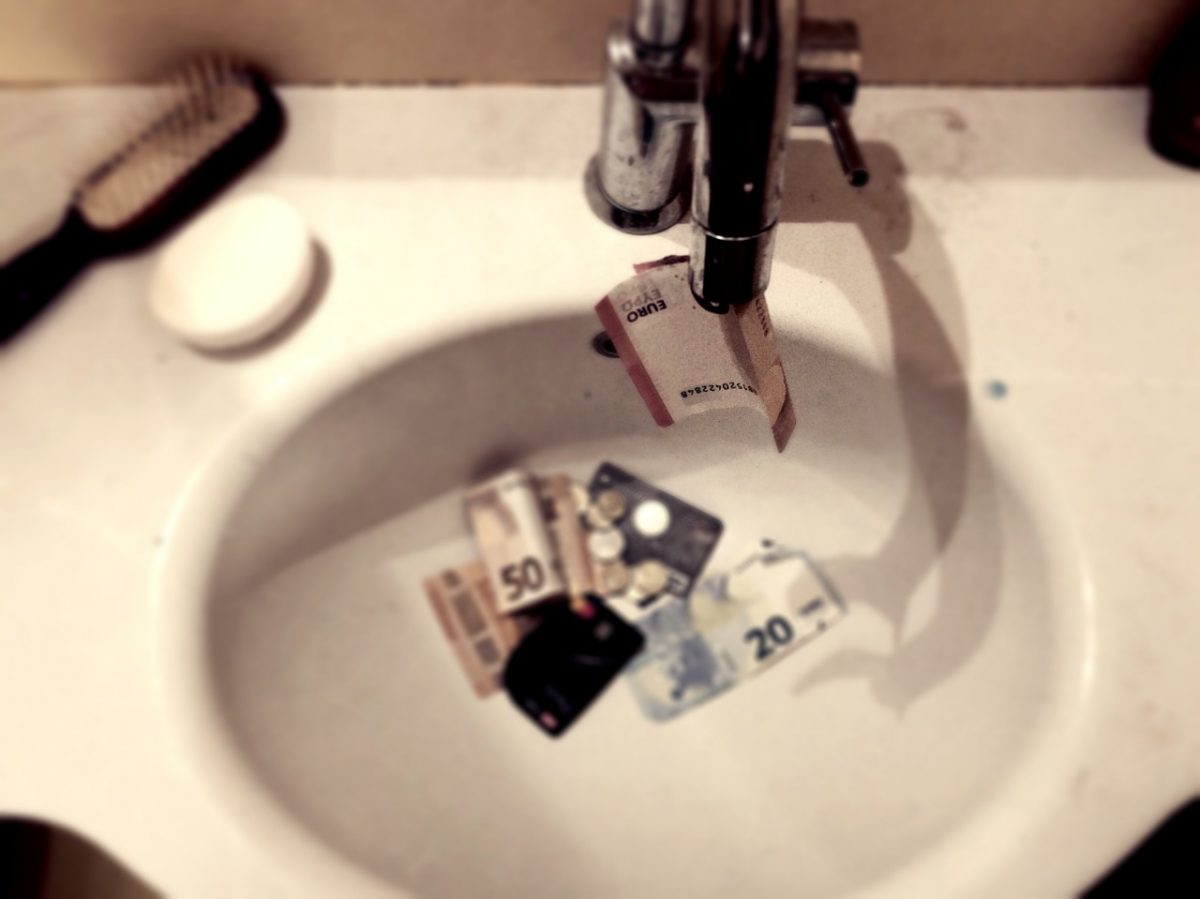
    A change must be made within society with the aim of  this problem does not continue increase, for this reason with this image we want to represent that having water in your home can be a luxury, because a lot of people have to travel long distances to collect non-potable water.
    So, realizing that water is not a resource that we must take for granted, but on the contrary the water is a non-renewable resource that the current generations are wasting and we are being selfish with next generations, taking their to have advantage of this resource and cover their needs.
    Many countries are already suffering the consequences of this event.
    If we continue in this way, only in 2025, 1,800 million people will live in countries or regions with absolute water shortages and two thirds of the world’s population will be facing critical water shortages. And during the year 2030, almost half of the world’s population will live in areas with water shortages.

    Since you’re here…
    Our mission is to monitor Advertising to make certain that companies obey ethical standards of trustworthiness and transparency while communicating their commitment to addressing the great challenges of the New Millennium. From climate emergency to social inequality through all the issues included in the Sustainable Development Goals Agenda, we monitor the consistency of their statements, if they are ‘walking the talk’. With rising misinformation and commercial ownership, independent information is more and more rare. We think citizens deserve access to accurate analyses with integrity at their heart, so we can all make critical decisions about our lives, health and enviroment – based on fact, not fiction.
    Our editorial independence means our content agenda is set only to voice our opinions, supported by in-depth research, free from any political and commercial bias, never influenced by interested owners or shareholders (which we don’t have). It means we can stand up to mainstream and give a voice to those less heard. We hope this will motivate you to make a contribution in support of our open, independent journalism. Every reader contribution, however big or small, is so valuable. Support BeIntelligent from as little as €5 – and it only takes a minute. Thank you.

    Support BeIntellgent

    Author: maferyvale

    I’m an international students from Mexico.


    contest