Philanthropy, CSR, and purposeful communication have at least one goal in common: to do well by consumers who, directly or indirectly, are being addressed. But is it always so? Through the analysis of the communication that the companies Purdue Pharma, British Petroleum have adopted, we will try to understand whether there is a virtual limit beyond which not only the “purposeful” campaigns (guided by a “high” purpose’) are no longer effective for companies that adopt them but whether they are also potentially harmful to consumers.
In 2018 the Guggenheim Museum in Manhattan, New York, was at the center of a protest against its financing by the Sackler family, the head of Purdue Pharma, which markets OxyContin. A few days afterwards, Columbia University and the University of Washington, which have both received donations from the Sacklers in the past, announced that they will no longer accept grants from the family.
What is behind this protest?
The American photographer Nan Goldin, who claimed to have become addicted to OxyContin after the pills were prescribed, lead the protest along with other artists and activists against the campaigns of cultural philanthropy, claiming that accepting funding from owners from similar companies makes cultural institutions accomplices of their damage.
The eight members of the Sackler family were accused of intentionally minimizing the dangers of taking OxyContin painkillers (seemingly more potent than heroin or morphine) and deceiving doctors into prescribing excessive doses for many patients who would never have had to take the drug. OxyContin is now considered co-responsible for the opioid crisis that is killing more than 100 people a day in America and has generated millions of addicts.
In September 2019, to freeze the lawsuits against them, the drug maker filed for Chapter 11 bankruptcy.
Opioids are not the only epidemic devastating America, despite the U.S. being one of the highest economically performing countries today. “By most accounts, Americans should be happier now than ever,” writes Jean M. Twenge, co-author Of theReport ‘World Happiness,’ published March 20, 2019, which monitors the level of happiness of the citizens of 156 countries in the world. “The violent crime rate is low, as is the unemployment rate. Income per capita has steadily grown over the last few decades. ” Yet Americans are sad.
Jeffrey D. Sachs, director of the Sustainable Development Solutions Network (SDSN), Director of the Center for Sustainable Development at Columbia University, and co-author of the report, explained in these terms the phenomenon:
My argument is that the U.S. is suffering an epidemic of addictions, and that these addictions are leaving a rising Portion of American society unhappy and a rising number clinically lonely.
The fact that the Guggenheim Museum and other cultural institutions have accepted the subsidies of Purdue Pharma under the guise of a philanthropic action with the twofold aim of “bringing the general public closer” and diverting attention from their responsibilities, with an effect of “reputation laundering “[3] , is cause for concern.
Activists @British Museum against BP sponsorship
This of the Guggenheim is not an isolated case. Many will remember the long-standing partnership between British Museum And British Petroleum, which frequently was the subject of a protest. Last time at the center of the controversy was the exhibition “I Am Ashurbanipal,” with the protesters claimed to have been taken from contemporary Iraq during the Ottoman era. The banners of the event said “colonialism crisis” and “stolen items.” So for BP the philanthropic sponsorship of the British Museum has become a constant cause for concern.
And even more worrying is the (unconscious?) intercession an institution such as the British Museum or the Guggenheim are pushed to do to get the funds to survive. I get to ask if the price they apply is worth the game. And if it is acceptable to the Government that culture remains alive thanks to the ‘soul washing’ or ‘reputation laundering’.
Unfortunately, it seems no one can feel immune to some form of addiction (hence the term epidemic used by the author of Report World Happiness Jeffrey D. Sachs). And from this perception to the salience and relevance of the subject.
A question arises: the basis of the purposeful communication or goodvertising (advertising that does good – whether developed through actions of philanthropy or CSR ) shouldn’t be a code of ethics?
Article written in collaboration with Stefano Serafinelli, clinical Psychologist, mindfulness intervention trainer.
Foto: Nan Goldin Aperture Drugs On The Rug New York City
[2] https://www.researchgate.net/publication/46578270_Prevalence_of_the_Addictions_A_Problem_of_the_Majority_or_the_Minority
[3] “There’s the question about whether Yale or any other university wants to be complicit in the reputation laundering of the donor. And at the very minimum there is that negative to put on the ledger of whatever good could be done with the gift.” Rob Reich, professor of ethics, Stanford University
http://fortune.com/2019/03/20/u-s-unhappiest-its-ever-been/https://www.washingtonpost.com/nation/2019/03/21/americans-are-unhappiest-theyve-ever-been-un-report-finds-an-epidemic-addictions-could-be-blame/https://newfoodeconomy.org/plant-blood-soy-leghemoglobin-impossible-burger/https://www.gmoscience.org/impossible-burger-boon-risk-health-environment/
Since you’re here…
Our mission is to monitor Advertising to make certain that companies obey ethical standards of trustworthiness and transparency while communicating their commitment to addressing the great challenges of the New Millennium. From climate emergency to social inequality through all the issues included in the Sustainable Development Goals Agenda, we monitor the consistency of their statements, if they are ‘walking the talk’. With rising misinformation and commercial ownership, independent information is more and more rare. We think citizens deserve access to accurate analyses with integrity at their heart, so we can all make critical decisions about our lives, health and enviroment – based on fact, not fiction.
Our editorial independence means our content agenda is set only to voice our opinions, supported by in-depth research, free from any political and commercial bias, never influenced by interested owners or shareholders (which we don’t have). It means we can stand up to mainstream and give a voice to those less heard. We hope this will motivate you to make a contribution in support of our open, independent journalism. Every reader contribution, however big or small, is so valuable. Support BeIntelligent from as little as €5 – and it only takes a minute.Thank you.
I have been dealing with communication for 20 years, I have worked in marketing for large international and Italian companies and I know the mechanisms of advertising persuasion. I decided to invest my know-how and my skills to use the available resources of companies (budgets but also human capital) in positive transformation. Because to students from all over the world I teach at Purpose Brands in Catholic University I wish to give more and more examples of virtuous companies that have invested for the future, of everyone (and there are already many!). Because if we watch, without acting, without taking responsibility, we have no excuse. View all posts by elena grinta
13 Solutions to Create Truthful Advertising and Retain the Consumer
22 October 2019
It was estimated that advertising spending worldwide would surpass $560 billion in U.S. currency in 2019, representing a growth of roughly 4% compared with the previous year. The actual amount of money spent sits around $592 billion, exceeding the estimate by over $30 billion, according to Dentsu Aegis Network’s January 2020 Forecast, the actual figures exceeded the estimate.
“Purposeful communication” is from a 2017 marketing trend: that year almost half of the Cannes Lions Festival awards were handed out to purpose-driven campaigns as opposed to 29% in the previous four years (source: Dentsu Aegis). This trend was confirmed in 2018 (15 of 27). And 2019 was a BOOM: purpose was at the core in Talks and Works, often as an empty buzzword and sometimes as an actual driver of change.
For companies, communicating their values through ‘purposeful’ campaigns is a great opportunity but also a great challenge in a climate of distrust, where 6 out of 10 consumers do not believe in a brand until they have seen concrete proof that the company has kept its promises.
With the UN General Assembly (UNGA) focusing on the sustainable development goals (SDGs) for the first time since the launch of Agenda 2030 in 2015, sustainable development is at the core of many corporate declarations, including the financial sector. 130 international banks with assets of $47 billion have signed the Principles for Responsible Banking document, a Magna Carta to face social and environmental issues.
The road, however, could still be largely covered, according to research by environmental associations. The Rainforest Action Network has shown that 33 banking giants – starting with leading U.S. groups – have financed 1800 fossil fuel companies in the last year with $654 billion, a figure that is growing and equal to more than 2/3 of the total capital expenditure of the sector. Amazon Watch has denounced multimillion-dollar credits from some of the same banks’ signatories to the Principles, granted to agro-food giants that take advantage of the Amazon’s degradation.
According to Oxfam, “There is a real risk that for many companies the [SDGs] end up being not much more than another communication tool.” In other words, we should be aware that using issues for good in advertising doesn’t mean using issues to do good.
This is usually called “green washing” and can have two meanings, decoupling and attention deflection:
The first (decoupling) refers to the doubling that occurs to satisfy the needs of the stakeholders without actually creating organizational changes. The second sees the deviation of attention from nonappreciable performances in terms of sustainability through practices such as self-certifications and selective discrimination that highlight indicators with positive values about the environmental impact (Suddaby and Greenwood, 2005; Marquis and Toffel,2012).
The Importance of Disseminating Truthful and Consistent Information to Help Consumers Make Informed Choices
In September 2019, Ente Nazionale Idrocarburi, or the National Hydrocarbons Authority (ENI), joined four other energy companies––Total, Sinopec, SOCAR AQS, and Sakhalin Energy Investment Company Ltd.––in the Global Compact LEAD, an event within the UNGA led by the UN Global Compact, a voluntary initiative based on annual participant contributions up to $20,000.
ENI is a multinational Italian company specializing in oil and gas with its base in the Italian capital Rome. It operates in 79 countries worldwide and is ranked in the top 15 largest industrial organizations globally. The main focus areas of ENI’s work include refining/extraction, energy, chemicals, and nuclear power. ENI has adopted a purposeful communication strategy plan that highlights its “corporate philosophy focused on the passion for technological innovation and progress, combined with values and integrity, respect for people and environmental protection” (ENI website)
The Italian company sees its commitment to compliance with the principles of the United Nations for responsible business being rewarded, proving that ENI is working towards environmental protection, social justice, and renewable solutions. For example, in an article in Forbes, Annalisa Girardi writes about how ENI was the first company to develop biorefinery, high-quality biofuels, and green diesel fuel. The article highlights the impacts of ENI’s groundbreaking sustainability work, stating, “The positive environmental impact of the initiative is undeniable.”
Moreover, for 12 years running, ENI has been on the Dow Jones Sustainability World Index
However, ENI has faced public scrutiny as a result of supposed unethical business practices such as bribing, corruption, and coverups (as for the Nigerian case), in addition to their connection to environmentally dangerous techniques such as hydraulic fracturing or the September 2017 oil spill disaster that contaminated Val d’Agri.
Corporations, as well as some publishers, portray an ethical and sustainable image of work practices and company identity. However, conflicting news articles make it difficult to decipher the truth behind the real brand identity and purpose of the brand.
How can consumers make conscious purchasing decisions if some initiatives sponsor the company’s sustainability and other news and insights contradict it? This is the type of communication that is associated with the increase in skepticism.
Alan Jope (Chief Executive Officer at Unilever) during the last Cannes Lions Festival provoked the advertisement industry, saying:
“Please do not damage your industry by accepting briefs for brand which don’t walk the talk on purpose. If there is no substance in what the brand wants to say, including a brand from Unilever, walk away, refuse the brief. We want to work with creative teams that share our values and passions, that believe we can change the world. By contrast we don’t want to work with creative teams that have a track record of purpose washing and producing anthemic messages with no substance lying on what the brand does”.
A study from the Economist shows that 68% of executives report that companies are increasingly facing a backlash over inauthentic social initiatives and 83% of younger junior employees (below manager level) feel it is sometimes difficult to tell if a company cares about a social cause or is just trying to sell more products/services.
And one finding from a Harvard Business Review study, is that only 37% of executives believe the operations of their organization are aligned with their purpose.
In such a climate of distrust, internal and external communication should improve.
Purpose Washing to Make Consumers Cry and Buy Is No Longer an Opportunity but a Risk
That’s why Be Intelligent Magazine is promoting the Be Intelligent Manifesto. Commitments initially written with input from several professionals including Nicola Giuggioli, CEO of Eco-Age and Geo Ceccarelli CEO General Manager at Breakfastforcontent e Chief Creative Officier in Gruppo Roncaglia. It was then revised with inputs from independent intellectuals, students, and activists. Our hope is that advertisers from all over the world will read the Manifesto, sign it, and make awesome creative works with it!
We are seeking feedback and signatures from advertising professionals who commit to using their talent to support the movement, who commit to practicing their creative work more sustainably and to partner with other stakeholders to meet the 2030 agenda for sustainable development
The Manifesto subscribers will be announced on Jan, 2020.
Since you’re here…
Our mission is to monitor Advertising to make certain that companies obey ethical standards of trustworthiness and transparency while communicating their commitment to addressing the great challenges of the New Millennium. From climate emergency to social inequality through all the issues included in the Sustainable Development Goals Agenda, we monitor the consistency of their statements, if they are ‘walking the talk’. With rising misinformation and commercial ownership, independent information is more and more rare. We think citizens deserve access to accurate analyses with integrity at their heart, so we can all make critical decisions about our lives, health and enviroment – based on fact, not fiction.
Our editorial independence means our content agenda is set only to voice our opinions, supported by in-depth research, free from any political and commercial bias, never influenced by interested owners or shareholders (which we don’t have). It means we can stand up to mainstream and give a voice to those less heard. We hope this will motivate you to make a contribution in support of our open, independent journalism. Every reader contribution, however big or small, is so valuable. Support BeIntelligent from as little as €5 – and it only takes a minute.Thank you.
I have been dealing with communication for 20 years, I have worked in marketing for large international and Italian companies and I know the mechanisms of advertising persuasion. I decided to invest my know-how and my skills to use the available resources of companies (budgets but also human capital) in positive transformation. Because to students from all over the world I teach at Purpose Brands in Catholic University I wish to give more and more examples of virtuous companies that have invested for the future, of everyone (and there are already many!). Because if we watch, without acting, without taking responsibility, we have no excuse. View all posts by elena grinta
Danone, the French food giant, has decided to undergo the B Corp certification, which is a real challange, considering that Danone is listed on the stock exchange and that failure to achieve this goal could have negative repercussions on the company, adding only “paperwork and unnecessary restrictions” [1]. Instead, the CEO Emmanuel Faber has announced the goal to reach the necessary parameters for the certification and to become a B Corp by 2030. Danone North America – the eighth (and largest) branch of Danone – has already become a B Corporation certified. Danone North America is the company’s 8th subsidiary to become a certified B Corporation. Despite what critics claim about the certification, B Corp’s status establishes integrity and builds consumer goodwill for brands looking to connect with growing consumers.
But the risks are worth taking, Faber said, because “certification has received great support from employees and has won over skeptical investors” [2]. It has also instilled confidence in the banks, with which Danone has renegotiated at a lower loan of two billion euros [3].
Faber fully embodies the role of the corporate activist when he declares that he wants to be a promoter of a “food revolution”[4] and urges the industry to join a “movement” that aims for “the adoption of healthier products and of sustainable eating habits “[5] .
“Food sovereignty for us means giving up control and restoring power to people, and how credible would we be to tell our consumers if we didn’t start with our employees?”[6] Faber asks.
To be credible as a ‘brand activist,’ all stakeholders, starting with employees, should embody the values of the company and its ideology. “The purpose can become marginal if you don’t work at it. Therefore, it is essential to give people the responsibility to make the brand responsible for its goals and philosophy.”[7]
The new era of ‘people powered brands’ is no longer just a consumerat the center program but a paradigmatic transformation from Business-to-Consumer to Human-to-Human (from B2C to H2H).
The ‘legal person’ can become a ‘natural person’ through the hundreds of faces, personalities, and dreams that constitute the ‘workforce’ of every business reality. Bryan Kramer, who first used the expression H2H, said, “Businesses do not have emotion. People do. People want to be part of something bigger than themselves. People want to feel something. People want to be included.” [8] It is not just a ‘social media’ strategy [9] in which it is sufficient to show the team behind the product and the magic is done. No. All human resources must be involved and treated as resources and humans. One of the biggest mistakes you can make is investing huge budgets in campaigns to activate your customers and not invest effectively in internal communication, making little effort to tell your story and your progress within the company. Showing the social impact that the company is having can be highly effective when it is measurable and closely linked to the company’s operations.
We hope that Danone, once it has obtained the certification, will promote a 180° sustainable revolution, setting the pace for other players, perhaps starting with the plastic issue. Maybe then the company will think twice about launching “innovative products” like Eletrolytes Evian for millennials [10] or Mickey Mouse water for children. The oceans will be thankful.
[1] https://www.forbes.com/sites/simonmainwaring/2018/09/28/business-building-lessons-from-the-largest-b-corp-in-the-world/#70e5f19379f4
[2] https://it.businessinsider.com/b-corp-un-new-model-of-capitalism-good-for-state-that-create-value-for- all-the-societa-only-only -for-the-shareholders /
[3] https://www.reuters.com/companies/DANO.D
[4] https://www.just-food.com/interview/how-danones-manifesto-is-shaping-its-corporate-activity-just-food-interview-part-two_id137131.aspx
[5] https://www.marketingweek.com/danone-repositioning-manifesto-brand/
[6] The whole concept behind food sovereignty is for us to surrender control and give the power back to people, and how credible would it be to say to our consumers if we don’t start with our employees? “
[7] https://www.marketingweek.com/danone-repositioning-manifesto-brand/
[8] https://bryankramer.com/there-is-no-more-b2b-or-b2c-its-human-to-human-h2h/
[9] The Value of Getting Personal on Social Media
[10] We re-ignited our evian brands in the US through the innovative #Iwanna campaign featuring Maria Sharapova, Madison Keys, Luka Sabbat and many inspiring micro-influencers across the country. Engagement was 20 times higher than traditional campaigns, reaching over 18 million consumers.
Since you’re here…
Our mission is to monitor Advertising to make certain that companies obey ethical standards of trustworthiness and transparency while communicating their commitment to addressing the great challenges of the New Millennium. From climate emergency to social inequality through all the issues included in the Sustainable Development Goals Agenda, we monitor the consistency of their statements, if they are ‘walking the talk’. With rising misinformation and commercial ownership, independent information is more and more rare. We think citizens deserve access to accurate analyses with integrity at their heart, so we can all make critical decisions about our lives, health and enviroment – based on fact, not fiction.
Our editorial independence means our content agenda is set only to voice our opinions, supported by in-depth research, free from any political and commercial bias, never influenced by interested owners or shareholders (which we don’t have). It means we can stand up to mainstream and give a voice to those less heard. We hope this will motivate you to make a contribution in support of our open, independent journalism. Every reader contribution, however big or small, is so valuable. Support BeIntelligent from as little as €5 – and it only takes a minute.Thank you.
I have been dealing with communication for 20 years, I have worked in marketing for large international and Italian companies and I know the mechanisms of advertising persuasion. I decided to invest my know-how and my skills to use the available resources of companies (budgets but also human capital) in positive transformation. Because to students from all over the world I teach at Purpose Brands in Catholic University I wish to give more and more examples of virtuous companies that have invested for the future, of everyone (and there are already many!). Because if we watch, without acting, without taking responsibility, we have no excuse. View all posts by elena grinta
On March 4 we mark the World Obesity Day. The idea is to encourage people around the world to maintain a healthy weight. As we can read in the Unicef THE STATE OF THE WORLD’S CHILDREN 2019 report, while the number of stunted children is falling in every continent except Africa, overweight and obesity are growing in every continent, including Africa, and at a much faster rate. Globally, at least half of all children under five suffer from hidden hunger: a lack of essential nutrients that often goes unnoticed until it’s too late.In many countries, and even within households, these three forms of malnutrition – undernutrition, hidden hunger and overweight – co-exist. One important aspect of the food environment, and a major influence on a child’s diet, is food marketing. Advertisements, food packaging and digital campaigns targeted at children are building demand for junk food, fast food and sugary drinks. This rise in food marketing is directly linked to the increase of childhood obesity.
Can Big Food brands Fight Malnutrition?
Kellog’s, the global food leader, last year decided to take part in fighting hunger launching a campaign against malnutrition and hunger. The Kellogg Company is an American multinational food-manufacturing company that produces cereal and convenience foods including cookies, crackers, and pastries. Kellogg’s products are marketed in over 180 countries and produced in 18 and are marketed as being healthy and nourishing.
After receiving the brief, their Advertising Agency in Mexico, Leo Burnett from Mexico City, came up with the idea of Uniform Against Malnutrition. Mexico is still battling against malnutrition in large rural regions. According to Borgen Magazine, “At least 10 percent of the population in every Mexican state suffers from inadequate food access.” Malnutrition is most common in the southern rural areas where access to food is the main problem. The Uniform Against Malnutrition project took place in 20 schools in Mexico to provide them with uniforms. In addition to the uniforms, teachers and parents received special instructions over the usage of the uniforms and a nutrition guide alongside some Kellogg’s products. The idea behind this project is to encourage them to receive help in case they find a case of malnutrition in a child younger than six thanks to a Velcro system exposed in the right arm.
The uniforms were designed for children younger than six because at this early age children are in their full development. Once the children put on their uniforms the Velcro has an arrow on one side of the sleeve with the colors green, yellow, and red. Each color represents a nutrition state depending on the arm diameter. “If the color was green, the child was in a good condition; if it was yellow or red, it meant the child was in a moderate or severe malnutrition situation. In the case of a yellow or red indicator, a nutritional expert’s number could be found on the shirt’s label for immediate help.”
Good for the Kids?
Aside from potential problems of a child displaying their nourishment level on their arm––who wants everyone to know that they aren’t healthy enough?––the mechanism by which the uniforms detect malnutrition is flawed. Overweight and obese children can be malnourished as well. Making sure that children are consuming enough calories is undoubtedly important, but making sure that children are consuming enough micronutrients is critical as well.
Kellogg’s has recently announced its decision to stop fortifying its Mexican breakfast cereals with vitamins and minerals. According to a November 2019 report published by the Changing Markets Foundation, over a five-year period, the decision will save Kellogg’s around $85 million, but it will cost Mexico around $250 million in health-related costs. In these five years, the report explains, for every dollar that Kellogg’s saves by eliminating these micronutrients, the decision will cost the Mexican people $3 in public health. Does it not seem counterproductive for the company to strip its food of any nutritional benefit when the entire point of its Uniform Against Malnutrition campaign is to help children be healthy?
Beside this counterintuitive decision on eliminating micronutrients from its products, Kellogg’s has also been embroiled in controversy for its misleading claims ranging from how its breakfast cereal Frosted Mini-Wheats can improve children’s memory and attentiveness in school to how the company uses natural blueberries in its products.
Love the Kids, Love Mother Earth
The Kellogg Company’s is questionable not only for the decision to alter the nutritional benefits in their products, but also for their impact on the environment. Kellogg’s has partnered up with Wilmar, the largest global provider of palm oil and, according to Newsweek in 2012, the “least sustainable company in the world.” The palm oil company destroys Indonesian forests, thus endangering species by taking away their natural habitats. The constant cutting of the rainforest has decreased the number of Sumatran tigers drastically––just to obtain cheap palm oil to use in food products. Once Kellogg’s was approached about this problem, the response was, “It’s something that the activists should really take up with Wilmar to determine the best path forward with them.”
Wilmar issued a press release in October 2018 outlining a plan to phase out palm oil from deforested areas from 2020 onward. It’s too early to tell whether or not the company has followed through with its intentions, but the press release comes five years after Wilmar released its “No deforestation, no peat, no exploitation” policy in response to Greenpeace International revealing the company’s contribution to deforestation and fires on peatland, among other environmental hazards. Ben Cushing, Field Organizer with the Forest Heroes Campaign, explained it well when he said, “By partnering with the least sustainable company in the world, Kellogg’s is putting its reputation and legacy at risk.”
Forest Heroes Campaign has set multiple meetings begging Kellogg’s to stop the partnership, but the company has not responded.
There is no doubt that the Kellogg Company’s “Uniform Against Malnutrition” campaign has socially responsible intentions, but is it actually a socially or environmentally responsible initiative? Who ultimately benefits from the campaign? Children in Mexico? Maybe. The company’s image? Absolutely.
The Uniform Against Malnutrition campaign was awarded the SDG Bronze Award at Cannes Lions 2018, Grand Prix and 2 Golds for Innovation & Health @ Círculo Creativo, shortlisted for PR & Product Design at Clio Awards. The question that arises is simple: should the advertising and creative industries be more aware of their role in the grave situation we now find ourselves in? Should they consider themselves as part of the problem? Could they be part of the solution?
Photo credits: By Original: lyzadangerDerivative work: Diliff –
Since you’re here…
Our mission is to monitor Advertising to make certain that companies obey ethical standards of trustworthiness and transparency while communicating their commitment to addressing the great challenges of the New Millennium. From climate emergency to social inequality through all the issues included in the Sustainable Development Goals Agenda, we monitor the consistency of their statements, if they are ‘walking the talk’. With rising misinformation and commercial ownership, independent information is more and more rare. We think citizens deserve access to accurate analyses with integrity at their heart, so we can all make critical decisions about our lives, health and enviroment – based on fact, not fiction.
Our editorial independence means our content agenda is set only to voice our opinions, supported by in-depth research, free from any political and commercial bias, never influenced by interested owners or shareholders (which we don’t have). It means we can stand up to mainstream and give a voice to those less heard. We hope this will motivate you to make a contribution in support of our open, independent journalism. Every reader contribution, however big or small, is so valuable. Support BeIntelligent from as little as €5 – and it only takes a minute.Thank you.
I have been dealing with communication for 20 years, I have worked in marketing for large international and Italian companies and I know the mechanisms of advertising persuasion. I decided to invest my know-how and my skills to use the available resources of companies (budgets but also human capital) in positive transformation. Because to students from all over the world I teach at Purpose Brands in Catholic University I wish to give more and more examples of virtuous companies that have invested for the future, of everyone (and there are already many!). Because if we watch, without acting, without taking responsibility, we have no excuse. View all posts by elena grinta
In 2015, the United States Environmental Protection Agency filed a lawsuit against Volkswagen AG for installing a “defeat device” that allowed hundreds of thousands of the company’s vehicles to cheat Clean Air Act emissions standards. Over a year after the company agreed to pay $4.3 billion in penalties, Volkswagen was sued once again for cheating emissions regulations, this time by the German government for around $1.8 billion.
With so much negative press, Volkswagen had to innovate quickly to remain competitive globally and saw electrification as the way forward. In November 2019, Volkswagen CEO Herbert Diess announced that the company is going to invest around $66 billion in electric cars in the next five years with the goal of marketing 75 models of electric vehicles and 60 models of hybrids.
The effects of Dieselgate, as the incident came to be known, seem to have turned the automotive industry away from diesel and toward electric. So how has such an affair affected the automakers communication strategies? Let’s start with Audi and Porsche, both of which launched their new campaigns during the 2020 Superbowl. They provide two interesting examples of how the electrical pivot may change––or leave largely the same––the car industry’s communication strategy over the next few years.
Audi: Letting Loose, Letting Go
Audi Superbowl 2020 Commercial
Audi’s commercial opens with Game of Thrones actress Maisie Williams stuck in a traffic jam, visibly stressed as exhaust fumes rise in wisps and the drivers around her poke their heads out of the windows to yell. A voice on the radio even mentions how the current temperature is “8° above normal” and how average temperatures are trending higher and higher. This is a clear reference to global climate change, a problem that the automotive industry contributes to greatly. In 2018, transportation accounted for almost a quarter of global CO2 emissions.
Right when it looks like Williams is about to break down, she instead breaks out in song, singing “Let It Go” from Disney’s Frozen. As she sings, she passes by a person waving a giant arrow reading “The Past” and several gas stations, one of which has a sign reading “Closing Down.” A diverse cast of people join her in song, showing that this Audi-lead future is an inclusive one.
One may assume that a Frozen-themed commercial’s main purpose is to elicit happiness in the customer and encourage them to buy the product, which is true. But more important, the ad emphasizes sustainability as the company’s primary motivator. If you take a look at Audi’s commercials even just one year earlier in 2019, you can see that, while the company still values sustainability, commercials like “Cashew” and “Not for You” focus more on the quality of the vehicle than on its environmental impact. If you go back to 2016, you can see an even purer focus on quality, with the ad “Commander” directly comparing the Audi R8 to a rocket headed for space.
The Porsche Model
Porsche “The Heist” Official Big Game Commercial 2020 – Extended Cut
Audi’s environment-centered communication technique seems like a common sense approach for a company that wants to improve its ecological footprint and reputation, but Porsche’s Super Bowl ad shows that there’s another way to do so. Whereas Audi chose a more family-oriented, idealistic approach, Porsche opted for a more action-driven, a la Fast & Furious, angle.
The ad opens on a hooded figure stealing a Porsche Taycan Turbo S from the Porsche Museum right out from under the noses of several security guards. After the guards fight over who gets to drive which car, a high-speed chase through an idyllic fairytale-quality town occurs. When the thief is finally apprehended, rather than be punished, he tosses the keys to one of the security guards and gets in another vehicle. It is then revealed that the so-called “heist” is just a game among these museum guards because they love driving the Porsches so much.
What’s most fascinating about Porsche’s ad is that, above all, it values luxury and excitement. Only at the end, it’s revealed that the Taycan Turbo S is an electric car! Using this strategy, Porsche essentially gives the impression that it doesn’t need to wash all its advertisements in green—green is just a natural part of the process.
The Trojan Horse Gets Wheels
Audi’s commercial certainly sets an environmental agenda, but does that necessarily mean that its communication style is more effective? Porsche’s commercial accomplishes a difficult task by packaging an innovative idea––a car that does not emit pollution––in a way that is palatable to the brand’s target audience. In doing so, the company goes through the two stages outlined by John Grant in The Green Marketing Manifesto to make such a revolutionary idea or product desirable to the public. The two stages are as follows:
Create a different and more radically sustainable product or
service for daily life
Graft it onto an existing cultural matrix unrelated to
sustainability that will act as a Trojan Horse to make it acceptable and
normalized
Too often mass culture demonstrates “greenphobia,” a perception that green products are unpleasant, backward, uncomfortable, cheaply produced, require some kind of a sacrifice, or are part of a hippie lifestyle. The Trojan Horse eliminates this problem by presenting a useful item that people perceive to be familiar and accessible but that is still more environmentally friendly than the conventional option. In doing so, the brand helps the public to grasp the idea of sustainability and communicates the functional and emotional benefits by creating a word-of-mouth platform.
While detractors may claim that Porsche is not preaching sustainability enough in the ad, ultimately, the goal of the Trojan Horse is to focus on the final need (in this case, the desire to drive a high-quality sports car). The framing does not have to be green, so long as the result is.
Is This the Right Strategy to Overcome the Scandal?
Dieselgate caused Volkswagen to pay billions of dollars in fines, but it’s questionable to claim that it cost the company many of its customers. According to a 2018 paper titled The VW Diesel Scandal: A Case of Corporate Commissioned Greenwashing, European customers still largely viewed the company as reliable and of high quality. Only in the U.S. did Volkswagen see its sales drop in 2016; but even then, the company saw sales rise 6.7% through August 2017. It seems as if the only real price that Volkswagen had to pay was the immediate financial loss following the lawsuit and any buyback programs that it launched to rebuild customer trust.
Rather than staying down, the company is pushing forward, especially in regards to electric vehicles. Volkswagen’s $66 billion investment is far greater than the investments of any of its competitors in electric vehicles: Only Hyundai comes close with a plan to invest $51.81 billion into electric vehicles from 2020 to 2025. Falling even farther behind are GM with a $3 billion investment for an electric vehicle by 2021, Toyota with a $2 billion investment through 2023, and Ford with an $11 billion investment by 2022.
Although Dieselgate demonstrates how dangerous greenwashing can be, it can actually have tremendously positive effects for us, the consumers. For example, it will now be harder for Volkswagen to decouple its claims from its actions or to deflect public attention from its business practices now that the company is in the spotlight. But it’s up to us as consumers to keep the company in the light and hold it accountable for its actions.
Since you’re here…
Our mission is to monitor Advertising to make certain that companies obey ethical standards of trustworthiness and transparency while communicating their commitment to addressing the great challenges of the New Millennium. From climate emergency to social inequality through all the issues included in the Sustainable Development Goals Agenda, we monitor the consistency of their statements, if they are ‘walking the talk’. With rising misinformation and commercial ownership, independent information is more and more rare. We think citizens deserve access to accurate analyses with integrity at their heart, so we can all make critical decisions about our lives, health and enviroment – based on fact, not fiction.
Our editorial independence means our content agenda is set only to voice our opinions, supported by in-depth research, free from any political and commercial bias, never influenced by interested owners or shareholders (which we don’t have). It means we can stand up to mainstream and give a voice to those less heard. We hope this will motivate you to make a contribution in support of our open, independent journalism. Every reader contribution, however big or small, is so valuable. Support BeIntelligent from as little as €5 – and it only takes a minute.Thank you.
I have been dealing with communication for 20 years, I have worked in marketing for large international and Italian companies and I know the mechanisms of advertising persuasion. I decided to invest my know-how and my skills to use the available resources of companies (budgets but also human capital) in positive transformation. Because to students from all over the world I teach at Purpose Brands in Catholic University I wish to give more and more examples of virtuous companies that have invested for the future, of everyone (and there are already many!). Because if we watch, without acting, without taking responsibility, we have no excuse. View all posts by elena grinta
When a company has difficulty in finding its ‘good side’ instead of purposeful communication, one of many solutions can be “cause related marketing 2.0” (CRM). What exactly is involved in a “linear CRM”? The cause supported by the company is not necessarily a charity’s––it has to do with marketing.
Take for example hackvertising, a strategy of multi-award-winning Chief Marketing Officer Fernando Machado, who launched some of the most interesting campaigns in the last few years, including Dove’s Real Beauty sketches and Burger King and its “net neutrality” prank:
Burger King played the role of “facilitator” on a subject of public interest (the neutrality of the web), creating awareness among a range of citizens not used to taking part in such conversations and raising public attention of an issue that may not have received much attention otherwise. With this project, Burger King underlines that brands, thanks to their share of voice, their ability to be heard, can direct the gaze of citizens towards urgent current issues playing a role well beyond the pure player within their market.
For another example, look at the new Barbie’s strategy as described by Alaina Crystal from AMV BBDO. Crystal digs deep into the reason why Ruth Hander created Barbie with such a contemporary purpose:
“The little girl could be anything she wanted to be.”
Starting from this, in 2016 Mattel transformed Barbie’s shapes in response to the scorching criticism of an ideal body shape that is unattainable for most girls, communicated a positive message of girl empowerment with Imagine the Dossibilities, and in 2017 their “Dads Who Play with Barbie” campaign aimed to broaden their audience and broke prejudices against men partaking in feminine activities. However, while Mattel has taken positive steps in its communication, it has not communicated a responsible plan for the company’s suppliers to fight against Chinese factory workers’ poor labor conditions and toxic products.
Although I appreciate Mattel and Burger King efforts towards a more conscious consumer, all of this is not without risks. There is a potential danger that the brands’ commercial aims (selling more burgers for example) could end up simplifying the very issues that they are supporting.
And so one wonders how Mattel is taking responsibility for suppliers to combat the inadequate working conditions in Chinese factories and fight against the use of toxic products. Likewise, if we look at fast food restaurants, the impact on the environment of production, delivery, cooking, and packaging of food is enormous and according to some sources cited by the Guardian, Burger King’s animal feed comes from deforested lands in Brazil and Bolivia.
If we don’t start seeing brands for what they really are, instead of only seeing what they want to show us, we won’t be able, as consumers and concerned citizens, to demand respect and responsibility towards our planet. The only way companies are going to change is if they see a reaction from us towards a more sustainable production and consumption. Let’s change the talk.
IMMAGINE Lena Vargas @lenalaballena
Join the conversation and subscribe!
Since you’re here…
Our mission is to monitor Advertising to make certain that companies obey ethical standards of trustworthiness and transparency while communicating their commitment to addressing the great challenges of the New Millennium. From climate emergency to social inequality through all the issues included in the Sustainable Development Goals Agenda, we monitor the consistency of their statements, if they are ‘walking the talk’. With rising misinformation and commercial ownership, independent information is more and more rare. We think citizens deserve access to accurate analyses with integrity at their heart, so we can all make critical decisions about our lives, health and enviroment – based on fact, not fiction.
Our editorial independence means our content agenda is set only to voice our opinions, supported by in-depth research, free from any political and commercial bias, never influenced by interested owners or shareholders (which we don’t have). It means we can stand up to mainstream and give a voice to those less heard. We hope this will motivate you to make a contribution in support of our open, independent journalism. Every reader contribution, however big or small, is so valuable. Support BeIntelligent from as little as €5 – and it only takes a minute.Thank you.
I have been dealing with communication for 20 years, I have worked in marketing for large international and Italian companies and I know the mechanisms of advertising persuasion. I decided to invest my know-how and my skills to use the available resources of companies (budgets but also human capital) in positive transformation. Because to students from all over the world I teach at Purpose Brands in Catholic University I wish to give more and more examples of virtuous companies that have invested for the future, of everyone (and there are already many!). Because if we watch, without acting, without taking responsibility, we have no excuse. View all posts by elena grinta
Dr. Jeffrey D. Sachs explains (in Chapter 7 of the Addiction and Unhappiness Report in America) how originally, psychologists and public health specialists applied the concept of addiction mainly or exclusively to substances such as tobacco, alcohol, marijuana, opioids (both natural and synthetic), and other drugs. Recently, many psychologists have come to regard various behaviors as potential addictions as well; such addictive behaviors include gambling, social media, video games, shopping, unhealthy foods, exercise, extreme sports, and risky sexual behaviors, among others. Behaviors like these may become compulsive, with individuals pursuing them to excess, despite the awareness of their harmful nature to the individuals themselves or to those around them (including family and friends).
Shopping, Eating, Exercising Hurt Half of All Americans
According to the Sussman report, about half of the American population suffers from an addiction. These statistics were so high that the concept of “addiction epidemic” was introduced to describe the situation and the label “Mass-Addiction Society” was created to describe American society. Dependency behaviors and personal unhappiness have comorbidities with depressive and other mood disorders, in addition to the abuse of substances, illicit behavior, and a general state of discomfort and stress.
Unfortunately, the United States’ historical failure to implement public health policies that emphasize well-being over corporate interests must be addressed to respond to the addiction epidemic.
Other so-called “developed countries” shouldn’t consider themselves immune to such a destiny either.
Overcoming the idea of dependence on a “substance” (such as opioids, alcohol, and tobacco) and introducing the concept of “behavior addiction” is a novelty. The point is all in the abuse rather than in the use: working too much (workaholism, especially in a hypercompetitive society like ones in “developed economies”), excessive physical activity, compulsive shopping, “screen addiction,” and sex addiction may, at most, have some stigma attached to them; but by and large, people don’t typically view them as deleterious. Yet when they turn into dependencies, these activities can cause the total loss of control.
Some theories hypothesize that “[s]elf-control in general is an exhaustible resource and once exhausted (due to stress, anxiety or other reasons) the results are shortsighted and impulsive decisions. In general terms, stress of various kinds leads to exhaustion, which leads to addictive behavior.”
Within the concept of “behavior addiction,” we can also find food behaviors, which can affect the entire population, both in terms of consumption and production. In fact, studies show that the increasing availability of food does not correspond to a decrease in the voracious attitude typical of when this availability was not there (Lee Goldman, Too Much of a Good Thing, 2015). Moreover, it is known that, in order to make its products more desirable, food companies put additives (like sugar and salt) that create addictive behaviors towards that food (Adam Alter, Irresistible: The Rise Of Addictive Technology and the Business of Keeping Us Hooked, 2017).
This leads us to Burger King.
Can Fast Food Be Addictive yet “Sustainable”?
On March 31, 2019, Burger King launched a taste test video to launch the Impossible Whopper in the U.S. in collaboration with Impossible foods, a company in which Google, Bill Gates, and others have invested. Later that year in November, the company launched the Rebel Whopper in 2400 restaurants across Europe in collaboration with Unilever, which in 2018 had acquired The Vegetarian Butcher, the company that produces the Rebel Whopper. Again a taste test video for each european country has been used to advertise it.
Both the Impossibile Whopper and the Rebel Whopper have a great surprise inside. “100 percent Whopper, 0 percent beef”.
All the video campaigns show the reactions of Whopper fanatics while tasting the veggie Whopper, a meatless hamburger. And of course they all are pleased with the great taste!
https://youtu.be/N9FED3jkNTo[/embed]
According to Burger King’s chief marketing officer, Fernando Machado, the objective of introducing the Impossible Whopper in all Burger King restaurants is not to satisfy a niche for vegetarians or vegans (who, by the way, filed a lawsuit against the company in the United States on the charge of not paying attention during the preparation of the 100% vegetable hamburger, which was contaminated by grease from beef hamburgers). “ I have high expectations that it’s going to be big business, not just a niche product,” Mr. Machado said. Burger King wants to satisfy the desire of meat-eating consumers who are becoming more and more attentive to their environmental impact and health. Many commentators welcomed the introduction of this product innovation in regards to both competitive advantage over main rival McDonald’s and effectiveness in reducing environmental impact. And in fact, months after Burger King started serving a plant-based version of its signature Whopper, McDonald’s announced in September 2019 that it was rolling out its own veggie burger.
José Cil, CEO of Restaurant Brands International––Burger King’s parent company––called the Impossible Whopper “a huge success” as it quickly became “one of the most successful beginnings in the history of the company’s products.” The launch strongly contributed to accelerated sales in the United States: in the third quarter of 2019 there was growth of 5%, the highest rate of the brand since 2015, with a “significant acceleration” compared to the first two quarters of the year.
But enthusiasm has a short life. “While we did see a deceleration in comparable sales growth in the U.S. from the third into the fourth quarter, our core business continues to perform well and absolute sales levels remain very healthy,” said Cil. According to the company, the price point for the Impossible Whopper has been a challenge to some diners.
While we are still waiting to evaluate the economical impact, some studies have been carried out on the Impossible Whopper’s potential health effects.
The first results have shown that the innovation’s base ingredient (soy leghemoglobin) is a protein produced from genetically modified yeast cells. This protein has never been tested before on the human organism and has not been officially approved by the U.S. Food and Drug Administration. It may be premature to predict the effects on human health and the environment, but it is simple to understand that the Impossible Whopper is not a healthy choice: to achieve the same taste, the veggie burger is rich in saturated fats, and it contains significantly more sodium than a beef burger does.
In short, rather than help to cause a momentous change in the eating habits of millions of citizens around the globe, Burger King decided to solve another issue: unsustainable agriculture. The burger chain did not create the addiction with its product (the addiction was already there) yet they are not trying to solve the issue. Nonetheless, the plant-based burger offers a viable option for meat-eaters to eat more sustainably and ethically.
Is offering a more sustainable dietary option that is still unhealthy, considered to be a good ethical business example?
Whatever your answer, we think Burger King needs to be more transparent about its plant-based burger’s nutrition facts and ingredients list. The campaign is undoubtedly persuasive, which is all the more reason for Burger King to be more up front with the product’s details. Ultimately this brings us to the main point: at the center of any purposeful communication (advertising for good), shouldn’t there be a code of ethics?
Article written in collaboration with Stefano Serafinelli, clinical Psychologist, mindfulness intervention trainer.
Since you’re here…
Our mission is to monitor Advertising to make certain that companies obey ethical standards of trustworthiness and transparency while communicating their commitment to addressing the great challenges of the New Millennium. From climate emergency to social inequality through all the issues included in the Sustainable Development Goals Agenda, we monitor the consistency of their statements, if they are ‘walking the talk’. With rising misinformation and commercial ownership, independent information is more and more rare. We think citizens deserve access to accurate analyses with integrity at their heart, so we can all make critical decisions about our lives, health and enviroment – based on fact, not fiction.
Our editorial independence means our content agenda is set only to voice our opinions, supported by in-depth research, free from any political and commercial bias, never influenced by interested owners or shareholders (which we don’t have). It means we can stand up to mainstream and give a voice to those less heard. We hope this will motivate you to make a contribution in support of our open, independent journalism. Every reader contribution, however big or small, is so valuable. Support BeIntelligent from as little as €5 – and it only takes a minute.Thank you.
I have been dealing with communication for 20 years, I have worked in marketing for large international and Italian companies and I know the mechanisms of advertising persuasion. I decided to invest my know-how and my skills to use the available resources of companies (budgets but also human capital) in positive transformation. Because to students from all over the world I teach at Purpose Brands in Catholic University I wish to give more and more examples of virtuous companies that have invested for the future, of everyone (and there are already many!). Because if we watch, without acting, without taking responsibility, we have no excuse. View all posts by elena grinta
Coffee is the second most sought-after commodity in the world, and in 2018 the industry had an export value of around US $20 billion––and that number is only expected to rise. The coffee machine market is also expected to experience incredible growth over the next few years. Currently it’s estimated that the industry will reach US $7.59 billion.
Drip filters currently dominate the coffee machine market, but capsule machines are actually expected to achieve the highest compound annual growth rate (CAGR) of any of the four machines, and espresso machines are also expected to become more popular as well.
The rise of coffee machines poses obvious ecological hazards, with Ethical Consumer explaining for example how pods from capsule machines will most likely just add to the already vast amount of pollution harming the environment; but they also pose potential social hazards, such as human rights abuses within companies’ supply chains. Most coffee machines are made of plastic and metal from non-recycled sources, and it’s not always clear who is providing the raw materials.
While the coffee industry is facing new environmental problems, the social impact of supply chains is an old one that has yet to be fixed.
How is the industry addressing issues regarding the coffee itself and the coffee machines? Lavazza, Illy, Nespresso, and Starbucks are four interesting examples of companies that have been advertising for some years their efforts in corporate social responsibility (CSR) while still not addressing all the issues that plague the industry.
The Entire Coffee Industry Under the Magnifying Glass
In December of 2019, Reuters reported that armed police and labor inspectors raided two large coffee plantations in Brazil to free people working as slaves. They found 59 works, 13 of whom were children aged 13, who were all “undocumented, underpaid, and lacking safety equipment as required by law.” The article goes on to explain how coffee grown using forced labor was still certified slavery-free and “sold at a premium to major brands like Starbucks and Nespresso.”
Child slavery has also been found at six Guatemalan farms that believed to supply Nespresso with coffee. Channel 4 Dispatches filmed children working eight hours a day, six days a week, making poverty wages.
All these companies are interested in showing their efforts to control the entire supply chain, from coffee beans to row materials for their coffee machines and capsules.
What’s the Problem with Coffee Machines and Capsules?
The conflict minerals are tin, tantalum, tungsten, and gold (known as 3TG), and they are given that name because they have historically generated revenue for armed groups in the Democratic Republic of the Congo and surrounding countries. In other words, the 3TG trade has helped to fund human rights abuses in Africa.
Two of the primary uses of 3TG metals in the industry are to produce coffee machines and capsules. Coffee companies struggle with transparency concerning the sources of these metals.
How Are These Companies Advertising These Issues?
Lavazza, Illy, Nespresso, and Starbucks have all demonstrated a similar pivot within the last few years regarding their communication strategies, and they also claim to have been interested in environmental and social sustainability for many years now. But even after the pivot, their communication is often lacking, sometimes even greenwashing.
For example, according to the company’s website, Lavazza has prioritized sustainability for over four generations; and on face value, the company seems to try to uplift social welfare and environmental protection. For example, the company has joined the UN Global Compact and Global Goals, partnered with Save the Children, and worked with local communities in the areas in which it operates.
But Lavazza hasn’t always centered sustainability in its communication strategies. Most of its commercials from past years, and even some in recent years, prioritize the coffee’s quality over anything else. Ads like “From Italy with Passion,”“The Real Italian Coffee,” and “There’s More to Taste” try to convince the viewer that Lavazza coffee is the superior choice, not necessarily the most ecologically friendly one.
Interestingly, despite Lavazza alleging that it values environmental and social justice for so long, the company never released a sustainability report until 2015. Also in 2015, Lavazza centered its annual calendar on coffee growers in the company’s supply chain, declaring them all Earth Defenders for the impact they have on the planet and their local communities.
Two years later in 2017, the project “Goal Zero” was launched to inform people about Lavazza’s commitment to CSR by raising awareness of the 17 sustainable development goals (SDGs); and that same year, the company launched the project TOward 2030 to try to accomplish the same goal through a more creative approach.
Sample of Lavazza’s 2020 calendar, which celebrates the natural world in a supernatural fashion
Illy has followed a similar path. The company has demonstrated commitment to sustainability for decades, having established The University of Coffee in 1999. The university’s purpose is to spread the knowledge of growing high-quality coffee, partly by helping to enrich the well-being of those who grow the coffee and to mitigate environmental damage from coffee production. Another initiative is the establishment of the Ernesto Illy Prize in 1991, which encouraged growers in Brazil to produce high-quality, environmentally friendly coffee yields to win a cash prize of $10,000.
Curiously, not many of Illy’s campaigns cover the company’s engagement toward its supply chain. Take, for example, the 2006 campaign “Beauty Has a Taste,” which glorifies the Illy-drinking experience as an artistic experience. The ad cements Illy as a high-quality, elite brand, but there’s no mention of sustainability.
Also like Lavazza, Illy waited a long time (2012) to publish its first sustainability report; and then it wasn’t until two years later in 2014 that the company launched a project that explicitly prioritized people over coffee quality: A Small Section of the World, a documentary about a group of women coffee growers from a remote farming region in Costa Rica who’ve had a huge impact on the coffee industry.
Illy continued its sustainability-centered communication in the following years, with initiatives like 2015’s #illyDreamers, 2016’s #Thanks4theCoffee, and 2018’s “Half a Cup.” Each project built on the previous one, with “Half a Cup” recognizing, as did Small Section of the World, women’s impact on the industry.
Nespresso has also been alleging environmental and social sustainability for quite some time. In 2003, the company established the Nespresso AAA Sustainable QualityTM Program to help ensure that the company’s coffee is environmentally friendly and that farmers work and live in decent conditions.
But it wasn’t until 2014 that the company released its first campaign centering sustainability: The Positive Cup. Three years later, Nespresso aired a new campaign narrated by George Clooney that followed in the Positive Cup’s footsteps, “The Choices We Make.” The ad makes clear that the company is attempting to achieve a higher standard of living for the coffee growers than what they had before.
Prior to “The Positive Cup,” Nespresso used its starpower to puff itself up as a good product rather than a product for good. Clooney has starred in Nespresso commercials for over a decade, including ads like “The Quest” and “What Else.”
Once again, we see a larger emphasis on quality than on sustainability; but to be fair, Clooney has spoken out against the use of forced labor in the supply chain. As soon as the revelations in Guatemala were made, Clooney stated, “Clearly this board and this company still have work to do. And that work will be done.”
That leaves the coffee giant Starbucks. Starbucks was actually the first of the four companies to report on its sustainability practices, having included them for the first time in its 2009 Global Responsibility Report. But the company seems to have focused its attention on sustainability at least ten years earlier, having partnered with partnered with Conservation International in 1999 to promote sustainably sourced coffee and established in 2000 a licensing agreement with TransFair USA to sell fair trade-certified coffee in US and Candadian stores.
Much like with the other three companies, we can see a large focus on sustainability in Starbucks’ communication strategies within the last decade. In 2015, for example, Conservation International and Starbucks released a video about how the company became the largest coffee retailer to sell 99% verified ethically sourced coffee. But more recently in 2019, Starbucks took a more inclusive (albeit astute and crafty) approach by releasing the ad “Every Name’s a Story,” which shows a transgender man trying to navigate the world with no one respecting his identity––until a Starbucks barista writes his chosen name on his cup.
The common thread in all of their marketing tactics is that quality seems to be the most important aspect. Sustainability has definitely been emphasized in the past few years, but considering the many holes in each company’s marketing, we as consumers have to be skeptical just how much these companies are actually trying to be responsible for their actions.
Social Justice Requires Inclusivity
While all four companies discuss how they are connecting with coffee growers in the developing world, it’s still difficult for them to demonstrate a commitment to ensuring that everyone in the supply chain––including miners who supply 3TG––is earning a living wage and that no abuse is occurring.
The graph above from NYU’s Stern Center of Business Report compares market growth of sustainability-marketed products with conventional products, and it leaves us with a question: what kind of impact could have on consumers a communication strategy based on social and environmental commitments when it portrays a world in which all issues have been fixed?
Another question arises as well: why did the companies take so long to center sustainability in their communication strategies, especially when they have spent years working on making their companies more sustainable? Perhaps they are simply responding to consumer desire trends, as “green” goods saw a huge market increase from 2013-2018, the time period during which most of global companies started pushing their sustainable communication strategies (including ones in the coffee industry).
Whatever the reason, it’s important that we as consumers always remain vigilant whenever companies propagandize about their CSR. We need to ask ourselves, is anyone being left out in this message? Is this campaign just a cheap ploy to win “woke points,” a la Starbucks’ #racetogether campaign? What is the company doing behind closed doors? It’s up to us to ensure that companies are actually walking the talk they spout––for the planet and for humanity.
Works Citedhttps://globaledge.msu.edu/blog/post/55607/the-global-coffee-industryhttps://www.grandviewresearch.com/press-release/global-coffee-machine-marketobal-coffee-industryhttps://www.ethicalconsumer.org/home-garden/shopping-guide/coffee-makershttps://www.ethicalconsumer.org/food-drink/shopping-guide/coffee-and-coffee-beanshttps://www.reuters.com/article/us-brazil-coffee-slavery/picked-by-slaves-coffee-crisis-brews-in-brazil-idUSKBN1YG13Ehttps://www.business-humanrights.org/en/brazil-conectas-union-adere-mg-file-oecd-complaint-accusing-6-companies-of-forced-labour-in-their-supply-chainshttps://enoughproject.org/special-topics/progress-and-challenges-conflict-minerals-facts-dodd-frank-1502https://globalassets.starbucks.com/assets/f341d6b613c640958368bd3e91be13aa.pdfhttps://www.lavazza.com/en/sustainability.html
Since you’re here…
Our mission is to monitor Advertising to make certain that companies obey ethical standards of trustworthiness and transparency while communicating their commitment to addressing the great challenges of the New Millennium. From climate emergency to social inequality through all the issues included in the Sustainable Development Goals Agenda, we monitor the consistency of their statements, if they are ‘walking the talk’. With rising misinformation and commercial ownership, independent information is more and more rare. We think citizens deserve access to accurate analyses with integrity at their heart, so we can all make critical decisions about our lives, health and enviroment – based on fact, not fiction.
Our editorial independence means our content agenda is set only to voice our opinions, supported by in-depth research, free from any political and commercial bias, never influenced by interested owners or shareholders (which we don’t have). It means we can stand up to mainstream and give a voice to those less heard. We hope this will motivate you to make a contribution in support of our open, independent journalism. Every reader contribution, however big or small, is so valuable. Support BeIntelligent from as little as €5 – and it only takes a minute.Thank you.
I have been dealing with communication for 20 years, I have worked in marketing for large international and Italian companies and I know the mechanisms of advertising persuasion. I decided to invest my know-how and my skills to use the available resources of companies (budgets but also human capital) in positive transformation. Because to students from all over the world I teach at Purpose Brands in Catholic University I wish to give more and more examples of virtuous companies that have invested for the future, of everyone (and there are already many!). Because if we watch, without acting, without taking responsibility, we have no excuse. View all posts by elena grinta
Culture Jamming or Brand Jam? Lacoste Animals’ Logos as Greenwashing
01 October 2019
Since the boom of textile production in France in the 17thcentury, many popular brands have arisen and are still well known today. One example of a now world-famous brand that originated in France is Lacoste. Lacoste was created in 1933 by French tennis player, René Lacoste. He initially began the brand because he was “frustrated by the limitations of the classic tennis whites” (The Idle Man, 2018). In fact, the polo shirt was first popularized by Lacoste, as he felt they were the most practical thing to wear while playing tennis and designed his own to wear while playing. Since then, Lacoste moved to the United States and very quickly became popular amongst athletes, namely tennis players (The Idle Man). Though the clothing is still sporty and preppy to this day, the brand’s iconic logo makes it easily recognizable to all people. Even if people aren’t familiar with Lacoste, they will at least recognize the famous crocodile logo.
Lacoste brand jam
As many other brands within the fashion industry, Lacoste has to face issues about sustainability. Even if more and more companies are aiming to be more sustainable and responsible, there is still a long way to go in order for the entire industry to be considered so.
READ ALSO: Fast Fashion VS. Conscious Consumerism
According to their website, Lacoste has a “Corporate Social Responsibility” mandate through which the company “contributes to the protection of biodiversity worldwide through its involvement in the preservation of crocodiles, alligators…as well as the protection and restoration of the ecosystems in which these animals live” (Lacoste).
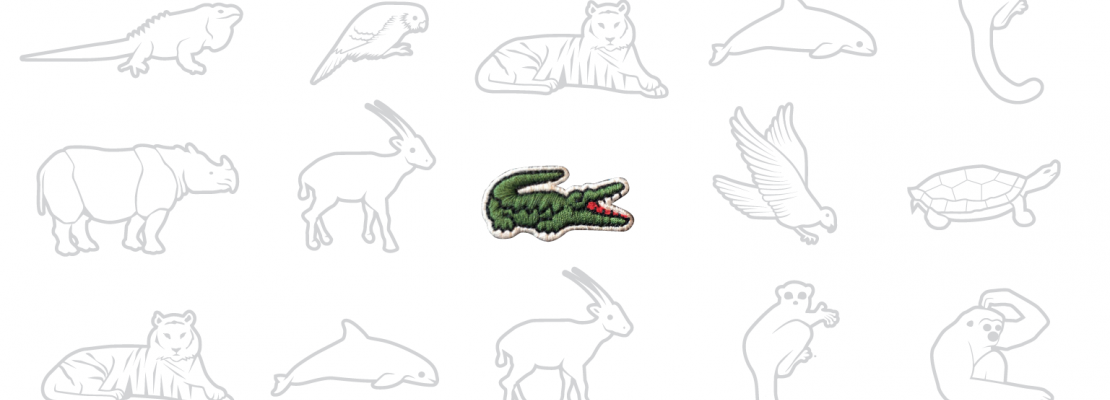
In accordance with their support of biodiversity, Lacoste launched its Save Our Species (SOS) campaign in 2018. In this campaign, the brand switched out its iconic crocodile logo for 10 different threatened species around the world. To take it a step further, the number of polos produced “of each species represents the number remaining in the wild” (Lacoste). The SOS campaign main goal was drawing attention to the rapidly declining species in the world. This gives consumers a glimpse of what the brand stands for and what their values are.
A simple question then arises: is the SOS a smart move for Lacoste since they are tight lipped about their own sustainability efforts?
Lacoste Efforts Towards Sustainability
Although Lacoste is very forward about its dedication to preserving biodiversity and the habitats for crocodiles and alligators across the world, they have been accused of using dangerous chemicals in some of their clothing items that have potentially harmed their customers, as stated in a report by Greenpeace in 2011. After the scandal Lacoste told Greenpeace it took the matter seriously and would investigate it. What happened since then?
In 2019 in the Corporate Information Transparency Index (CITI), which evaluates the environmental management of companies’ supply chains in China, Lacoste scored 6/100, ranking 239°. The 2019 Ethical Fashion Report ranked Lacoste with a C- for their ecologic impact of the production & supply chain industries and the risks linked to working conditions, such as child labour and health management. Rank a Brand provided Lacoste with an ‘E’ (the lowest possible score a brand can receive): “Lacoste has earned it by communicating nothing concrete about the policies for environment, carbon emissions or labor conditions in low-wage countries. For us consumers, it is unclear whether Lacoste is committed to sustainability or not”(Rank a Brand, 2017).
Lacoste has tried to reverse this pitiful image when launching the Save Our Species campaign which won the French Grand Prix Stratégies du Luxe 2018, and had a resonance all over the world. The campaign was launched in collaboration with BETC agency, acknowledged to be a pioneer in improving CSR for companies, with the results it had a great impact on the press and clearly changed the media perception of Lacoste.
On the International Day for Biological Diversity in 2019, Lacoste launched a new line of limited edition polo-shirts featuring ten threatened species confirming their commitment to transform awareness of threatened species and their collaboration with IUCN Save Our Species as new funding will be channeled into projects focusing on the conservation of the species highlighted through the collaboration.
This actually completely blurred all the other infamous accusations on the company’s responsibilities on People and Planet. The campaign was seen as a great move sustainability-wise as it changed the brand image and its own identity with the change of the logo. The strategy has been defined as “ethical rebranding” and the campaign has been furtherly endorsed when for every limited-collection £140 top Lacoste sold, it donated the sales to the International Union for Conservation of Nature.
On the whole, the SOS campaign gave a better perception of Lacoste in terms of sustainability . This helped the brand’s positioning as its “luxury” image had been somehow deteriorated as the shirts were at some point subject to massive imitations, and the preppy image had also lost its appeal in the beginning of 2000’s. But at what price?
Since you’re here…
Our mission is to monitor Advertising to make certain that companies obey ethical standards of trustworthiness and transparency while communicating their commitment to addressing the great challenges of the New Millennium. From climate emergency to social inequality through all the issues included in the Sustainable Development Goals Agenda, we monitor the consistency of their statements, if they are ‘walking the talk’. With rising misinformation and commercial ownership, independent information is more and more rare. We think citizens deserve access to accurate analyses with integrity at their heart, so we can all make critical decisions about our lives, health and enviroment – based on fact, not fiction.
Our editorial independence means our content agenda is set only to voice our opinions, supported by in-depth research, free from any political and commercial bias, never influenced by interested owners or shareholders (which we don’t have). It means we can stand up to mainstream and give a voice to those less heard. We hope this will motivate you to make a contribution in support of our open, independent journalism. Every reader contribution, however big or small, is so valuable. Support BeIntelligent from as little as €5 – and it only takes a minute.Thank you.
I have been dealing with communication for 20 years, I have worked in marketing for large international and Italian companies and I know the mechanisms of advertising persuasion. I decided to invest my know-how and my skills to use the available resources of companies (budgets but also human capital) in positive transformation. Because to students from all over the world I teach at Purpose Brands in Catholic University I wish to give more and more examples of virtuous companies that have invested for the future, of everyone (and there are already many!). Because if we watch, without acting, without taking responsibility, we have no excuse. View all posts by elena grinta
One of the most important key components of a brand’s success is communication. Most of the times, even though sustainable and ethical practices are in place in a company, they fail to communicate their responsibility. And while it’s great that companies don’t act in a “good way” just for publicity, it’s also important to involve the community around them and let them know of everything they are putting into practice. Building a strong communication channel not only gives brands the chance to put out there their sustainable actions, but also gives them the opportunity to create a stronger bond with community, which feels taken into account when its informed about “internal” brand policies and practices. Is there a connection between the rise of interest towards branded content and the creation of more & more purpose driven campaigns? What’s the line between the brand and its purpose? Glass box brands should bring solutions to issues they bring to light
Purposeful Communication: what is it?
10 October 2018
One of the most important key components of a brand’s success is communication. Most of the time, even if sustainable and ethical practices are in place, companies fail to communicate their responsibility. And while it’s great that companies don’t act in a “good way” just for publicity, it’s also important to involve the community around them and let them know about everything they are putting into practice. Building a strong communication channel not only gives brands the chance to release their sustainable actions, but it also gives them the opportunity to create a stronger bond with community members, who then feel heard because they are informed about “internal” brand policies and practices.
Is There a Connection Between the Rise of Interest Towards Branded Content and the Creation of More and More Purpose-driven Campaigns?
I was asked to write a paper for the BCMA book celebrating 10 years of the association’s activity, so I started reviewing the Grand Prix winners of the BC&E category at Cannes Lions ever since its inception:
Winner of the 2012 Grand Prix was US-based Mexican restaurant chain, Chipotle for its “Cultivate” campaign; Intel and Pereira & O’Dell won for the “The Beauty Inside” in 2013, (No Grand Prix awarded on 2014 and 2015). In 2016 “The Displaced” for New York Timer VR, by Vrse; 2017 was “Beyond Money” by Santander and this year, KPN’s Evert_45 campaigns were awarded the Entertainment Grand Prix.
In all of these examples, brands put their environmental and/or social commitment at the center of their marketing strategy. They transformed their own “brand structure” into a “purpose” to build a deeper connection with consumers.
Surely, storytelling and purposing have a lot to share, but there is a potential downside for brands linking themselves to important social issues using storytelling to persuade their consumers.
Look at what happened to Chipotle. The company always claimed to be “the healthy alternative to fast food.” Chipotle’s problem started back in July in Washington state, when 5 people got sick with E. coli after eating Chipotle, but it only made news on the local paper. Chipotle became a national story when bad tomatoes in Minnesota stores infected 81 people with salmonella in August. About the same time in California, Chipotle told the local health department that 17 employees were sick with norovirus, a nasty intestinal bug: 230 people caught the virus. At this point, the problem, though serious, appeared to be isolated, and Chipotle’s executives thought they had it under control. That changed when a separate E. coli outbreak crossed state lines in late October. The company closed all 43 restaurants in 2 States. In total about 500 people got sick from eating Chipotle in the second half of 2015.
What’s the Line Between the Brand and Its Purpose?
“With an increasing number of businesses making it a focus of their marketing, consumers are understandably getting a little skeptical – particularly when there is not a clear line between the brand and its purpose.” -Charlotte Rogers, Marketingweek
I think it’s an important role that companies are playing in bringing social issues to the public’s attention, but at the same time I fear it may just be a trend in marketing rather than a real inside transformation for the company: sometimes it’s hard for consumers to trust brands embracing “causes” without demonstrating they “really believe” in what they say they stand for. And they are right. Unfortunately there are a lot of “purpose driven campaigns” created for companies that aren’t actually facing a radical change.
Glass Box Brands Should Bring Solutions to Issues They Bring to Light
Back when a business was a black box, the brand was whatever the marketing team painted on the outside. “Now that a business is a glass box, the brand is everything. Every person. Every process. Every value. Everything that happens, ever.” – David Mattin Trendwatching CEO.
Even if it is admirable that companies want to bring thoughtful issues to the public’s attention, it’s not enough: they should also bring and implement solutions. Dentsu Aegis found that “there is a clear set of preferred causes that businesses adopt: purposeful campaigns around the topics of Environment, Diversity, Health and Social welfare make up 70% of all winning entries.”
Transparency is key to success, but sometimes it is not enough to “put it out there.” Mindful communication with a purpose behind it is the ultimate goal. Reaching the right audience with the right message should be every company’s objective, and while it’s not always easy, following the brand core values and being true to themselves as well to consumers is the first step to get there.
Interested in the conversation? Join our community!
Since you’re here… Our mission is to monitor Advertising to make certain that companies obey ethical standards of trustworthiness and transparency while communicating their commitment to addressing the great challenges of the New Millennium. From climate emergency to social inequality through all the issues included in the Sustainable Development Goals Agenda, we monitor the consistency of their statements, if they are ‘walking the talk’. With rising misinformation and commercial ownership, independent information is more and more rare. We think citizens deserve access to accurate analyses with integrity at their heart, so we can all make critical decisions about our lives, health and enviroment – based on fact, not fiction. Our editorial independence means our content agenda is set only to voice our opinions, supported by in-depth research, free from any political and commercial bias, never influenced by interested owners or shareholders (which we don’t have). It means we can stand up to mainstream and give a voice to those less heard. We hope this will motivate you to make a contribution in support of our open, independent journalism. Every reader contribution, however big or small, is so valuable. Support BeIntelligent from as little as €5 – and it only takes a minute.Thank you.
I have been dealing with communication for 20 years, I have worked in marketing for large international and Italian companies and I know the mechanisms of advertising persuasion. I decided to invest my know-how and my skills to use the available resources of companies (budgets but also human capital) in positive transformation. Because to students from all over the world I teach at Purpose Brands in Catholic University I wish to give more and more examples of virtuous companies that have invested for the future, of everyone (and there are already many!). Because if we watch, without acting, without taking responsibility, we have no excuse. View all posts by elena grinta
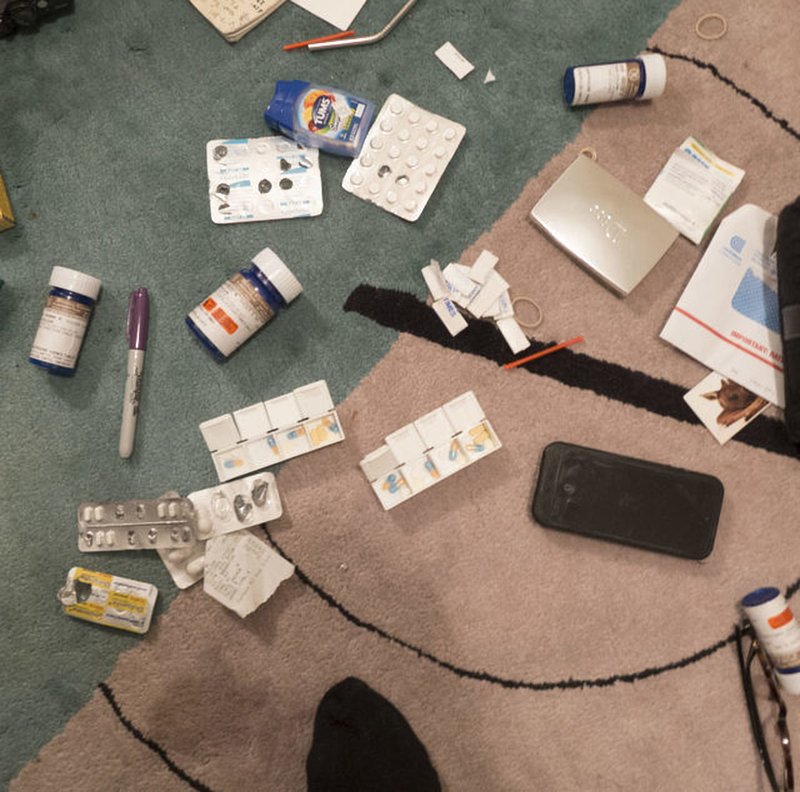 Philanthropy, CSR, and purposeful communication have at least one goal in common: to do well by consumers who, directly or indirectly, are being addressed. But is it always so? Through the analysis of the communication that the companies Purdue Pharma, British Petroleum have adopted, we will try to understand whether there is a virtual limit beyond which not only the “purposeful” campaigns (guided by a “high” purpose’) are no longer effective for companies that adopt them but whether they are also potentially harmful to consumers.
In 2018 the Guggenheim Museum in Manhattan, New York, was at the center of a protest against its financing by the Sackler family, the head of Purdue Pharma, which markets OxyContin. A few days afterwards, Columbia University and the University of Washington, which have both received donations from the Sacklers in the past, announced that they will no longer accept grants from the family.
What is behind this protest?
The American photographer Nan Goldin, who claimed to have become addicted to OxyContin after the pills were prescribed, lead the protest along with other artists and activists against the campaigns of cultural philanthropy, claiming that accepting funding from owners from similar companies makes cultural institutions accomplices of their damage.
The eight members of the Sackler family were accused of intentionally minimizing the dangers of taking OxyContin painkillers (seemingly more potent than heroin or morphine) and deceiving doctors into prescribing excessive doses for many patients who would never have had to take the drug. OxyContin is now considered co-responsible for the opioid crisis that is killing more than 100 people a day in America and has generated millions of addicts.
In September 2019, to freeze the lawsuits against them, the drug maker filed for Chapter 11 bankruptcy.
Opioids are not the only epidemic devastating America, despite the U.S. being one of the highest economically performing countries today. “By most accounts, Americans should be happier now than ever,” writes Jean M. Twenge, co-author Of the Report ‘World Happiness,’ published March 20, 2019, which monitors the level of happiness of the citizens of 156 countries in the world. “The violent crime rate is low, as is the unemployment rate. Income per capita has steadily grown over the last few decades. ” Yet Americans are sad.
Jeffrey D. Sachs, director of the Sustainable Development Solutions Network (SDSN), Director of the Center for Sustainable Development at Columbia University, and co-author of the report, explained in these terms the phenomenon:
My argument is that the U.S. is suffering an epidemic of addictions, and that these addictions are leaving a rising Portion of American society unhappy and a rising number clinically lonely.
The fact that the Guggenheim Museum and other cultural institutions have accepted the subsidies of Purdue Pharma under the guise of a philanthropic action with the twofold aim of “bringing the general public closer” and diverting attention from their responsibilities, with an effect of “reputation laundering “[3] , is cause for concern.
Philanthropy, CSR, and purposeful communication have at least one goal in common: to do well by consumers who, directly or indirectly, are being addressed. But is it always so? Through the analysis of the communication that the companies Purdue Pharma, British Petroleum have adopted, we will try to understand whether there is a virtual limit beyond which not only the “purposeful” campaigns (guided by a “high” purpose’) are no longer effective for companies that adopt them but whether they are also potentially harmful to consumers.
In 2018 the Guggenheim Museum in Manhattan, New York, was at the center of a protest against its financing by the Sackler family, the head of Purdue Pharma, which markets OxyContin. A few days afterwards, Columbia University and the University of Washington, which have both received donations from the Sacklers in the past, announced that they will no longer accept grants from the family.
What is behind this protest?
The American photographer Nan Goldin, who claimed to have become addicted to OxyContin after the pills were prescribed, lead the protest along with other artists and activists against the campaigns of cultural philanthropy, claiming that accepting funding from owners from similar companies makes cultural institutions accomplices of their damage.
The eight members of the Sackler family were accused of intentionally minimizing the dangers of taking OxyContin painkillers (seemingly more potent than heroin or morphine) and deceiving doctors into prescribing excessive doses for many patients who would never have had to take the drug. OxyContin is now considered co-responsible for the opioid crisis that is killing more than 100 people a day in America and has generated millions of addicts.
In September 2019, to freeze the lawsuits against them, the drug maker filed for Chapter 11 bankruptcy.
Opioids are not the only epidemic devastating America, despite the U.S. being one of the highest economically performing countries today. “By most accounts, Americans should be happier now than ever,” writes Jean M. Twenge, co-author Of the Report ‘World Happiness,’ published March 20, 2019, which monitors the level of happiness of the citizens of 156 countries in the world. “The violent crime rate is low, as is the unemployment rate. Income per capita has steadily grown over the last few decades. ” Yet Americans are sad.
Jeffrey D. Sachs, director of the Sustainable Development Solutions Network (SDSN), Director of the Center for Sustainable Development at Columbia University, and co-author of the report, explained in these terms the phenomenon:
My argument is that the U.S. is suffering an epidemic of addictions, and that these addictions are leaving a rising Portion of American society unhappy and a rising number clinically lonely.
The fact that the Guggenheim Museum and other cultural institutions have accepted the subsidies of Purdue Pharma under the guise of a philanthropic action with the twofold aim of “bringing the general public closer” and diverting attention from their responsibilities, with an effect of “reputation laundering “[3] , is cause for concern.


 Fast Fashion VS. Conscious Consumerism April 14, 2020 Fast fashion has captivated consumers for over 20 years. The…
 Communication For Good. 2019 Italy Trends June 9, 2019 The research conducted by The Easy Way and EG Media…
 Why Has Responsible Consumption Not Exploded Yet,… January 15, 2020 Despite the positive intentions regarding the consumption of green, or…
 Gender Inequality Storytelling Through Photography… March 5, 2019 Stefano Stranges is a photographer from Turin who was born…
 NOW. Or The Time Of Opportunities March 2, 2020 I will not go into the discourse of opportunities from…
 different ways to view #toxicmasculinity January 18, 2019 A campaign to revitalize an ancient payoff Bad PR is…
 There’s no room for gender inequality at IKEA November 19, 2018 When we first hear of IKEA the main image that…
 Fast Fashion Greenwashing April 27, 2020 Eco-friendly. Organic. Natural. Green. These terms are often used to…
 7 Persuasive Strategies Branded Entertainment Uses… February 18, 2019 long term consumers audience clear goals transparency storytelling measurement expertise
 13 Solutions to Create Truthful Advertising and… October 22, 2019 It was estimated that advertising spending worldwide would surpass $560…
 How to Become a Brand Activist. October 10, 2019 Creating a movement through a brand is possible only when…
 IKEA Between Sustainability and Green Surveys January 8, 2020 IKEA continues its commitment to the defense of the weakest…
 Purposeful Communication: what is it? October 10, 2018 One of the most important key components of a brand’s…
 Culture Jamming or Brand Jam? Lacoste Animals’ Logos… October 1, 2019 Since the boom of textile production in France in the…
 what is Cause Related Marketing 2.0? April 25, 2019 When a company has difficulty in finding its ‘good side’…
 It was estimated that advertising spending worldwide would surpass $560 billion in U.S. currency in 2019, representing a growth of roughly 4% compared with the previous year. The actual amount of money spent sits around $592 billion, exceeding the estimate by over $30 billion, according to Dentsu Aegis Network’s January 2020 Forecast, the actual figures exceeded the estimate.
“Purposeful communication” is from a 2017 marketing trend: that year almost half of the Cannes Lions Festival awards were handed out to purpose-driven campaigns as opposed to 29% in the previous four years (source: Dentsu Aegis). This trend was confirmed in 2018 (15 of 27). And 2019 was a BOOM: purpose was at the core in Talks and Works, often as an empty buzzword and sometimes as an actual driver of change.
For companies, communicating their values through ‘purposeful’ campaigns is a great opportunity but also a great challenge in a climate of distrust, where 6 out of 10 consumers do not believe in a brand until they have seen concrete proof that the company has kept its promises.
With the UN General Assembly (UNGA) focusing on the sustainable development goals (SDGs) for the first time since the launch of Agenda 2030 in 2015, sustainable development is at the core of many corporate declarations, including the financial sector. 130 international banks with assets of $47 billion have signed the Principles for Responsible Banking document, a Magna Carta to face social and environmental issues.
The road, however, could still be largely covered, according to research by environmental associations. The Rainforest Action Network has shown that 33 banking giants – starting with leading U.S. groups – have financed 1800 fossil fuel companies in the last year with $654 billion, a figure that is growing and equal to more than 2/3 of the total capital expenditure of the sector. Amazon Watch has denounced multimillion-dollar credits from some of the same banks’ signatories to the Principles, granted to agro-food giants that take advantage of the Amazon’s degradation.
According to Oxfam, “There is a real risk that for many companies the [SDGs] end up being not much more than another communication tool.” In other words, we should be aware that using issues for good in advertising doesn’t mean using issues to do good.
This is usually called “green washing” and can have two meanings, decoupling and attention deflection:
The first (decoupling) refers to the doubling that occurs to satisfy the needs of the stakeholders without actually creating organizational changes. The second sees the deviation of attention from nonappreciable performances in terms of sustainability through practices such as self-certifications and selective discrimination that highlight indicators with positive values about the environmental impact (Suddaby and Greenwood, 2005; Marquis and Toffel,2012).
It was estimated that advertising spending worldwide would surpass $560 billion in U.S. currency in 2019, representing a growth of roughly 4% compared with the previous year. The actual amount of money spent sits around $592 billion, exceeding the estimate by over $30 billion, according to Dentsu Aegis Network’s January 2020 Forecast, the actual figures exceeded the estimate.
“Purposeful communication” is from a 2017 marketing trend: that year almost half of the Cannes Lions Festival awards were handed out to purpose-driven campaigns as opposed to 29% in the previous four years (source: Dentsu Aegis). This trend was confirmed in 2018 (15 of 27). And 2019 was a BOOM: purpose was at the core in Talks and Works, often as an empty buzzword and sometimes as an actual driver of change.
For companies, communicating their values through ‘purposeful’ campaigns is a great opportunity but also a great challenge in a climate of distrust, where 6 out of 10 consumers do not believe in a brand until they have seen concrete proof that the company has kept its promises.
With the UN General Assembly (UNGA) focusing on the sustainable development goals (SDGs) for the first time since the launch of Agenda 2030 in 2015, sustainable development is at the core of many corporate declarations, including the financial sector. 130 international banks with assets of $47 billion have signed the Principles for Responsible Banking document, a Magna Carta to face social and environmental issues.
The road, however, could still be largely covered, according to research by environmental associations. The Rainforest Action Network has shown that 33 banking giants – starting with leading U.S. groups – have financed 1800 fossil fuel companies in the last year with $654 billion, a figure that is growing and equal to more than 2/3 of the total capital expenditure of the sector. Amazon Watch has denounced multimillion-dollar credits from some of the same banks’ signatories to the Principles, granted to agro-food giants that take advantage of the Amazon’s degradation.
According to Oxfam, “There is a real risk that for many companies the [SDGs] end up being not much more than another communication tool.” In other words, we should be aware that using issues for good in advertising doesn’t mean using issues to do good.
This is usually called “green washing” and can have two meanings, decoupling and attention deflection:
The first (decoupling) refers to the doubling that occurs to satisfy the needs of the stakeholders without actually creating organizational changes. The second sees the deviation of attention from nonappreciable performances in terms of sustainability through practices such as self-certifications and selective discrimination that highlight indicators with positive values about the environmental impact (Suddaby and Greenwood, 2005; Marquis and Toffel,2012).
 Danone, the French food giant, has decided to undergo the B Corp certification, which is a real challange, considering that Danone is listed on the stock exchange and that failure to achieve this goal could have negative repercussions on the company, adding only “paperwork and unnecessary restrictions” [1]. Instead, the CEO Emmanuel Faber has announced the goal to reach the necessary parameters for the certification and to become a B Corp by 2030. Danone North America – the eighth (and largest) branch of Danone – has already become a B Corporation certified. Danone North America is the company’s 8th subsidiary to become a certified B Corporation. Despite what critics claim about the certification, B Corp’s status establishes integrity and builds consumer goodwill for brands looking to connect with growing consumers.
But the risks are worth taking, Faber said, because “certification has received great support from employees and has won over skeptical investors” [2]. It has also instilled confidence in the banks, with which Danone has renegotiated at a lower loan of two billion euros [3].
Faber fully embodies the role of the corporate activist when he declares that he wants to be a promoter of a “food revolution”[4] and urges the industry to join a “movement” that aims for “the adoption of healthier products and of sustainable eating habits “[5] .
“Food sovereignty for us means giving up control and restoring power to people, and how credible would we be to tell our consumers if we didn’t start with our employees?”[6] Faber asks.
To be credible as a ‘brand activist,’ all stakeholders, starting with employees, should embody the values of the company and its ideology. “The purpose can become marginal if you don’t work at it. Therefore, it is essential to give people the responsibility to make the brand responsible for its goals and philosophy.”[7]
The new era of ‘people powered brands’ is no longer just a consumer at the center program but a paradigmatic transformation from Business-to-Consumer to Human-to-Human (from B2C to H2H).
The ‘legal person’ can become a ‘natural person’ through the hundreds of faces, personalities, and dreams that constitute the ‘workforce’ of every business reality. Bryan Kramer, who first used the expression H2H, said, “Businesses do not have emotion. People do. People want to be part of something bigger than themselves. People want to feel something. People want to be included.” [8] It is not just a ‘social media’ strategy [9] in which it is sufficient to show the team behind the product and the magic is done. No. All human resources must be involved and treated as resources and humans. One of the biggest mistakes you can make is investing huge budgets in campaigns to activate your customers and not invest effectively in internal communication, making little effort to tell your story and your progress within the company. Showing the social impact that the company is having can be highly effective when it is measurable and closely linked to the company’s operations.
We hope that Danone, once it has obtained the certification, will promote a 180° sustainable revolution, setting the pace for other players, perhaps starting with the plastic issue. Maybe then the company will think twice about launching “innovative products” like Eletrolytes Evian for millennials [10] or Mickey Mouse water for children. The oceans will be thankful.
[1] https://www.forbes.com/sites/simonmainwaring/2018/09/28/business-building-lessons-from-the-largest-b-corp-in-the-world/#70e5f19379f4
[2]
Danone, the French food giant, has decided to undergo the B Corp certification, which is a real challange, considering that Danone is listed on the stock exchange and that failure to achieve this goal could have negative repercussions on the company, adding only “paperwork and unnecessary restrictions” [1]. Instead, the CEO Emmanuel Faber has announced the goal to reach the necessary parameters for the certification and to become a B Corp by 2030. Danone North America – the eighth (and largest) branch of Danone – has already become a B Corporation certified. Danone North America is the company’s 8th subsidiary to become a certified B Corporation. Despite what critics claim about the certification, B Corp’s status establishes integrity and builds consumer goodwill for brands looking to connect with growing consumers.
But the risks are worth taking, Faber said, because “certification has received great support from employees and has won over skeptical investors” [2]. It has also instilled confidence in the banks, with which Danone has renegotiated at a lower loan of two billion euros [3].
Faber fully embodies the role of the corporate activist when he declares that he wants to be a promoter of a “food revolution”[4] and urges the industry to join a “movement” that aims for “the adoption of healthier products and of sustainable eating habits “[5] .
“Food sovereignty for us means giving up control and restoring power to people, and how credible would we be to tell our consumers if we didn’t start with our employees?”[6] Faber asks.
To be credible as a ‘brand activist,’ all stakeholders, starting with employees, should embody the values of the company and its ideology. “The purpose can become marginal if you don’t work at it. Therefore, it is essential to give people the responsibility to make the brand responsible for its goals and philosophy.”[7]
The new era of ‘people powered brands’ is no longer just a consumer at the center program but a paradigmatic transformation from Business-to-Consumer to Human-to-Human (from B2C to H2H).
The ‘legal person’ can become a ‘natural person’ through the hundreds of faces, personalities, and dreams that constitute the ‘workforce’ of every business reality. Bryan Kramer, who first used the expression H2H, said, “Businesses do not have emotion. People do. People want to be part of something bigger than themselves. People want to feel something. People want to be included.” [8] It is not just a ‘social media’ strategy [9] in which it is sufficient to show the team behind the product and the magic is done. No. All human resources must be involved and treated as resources and humans. One of the biggest mistakes you can make is investing huge budgets in campaigns to activate your customers and not invest effectively in internal communication, making little effort to tell your story and your progress within the company. Showing the social impact that the company is having can be highly effective when it is measurable and closely linked to the company’s operations.
We hope that Danone, once it has obtained the certification, will promote a 180° sustainable revolution, setting the pace for other players, perhaps starting with the plastic issue. Maybe then the company will think twice about launching “innovative products” like Eletrolytes Evian for millennials [10] or Mickey Mouse water for children. The oceans will be thankful.
[1] https://www.forbes.com/sites/simonmainwaring/2018/09/28/business-building-lessons-from-the-largest-b-corp-in-the-world/#70e5f19379f4
[2] 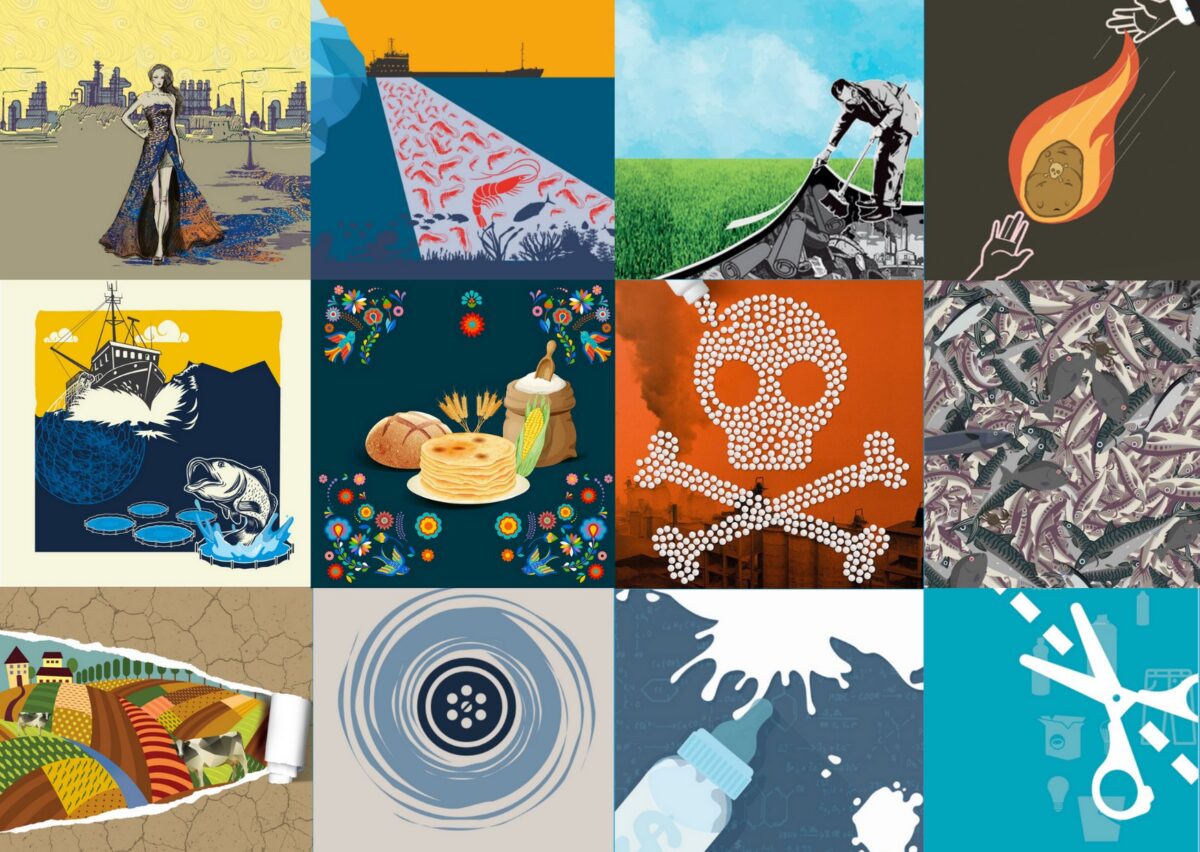 On March 4 we mark the World Obesity Day. The idea is to encourage people around the world to maintain a healthy weight. As we can read in the Unicef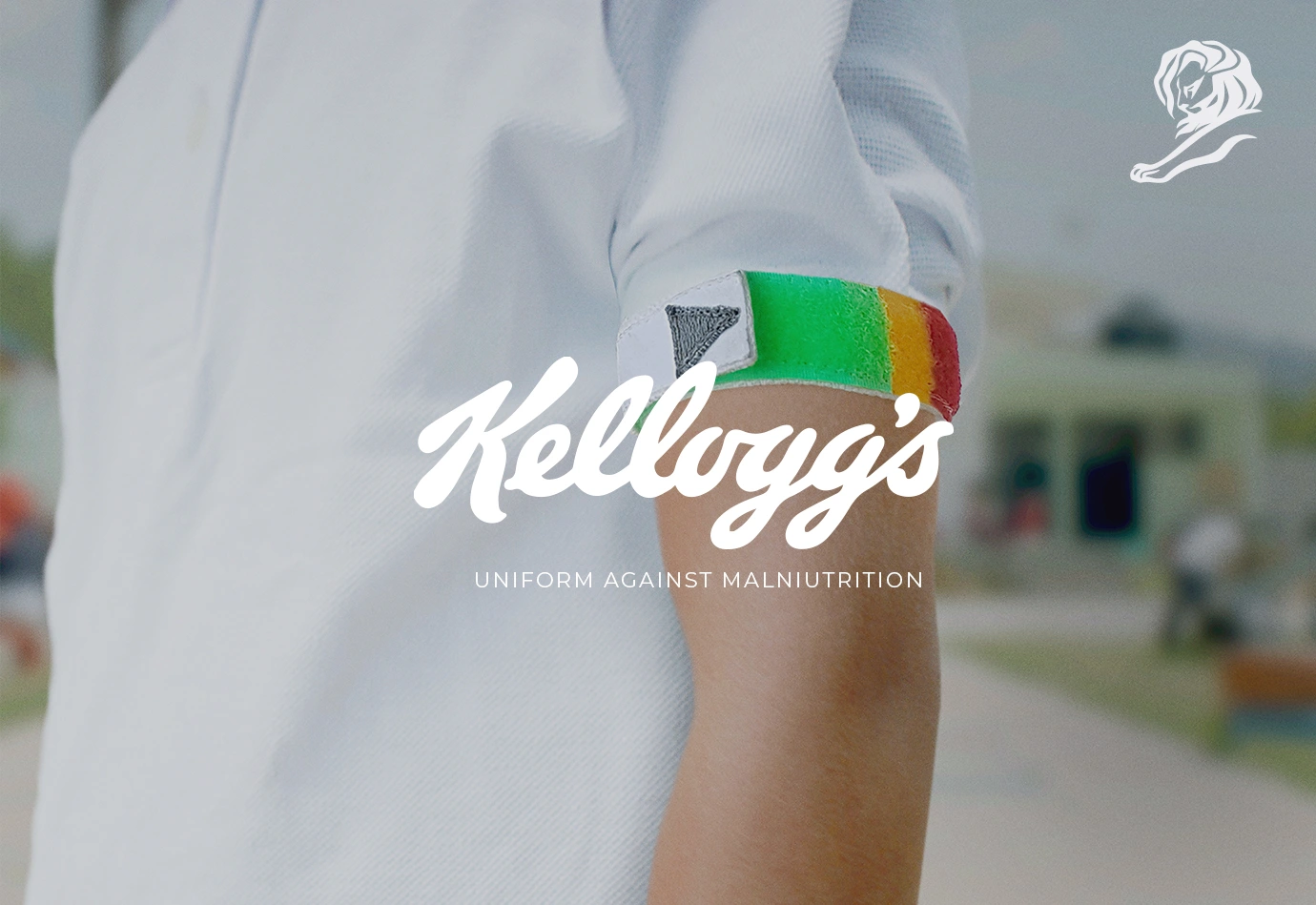
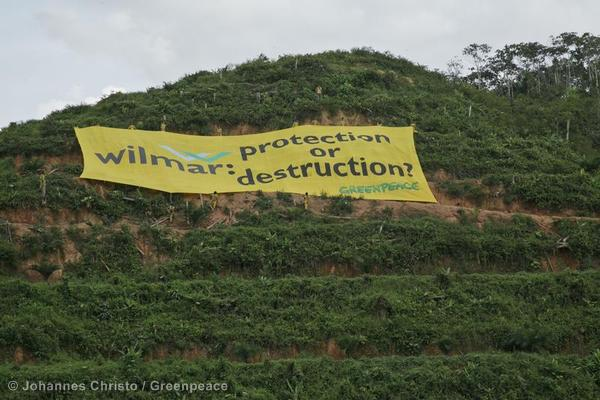
 In 2015, the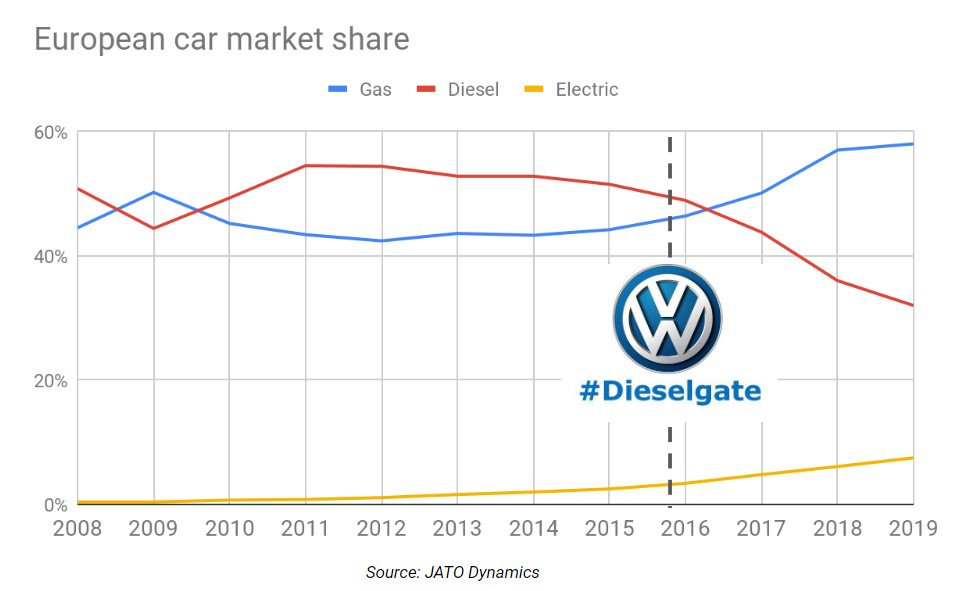
 When a company has difficulty in finding its ‘good side’ instead of purposeful communication, one of many solutions can be “cause related marketing 2.0” (CRM). What exactly is involved in a “linear CRM”? The cause supported by the company is not necessarily a charity’s––it has to do with marketing.
Take for example hackvertising, a strategy of multi-award-winning Chief Marketing Officer Fernando Machado, who launched some of the most interesting campaigns in the last few years, including Dove’s Real Beauty sketches and Burger King and its “net neutrality” prank:
Burger King played the role of “facilitator” on a subject of public interest (the neutrality of the web), creating awareness among a range of citizens not used to taking part in such conversations and raising public attention of an issue that may not have received much attention otherwise. With this project, Burger King underlines that brands, thanks to their share of voice, their ability to be heard, can direct the gaze of citizens towards urgent current issues playing a role well beyond the pure player within their market.
For another example, look at the new Barbie’s strategy as described by Alaina Crystal from AMV BBDO. Crystal digs deep into the reason why Ruth Hander created Barbie with such a contemporary purpose:
“The little girl could be anything she wanted to be.”
Starting from this, in 2016 Mattel transformed Barbie’s shapes in response to the scorching criticism of an ideal body shape that is unattainable for most girls, communicated a positive message of girl empowerment with Imagine the Dossibilities, and in 2017 their “Dads Who Play with Barbie” campaign aimed to broaden their audience and broke prejudices against men partaking in feminine activities. However, while Mattel has taken positive steps in its communication, it has not communicated a responsible plan for the company’s suppliers to fight against Chinese factory workers’ poor labor conditions and toxic products.
Although I appreciate Mattel and Burger King efforts towards a more conscious consumer, all of this is not without risks. There is a potential danger that the brands’ commercial aims (selling more burgers for example) could end up simplifying the very issues that they are supporting.
And so one wonders how Mattel is taking responsibility for suppliers to combat the
When a company has difficulty in finding its ‘good side’ instead of purposeful communication, one of many solutions can be “cause related marketing 2.0” (CRM). What exactly is involved in a “linear CRM”? The cause supported by the company is not necessarily a charity’s––it has to do with marketing.
Take for example hackvertising, a strategy of multi-award-winning Chief Marketing Officer Fernando Machado, who launched some of the most interesting campaigns in the last few years, including Dove’s Real Beauty sketches and Burger King and its “net neutrality” prank:
Burger King played the role of “facilitator” on a subject of public interest (the neutrality of the web), creating awareness among a range of citizens not used to taking part in such conversations and raising public attention of an issue that may not have received much attention otherwise. With this project, Burger King underlines that brands, thanks to their share of voice, their ability to be heard, can direct the gaze of citizens towards urgent current issues playing a role well beyond the pure player within their market.
For another example, look at the new Barbie’s strategy as described by Alaina Crystal from AMV BBDO. Crystal digs deep into the reason why Ruth Hander created Barbie with such a contemporary purpose:
“The little girl could be anything she wanted to be.”
Starting from this, in 2016 Mattel transformed Barbie’s shapes in response to the scorching criticism of an ideal body shape that is unattainable for most girls, communicated a positive message of girl empowerment with Imagine the Dossibilities, and in 2017 their “Dads Who Play with Barbie” campaign aimed to broaden their audience and broke prejudices against men partaking in feminine activities. However, while Mattel has taken positive steps in its communication, it has not communicated a responsible plan for the company’s suppliers to fight against Chinese factory workers’ poor labor conditions and toxic products.
Although I appreciate Mattel and Burger King efforts towards a more conscious consumer, all of this is not without risks. There is a potential danger that the brands’ commercial aims (selling more burgers for example) could end up simplifying the very issues that they are supporting.
And so one wonders how Mattel is taking responsibility for suppliers to combat the  Dr. Jeffrey D. Sachs explains (in Chapter 7 of the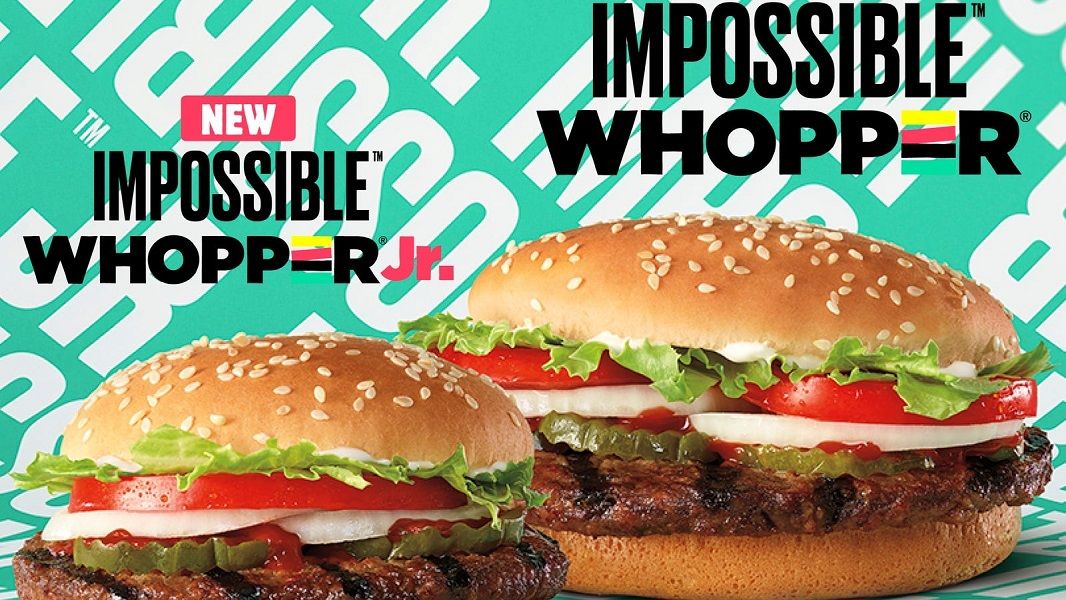
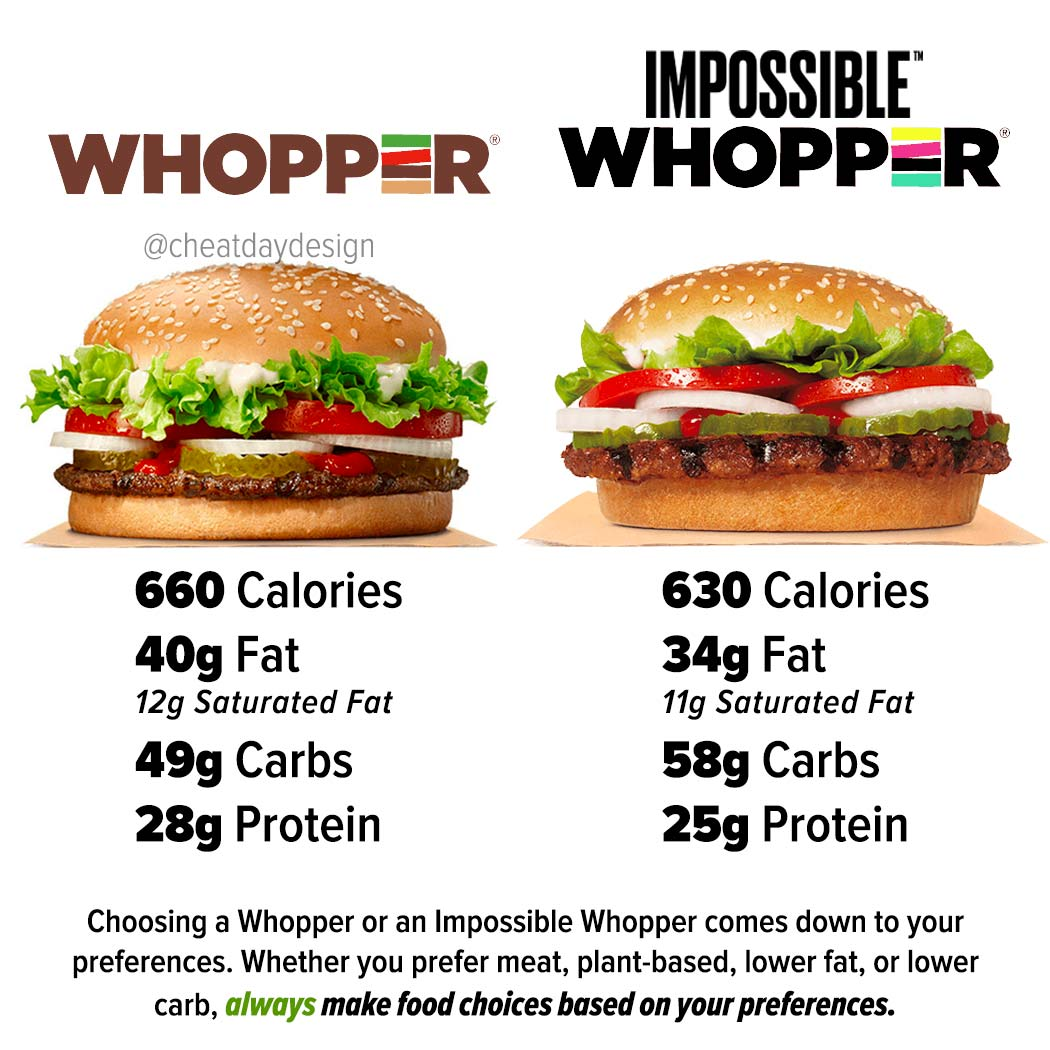
 Coffee is the second most sought-after commodity in the world, and in 2018 the industry had an export value of around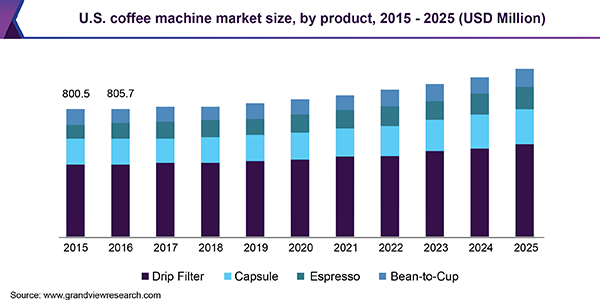
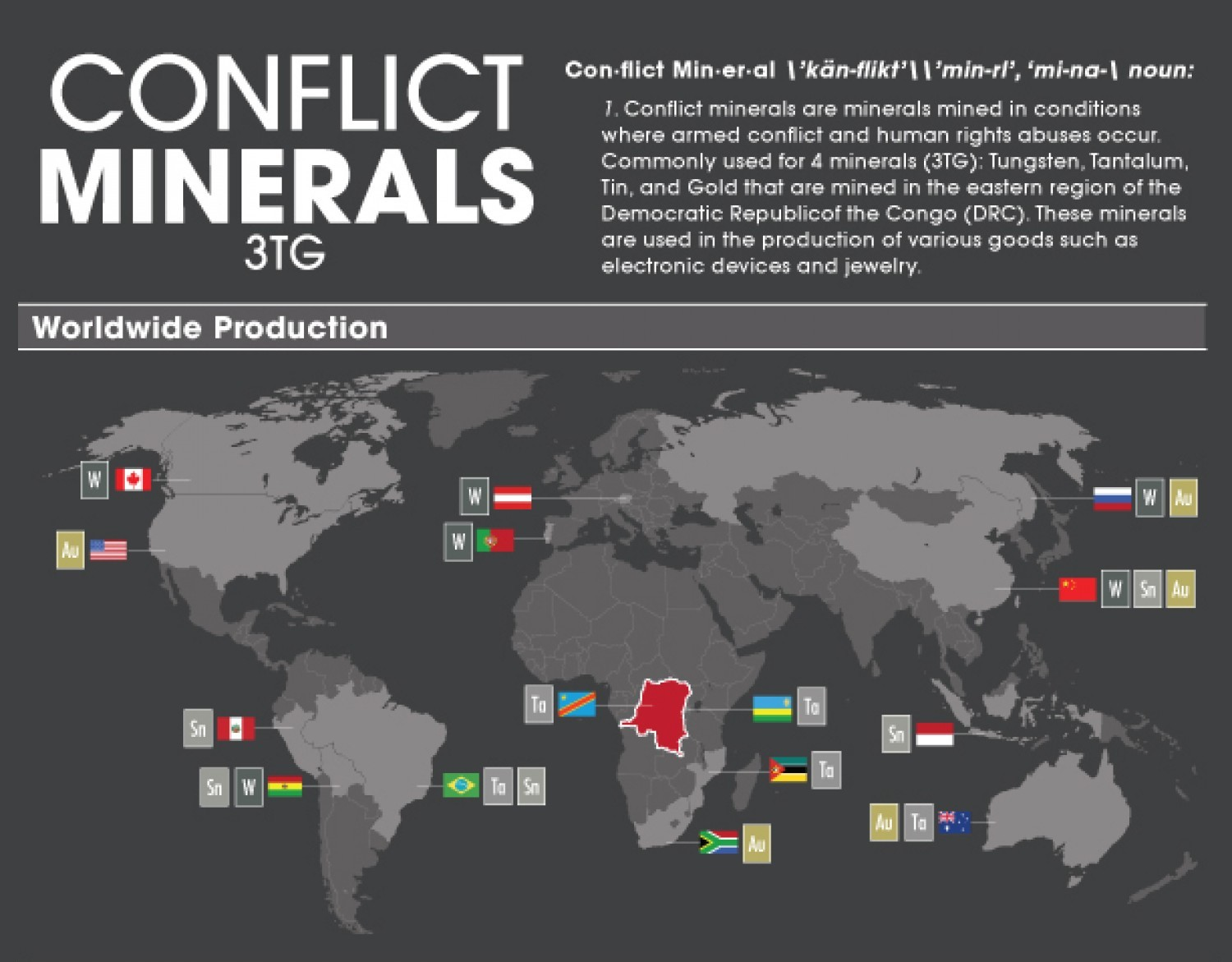
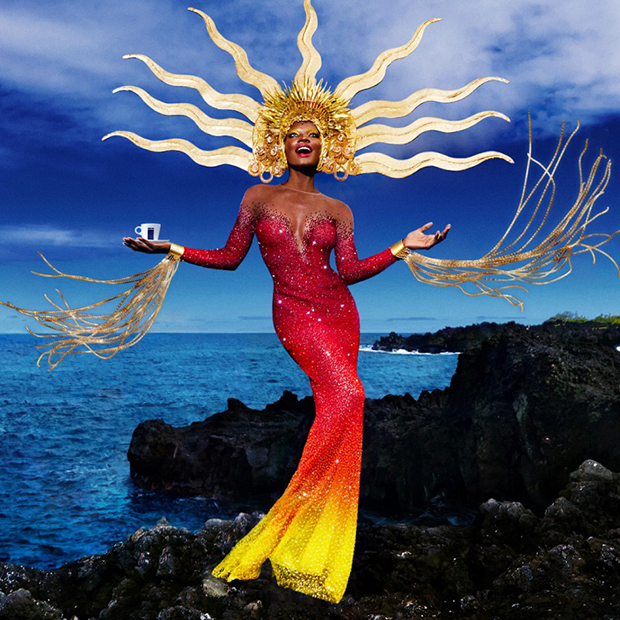

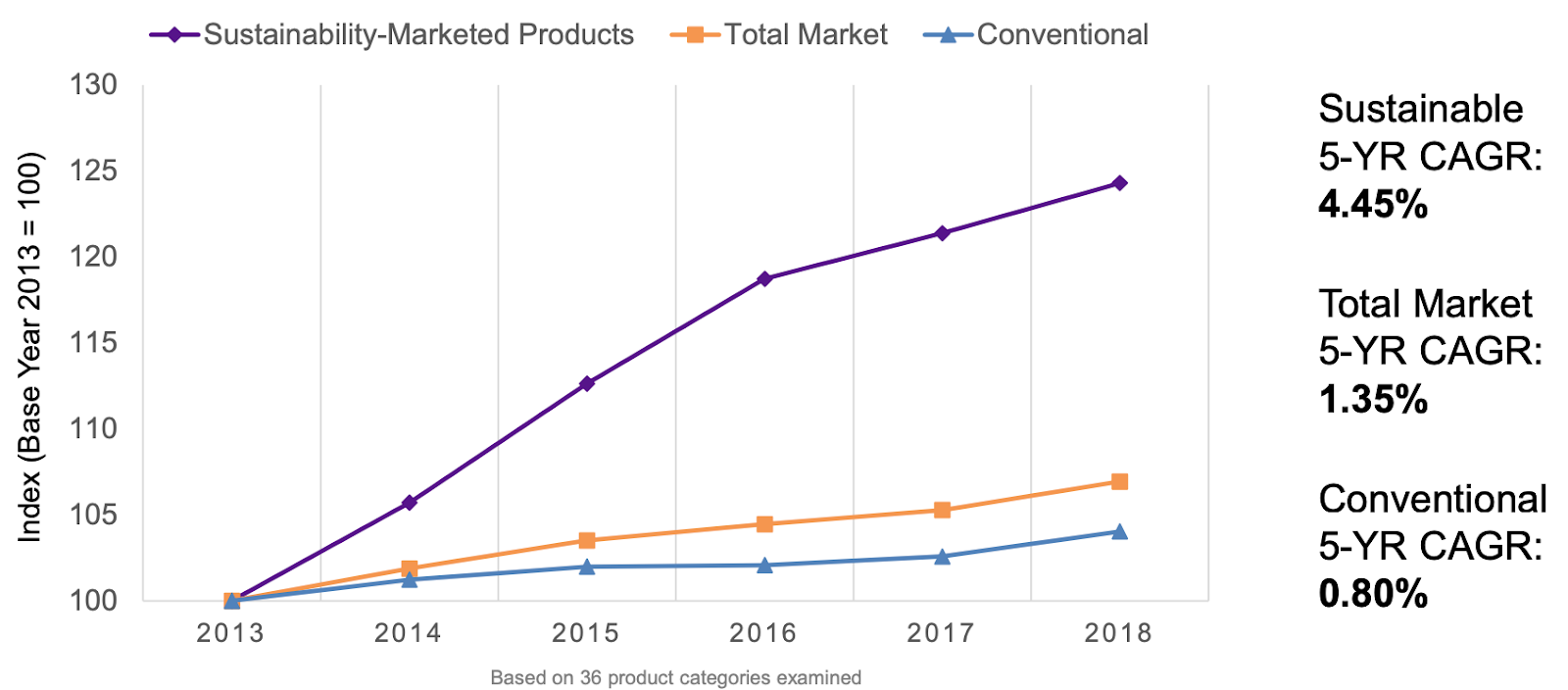

 Since the boom of textile production in France in the 17thcentury, many popular brands have arisen and are still well known today. One example of a now world-famous brand that originated in France is Lacoste. Lacoste was created in 1933 by French tennis player, René Lacoste. He initially began the brand because he was “frustrated by the limitations of the classic tennis whites” (