Category: Uncategorized

  • Advertisers Against Harmful Products


    Advertisers Against Harmful Products

    “By being production-heavy, or CO2-intensive, or non-reusable or non-recyclable, many of the products we’re paid to promote have an irrefutably negative effect on the environment. When an ad sells another one of these products, it advances its client’s profitability, but also harms the prospects of humanity. Which brings us to an extremely inconvenient truth for our industry that wasn’t raised at Cannes – in fact, I’m not sure I’ve seen it raised anywhere: that products like these shouldn’t be allowed to advertise.”

    In a recent article in the Creative Review,  Naresh Ramchandani, a leading influential creative copywriter, asked the entire industry whether it is now time to introduce a ban similar to the one on cigarettes, on products that harm our planet.

    Two years ago, when I asked myself why I was so concerned about advertising and branded content & entertainment (BC&E), I had a clear and profound epiphany: responsibility. Leading the BC&E Association in Italy made it clear to me that there are no longer limits to brand persuasion, as now their messages are perfectly crafted as contents––which is a big opportunity, but it also implies a greater ethical responsibility. That led to considering how companies could play a “better role in the society” (for example, whether they used their efforts (investments, know-how, human capital…) to “do good”).

    Purposeful communication is the way to tell a true unique story far behind the product or even the company history. There are many ways to tell a story, but not all of them are always the right fit. 


    #CreActivism is a term I borrow from Pascal Gielen meaning a form of action, a critical process of reflection on the problems that afflict contemporaneity with an active approach to improve conditions on a daily basis through creativity. It is the perfect portmanteau of #Creativity (which is a primordial act, physical birth, even before abstract speculation) and #Activism in its most contemporary and pacifist meanings.

    Applied to advertising, #CreActivism combines perfectly with a couple of other marketing trends: brand purposing and brand activism, the first concerning the corporate goal, mission, and vision, the second regarding its concrete actions.

    I consider #CreActivism to be a perfect unison between brand purpose, brand actions, and brand communication.

    And to have a better understanding of what #CreActivism is, let’s take Patagonia as an example. #CreActivism for Patagonia has meant the creation of a disruptive advertising campaign “Don’t buy this jacket,” and at the same time the implementation of substantial actions to protect the environment (for example, investments in R&D against the pollution of C8 polymer after Greenpeace criticized the company). Although the approach was risky, the message was intended to encourage people to consider the effects of their consumption practices on the environment. As a result, Patagonia managed to establish a strong community of consumers who appreciate the brand’s products but, most importantly, its values.

    Of course, it’s not always easy to find an authentic and credible “why” behind a product or company. And this can mean a potential backlash for brands that don’t walk the talk.

    Look at the textile sector––the most polluting after the oil and gas industry––and campaigns like “Conscious Exclusive” by H&M. “Conscious Exclusive” is an example of “alternative facts,” given that only 1% of recycled clothes become new H&M clothes.

    Take also the food industry, which is responsible for more than 25% of greenhouse gas emissions and a few public health scares. Take Chipotle as an example: the chain’s actions have not supported its sustainable agriculture and anti-GMO claims (remember the multi-award winning “Back to the Start” campaign in 2012?), as can be proven with the operational failures leading to E. coli pandemic and a collapse in #reputation, which is still having to be rebuilt several years after the crisis.

    In Chipotle’s case, advertising claiming sustainable agriculture was in total contradiction with the consumer perception after the E. coli outbreak.

    As we all know, brands are ultimately trying to sell more products. If they also “monetize” human values, it is a big ethical issue.

    RELATED CONTENT: Purpose Brands Are Determined to Take A Stand.

    Join our community! Subscribe our Free Newsletter
    Since you’re here… Our mission is to monitor Advertising to make certain that companies obey ethical standards of trustworthiness and transparency while communicating their commitment to addressing the great challenges of the New Millennium. From climate emergency to social inequality through all the issues included in the Sustainable Development Goals Agenda, we monitor the consistency of their statements, if they are ‘walking the talk’. With rising misinformation and commercial ownership, independent information is more and more rare. We think citizens deserve access to accurate analyses with integrity at their heart, so we can all make critical decisions about our lives, health and enviroment – based on fact, not fiction. Our editorial independence means our content agenda is set only to voice our opinions, supported by in-depth research, free from any political and commercial bias, never influenced by interested owners or shareholders (which we don’t have). It means we can stand up to mainstream and give a voice to those less heard. We hope this will motivate you to make a contribution in support of our open, independent journalism. Every reader contribution, however big or small, is so valuable. Support BeIntelligent from as little as €5 – and it only takes a minute. Thank you.

    Support BeIntellgent

    Author: elena grinta

    I have been dealing with communication for 20 years, I have worked in marketing for large international and Italian companies and I know the mechanisms of advertising persuasion. I decided to invest my know-how and my skills to use the available resources of companies (budgets but also human capital) in positive transformation. Because to students from all over the world I teach at Purpose Brands in Catholic University I wish to give more and more examples of virtuous companies that have invested for the future, of everyone (and there are already many!). Because if we watch, without acting, without taking responsibility, we have no excuse.


    Purposeful Communication
     
  • Doing Well By Doing Good. Elena Grinta in conversation with Giuseppe Morici.

    Doing Well By Doing Good. Elena Grinta in conversation with Giuseppe Morici.

      What follows is the first part of the interview  with Giuseppe Morici, Chief Executive Officer at Bolton Food, Author of Fare i manager rimanendo brave persone Istruzioni per evitare la fine del mondo (e delle aziende) Elena Grinta You published a second book after the huge success of the first one “Doing Marketing and still remaining a good person”. Why is it so important to underline that doing marketing and management is not the opposite of doing good? Giuseppe Morici Brands and companies have understood that people of this generation, or one/two generations before this one, they want to look through the glass box brands. I am personally passionate about some of these brands such as, for example, Patagonia, which is becoming almost a political party against the environmental exploitation of the nature and on its web site you can subscribe against the exploitation of certain areas for touristic reasons. So if I am Riomare, just talking about myself, or if I am Isabel – which is another brand we have in Spain, in Latin America, in Ecuador, in Colombia – I am interested in understanding how you see my life as a person in terms of my relationship between me, my food, my kids, but first of all I am interested in how you behave in the supply chain, which goes from the seas where you fish to the factories where we transform. If you are a company and not just a brand I want to know how you orient all your activity system around your purpose.

    Read also: How To Become A Brand Activist. Follow The Example Of Tony’s Chocolonley.

    Elena Grinta when you say “I” are you saying “Giuseppe Morici” or “the CEO of Bolton Group”? Because this is the point, isn’t it? Are you acting as a human being when you work for a company, when you are actually driving a company for the next three or five years? The question is not so easy to answer because you have goals, you have a budget so, it is tough and it is challenging, isn’t it? How nowadays managers can answer in the “right way” to this question? Giuseppe Morici It is possible to remain a human being as you make your steps forward in your career. You have to make trade-offs and sometimes you have to give up some opportunities, of course. Maybe sometimes you had better grow 3% instead of 4% in order to remain within the fair limits of a balanced growth, but I want to clarify that it is a false myth that you cannot do it because the system doesn’t allow you to do it. First of all you can refuse some jobs. [laughs] Yes well, once I was in a similar situation and somebody was saying “I chose not to do that job because I didn’t think it was ethical…” and I commented it “You were lucky to have the luck of choosing” To refuse a job is a gift. Some people can’t choose. Obviously we are not talking about blue collars in Indonesia, we are talking about managers, and when you are a manager very luckily you can choose. First of all you can choose to refuse some jobs, second you can choose to accept a certain job with having the opportunity to act differently in that job. If you have a leadership position, what you do and what you say change very significantly what the people around you do, say and think.

    Read also: 8 Out 10 Of Consumers Expect That CEOs Share Their Own Vision

    If you have a shareholder who is not perfectly in line with you and with this kind of direction you can influence your shareholder, or at least you can try to do this. It is not impossible, you just have to be willing to do it, which is not always the case. Elena Grinta Okay, now I can bet that your next book will be about the recipe on how you can influence your shareholder. By the way, when I read your book I found many human examples of entrepreneurs, but not so many managers. Could you give an example of a manager who is inspiring you or inspired you? Because being an entrepreneur is totally different from being a manager. Giuseppe Morici let me answer this question in another way. In the book, which is about managers, I talk very often about entrepreneurs. Why? Because I think that, especially founders – which are a specific species of entrepreneurs – founders have that humanity that helps them remain human beings. People among people. The real founder is somebody whose obsession on the first day in the famous garage was about a “somebody” and a “something”. He had in mind somebody – very often this somebody is himself, his daughter or his wife or his husband – who had a problem, and something – the invention, the product – which can solve or improve that problem. What is the best part of being a manager, then? The best part of being a manager, compared to a founder, is that the company, in order to grow, needs someone who is able to manage it. Very often, and unfortunately this is inevitable, managers do that via processes, establishing processes. So, you cannot go to the product development team when you woke up with an idea and say “do this”. You have to follow the process. Otherwise a big organisation cannot work. Then it can happen that the processes become more important than the human beings who are inside the processes, and when the KPIS by which you manage the processes become the aim and not the means. The magic that I inspire for managers-to-be is the magic of somebody who has developed the fundamentals, like in biking. When you have developed the basic fundamentals, you never forget them. You never forget how to bike. Then you behave like an entrepreneur. If there is an opportunity you catch it. You find a way for the opportunity to be brought in the process, without becoming the victim of the process. credits: the transcription was made by trascrizionicopy Read also: Not Uniquely For Profit. Elena Grinta In Conversation With Giuseppe Morici.

    Since you’re here… Our mission is to monitor Advertising to make certain that companies obey ethical standards of trustworthiness and transparency while communicating their commitment to addressing the great challenges of the New Millennium. From climate emergency to social inequality through all the issues included in the Sustainable Development Goals Agenda, we monitor the consistency of their statements, if they are ‘walking the talk’. With rising misinformation and commercial ownership, independent information is more and more rare. We think citizens deserve access to accurate analyses with integrity at their heart, so we can all make critical decisions about our lives, health and enviroment – based on fact, not fiction. Our editorial independence means our content agenda is set only to voice our opinions, supported by in-depth research, free from any political and commercial bias, never influenced by interested owners or shareholders (which we don’t have). It means we can stand up to mainstream and give a voice to those less heard. We hope this will motivate you to make a contribution in support of our open, independent journalism. Every reader contribution, however big or small, is so valuable. Support BeIntelligent from as little as €5 – and it only takes a minute. Thank you.

    Support BeIntellgent

    Author: elena grinta

    I have been dealing with communication for 20 years, I have worked in marketing for large international and Italian companies and I know the mechanisms of advertising persuasion. I decided to invest my know-how and my skills to use the available resources of companies (budgets but also human capital) in positive transformation. Because to students from all over the world I teach at Purpose Brands in Catholic University I wish to give more and more examples of virtuous companies that have invested for the future, of everyone (and there are already many!). Because if we watch, without acting, without taking responsibility, we have no excuse.


    INTERVIEWS / Trends
  • Not Uniquely For Profit. Elena Grinta In Conversation With Giuseppe Morici.

    Not Uniquely For Profit. Elena Grinta In Conversation With Giuseppe Morici.

      What follows is the 2nd part of the interview of Giuseppe Morici, Chief Executive Officer at Bolton Food, Author of Fare i manager rimanendo brave persone Istruzioni per evitare la fine del mondo (e delle aziende) Elena Grinta I like the practical part of your book because actually you put some “dos” and some “don’ts” to actually help managers who wish to follow your way. We were talking about don’ts, but you also put some dos. Sure, human first is one of the leitmotiv. So, do not forget where you come from and where you actually want to go, and be responsible towards the supply chain: this is another part of being human because you are dealing with humans not with machines, not with just robots. Giuseppe Morici I believe that companies are not economic entities with a social responsibility but they are social entities with an economic responsibility.  I explain this in the book: “Who said that companies are born to make money?” Elena Grinta  I think you used the expression “not uniquely for profit” I liked this so much! Is that a neologism? Did you invent this? Why do we have to say “for profit” or “not for profit”? There is a third way. Giuseppe Morici Yes, I realised it thanks to mathematics. I graduated in political science, my third kid is 13 years old and I cannot help her anymore with her math homework because I am a disaster in numbers, but I know that if a company makes on average 10% profit it means that 90% of the resources of that company goes somewhere else. This is logic. If you make 10% profit, it means that 90% of the resources of that company go to suppliers, employees, Government or public authority – taxes – partners, consultants, agencies and so on. And this is just one way to say it. So, who said that an entity, which makes 10% of profit, it’s not for social benefit? only a negligible part goes to the shareholder, to the ones who own the company. So, first observation:, it is not the case to use maths.

    Read also: From A Trademark To A Change Mark

    Second observation, let’s go back to the ones who invented and created the companies, not to the ones who today manage these big organisations. The ones who invented those products, who then created the companies were not there for money. There were other much faster and easier ways to make more money than packing pasta in blue boxes (Barilla Ed.) or canning tuna in a tin can (RioMare Ed.) or building railways (Italo Ed.). I mean, you make much more money in finance or much more money in real estate or in banking rather than building factories or manufacturing products. Elena Grinta Another advice I appreciate in your book is try to change how we talk about and within marketing. It is so important to use different words! not only to say but also to do in a different way. Only if you can see the same team in a different way, name it in a different way, there would be a change. Are you applying this in your everyday life when you talk with your managers? Giuseppe Morici Yes you can do that. Maybe not 100% of your time, 100% of your decisions, 100% of your activities, but you can do this. I believe it is just a matter of willing or being ready to do it. I think words are the most important things in life and I think that if you continue to call things in the same way you will not change things. So, the ones that I like the most of these words are growth and progress. Progress is a word that was very much used in the 19th Century and after the post IIWW, when the society and the economy were completely destroyed iand we needed to (re) create everything. at that age, we used to talk about progress. Now that we have everything, we are talking about growth. This is absurd. Growth is an adolescent dimension. Progress is qualitative, progress is about the quality of the relationship, the quality of the product.. Growth is just adding, not improving. Elena Grinta It is like exploitation. Giuseppe Morici Yes, exploiting. So, I think you can do this. There is one stupid example used in the book: “who said that in order to grow, a company has to sell more products?” You can sell better products, the same number, especially if you work in food like I have for a very long time. If you want to sell in this part of the world, how can you sell 6 biscuit to a kid for his morning breakfast if that kid is already overweight? You can grow a company by selling 4 buscuits, of a better quality  and at the right price. Food has become too cheap in this part of the world. It is too cheap, too much and too unbalanced.

    Read Also: Advertising For F(G)ood

    There are 1 billion people overweight, obese and there are 800 billion people malnourished. We, in this part of the world, should eat less and better and who is starving should eat more. Elena Grinta He is not a politician, he is not a journalist, he is the CEO of a food company! I was so pleased to interview. Thank you, thank you so much.

    Since you’re here… Our mission is to monitor Advertising to make certain that companies obey ethical standards of trustworthiness and transparency while communicating their commitment to addressing the great challenges of the New Millennium. From climate emergency to social inequality through all the issues included in the Sustainable Development Goals Agenda, we monitor the consistency of their statements, if they are ‘walking the talk’. With rising misinformation and commercial ownership, independent information is more and more rare. We think citizens deserve access to accurate analyses with integrity at their heart, so we can all make critical decisions about our lives, health and enviroment – based on fact, not fiction. Our editorial independence means our content agenda is set only to voice our opinions, supported by in-depth research, free from any political and commercial bias, never influenced by interested owners or shareholders (which we don’t have). It means we can stand up to mainstream and give a voice to those less heard. We hope this will motivate you to make a contribution in support of our open, independent journalism. Every reader contribution, however big or small, is so valuable. Support BeIntelligent from as little as €5 – and it only takes a minute. Thank you.

    Support BeIntellgent

    Author: elena grinta

    I have been dealing with communication for 20 years, I have worked in marketing for large international and Italian companies and I know the mechanisms of advertising persuasion. I decided to invest my know-how and my skills to use the available resources of companies (budgets but also human capital) in positive transformation. Because to students from all over the world I teach at Purpose Brands in Catholic University I wish to give more and more examples of virtuous companies that have invested for the future, of everyone (and there are already many!). Because if we watch, without acting, without taking responsibility, we have no excuse.


    INTERVIEWS / Trends
     
  • From a Trademark to a Change Mark

    From a Trademark to a Change Mark

    The Cannes Lions Festival, the most important advertising festival in the world, Cannes Lions announces on March 18, 2020 that the annual Festival of Creativity will not take place in June as previous planned, due to coronavirus emergency. They are for sure preparing for the great challenges of 2020, including a critical analysis of the “purposing” that has become one of the many marketing activities for many brands to respond to the relentless demand from consumers of taking responsibility for major environmental and social problems. Thus the Ascential press office announced that in the 2010 edition, “The world’s largest brands and agencies will discuss how they deal with global critical issues, from climate change to inequality” and called the topic “post-purpose” (inspired by the terms post-modern, post-human, and post-truth) rather than use the outdate word purpose. Results count. If it is not yet clear, there is in fact a difference between purpose campaigns and business with purpose: “Purpose brands do not campaign, they create movement,”  said Valerie Hernando Press (Chief Marketing Officier at Danone) at the 2019 Cannes Lions Festival as she was presenting the projects carried out by Danone within the “One planet. One Health” program. The concept is quite simple. “Brand activism” can be defined as participatory activation of corporations in social action. But its realization is not obvious. An epochal change should be foreseen which, if fully realized, would describe a new role of “legal persons,” subjects who, in addition to having the same rights, would also potentially have the same conscience as “natural persons” and therefore the same possibility of being the engine of action. Activism, according to the Cambridge Dictionary, means “the use of  direct  and  noticeable action  to  achieve  a  result , usually a  political  or  social  one.” Read also: How to Become a Brand Activist. Follow the Example of Tony’s Chocolonely. In short, we return to the results. Or rather we start from the results. And it is a great revolution that could be carried out before our eyes. Raj Patel in his book The Value of Nothing called for juridical (or “artificial”) people––public and private––to be rethought to allow sustainable policies to take off. “But the losses caused by the abandonment of old habits,” Patel explains, “will be more than offset by the new ones”

    The value of Nothing Coverbook
    To explain his point of view, he proposed an episode [1] in the history of US law in which being a legal person for companies actually meant being able to trample on the rights of natural persons. In 1994, Vermont voters asked to know whether the milk they consumed contained the growth hormone rBST,  which had been banned in Canada, Australia, New Zealand, and partly in Europe but was (and still is) used in the US. To answer this request, the Vermont legislators passed a law in April 1994 that required the specification of rBST on the label. Six non-profit companies, all created, financed, and directed by corporations, sued the State of Vermont claiming the rights to the First Amendment, thus obtaining the annulment of the labeling law. It was in the final decision, “the State of Vermont can’t compel the dairy manufacturers to speak against their will.” . In this case, the company (the legal persons) was given the same level of rights as the customers (the natural persons), and the constitutional guarantees of the first amendment for legal persons actually ended up annulling the same right to natural persons. But what we are witnessing today is a great opportunity, in which the individual responsibility of the legal person could mean making it part of an ecosystem, making the same commitments, and conducting the same battles alongside the natural people. Read also: Welcome to the H2H Era! Danone as a B Corp. This is perhaps the point of view of David Droga, president of the SDGs category jury at the Cannes Lions Advertising Festival in 2019, when he said: “Brands are citizens as well.” If brands are citizens themselves, then in the words of Valerie Hernando Press,  “Brands can act as true activists.” [1] https://celdf.org/wp-content/uploads/2015/08/Model-Brief.pdf Photo credits: “Sin título (ciencia ficción)”, 2007, 4 óleos sobre piel sintética de Marina Núñez

    Since you’re here… Our mission is to monitor Advertising to make certain that companies obey ethical standards of trustworthiness and transparency while communicating their commitment to addressing the great challenges of the New Millennium. From climate emergency to social inequality through all the issues included in the Sustainable Development Goals Agenda, we monitor the consistency of their statements, if they are ‘walking the talk’. With rising misinformation and commercial ownership, independent information is more and more rare. We think citizens deserve access to accurate analyses with integrity at their heart, so we can all make critical decisions about our lives, health and enviroment – based on fact, not fiction. Our editorial independence means our content agenda is set only to voice our opinions, supported by in-depth research, free from any political and commercial bias, never influenced by interested owners or shareholders (which we don’t have). It means we can stand up to mainstream and give a voice to those less heard. We hope this will motivate you to make a contribution in support of our open, independent journalism. Every reader contribution, however big or small, is so valuable. Support BeIntelligent from as little as €5 – and it only takes a minute. Thank you.

    Support BeIntellgent

    Author: elena grinta

    I have been dealing with communication for 20 years, I have worked in marketing for large international and Italian companies and I know the mechanisms of advertising persuasion. I decided to invest my know-how and my skills to use the available resources of companies (budgets but also human capital) in positive transformation. Because to students from all over the world I teach at Purpose Brands in Catholic University I wish to give more and more examples of virtuous companies that have invested for the future, of everyone (and there are already many!). Because if we watch, without acting, without taking responsibility, we have no excuse.


    PAPERS / Trends
  • Introducing the Sustainable Development Goals Award

    Since 2017, corporate organizations took the lead (VS. Non-Profit) in creating purposeful campaigns, both in terms of the absolute numbers and relative percentages. Since purposed brands are now becoming a more popular and rewarded part of society, this obliges others to “follow or die”. Staying in the dark with matters as important as sustainability or not knowing how to communicate their efforts are some of the reasons why consumers are now ‘shaming’ brands. In such a competitive market like the one we have today, in order to keep growing, brands must step-up and become more sustainable, turning social impact not as their path but as their goal.

    Introducing the Sustainable Development Goals Award

    If you have been following my activity within the last 5 years, you have probably already heard me discuss how brand storytelling and branded content & entertainment are essential for engaging with end-users. You probably also know that BC&E effectiveness has much more to do with brand values than sales or lead generation.

    RELATED CONTENT: Branded Entertainment: How Does It Work?

    For companies that have values to share, communicating with an active and conscious target is a great resource and, also, a big challenge. That’s probably why purposeful campaigns have recently become a  trend in advertising and some global companies are promoters of “visions” or cultural movements distributed on large-scale platforms. Take for example GE’s Ecomagnation, M&S Plan A, and Unilever’s Sustainable Living Plan.

    “Purpose must sit at the core of the brand, driving everything it does. It can not be an add-on or something that comes and goes according to whim or budget. It’s this authenticity that consumers recognize and reward, because today’s consumers, especially millennials, can smell bullshit a mile away”
    – Keith Weed, Chief Marketing And Communications Officer Unilever 

    And we have seen several brands take these opportunities with a great outcome, some to the point of being awarded for such a great scope at the Cannes Lions Festival.

    In 2017, Dentsu Aegis found that purposeful campaigns have taken a large part of the winning entries at Cannes during the past five years, “taking home 29% of the Grand Prix or Gold Lions in the previous four years, with a significant increase in 2017, where nearly 50% of the awards were handed to purposeful campaigns.” This trend was confirmed in 2018: almost 60% (15 out of 27) of Cannes Grand Prix winners were assigned to purposeful campaigns. And in 2019, the purposeful trend continued with even more gusto, with 16 out of the 21 Grand Prix prizes being award to purposeful campaigns.

    Since 2017, Corporate Organizations Took the Lead (VS. Non-Profit) in Creating Purposeful Campaigns, Both in Terms of the Absolute Numbers and Relative Percentages.

    That is probably why 2018 epitomizes the festival’s attention to environmental and social causes through the launch of a new category: the Sustainable Development Goals Award. In this category, 11 out of 20 campaigns were made by a corporate organization rather than an NGO. 4 awards were given to Carrefour for “Black Supermarket.”

    One SDG award was given to Enel Romania for “The Nest Address“(Life on Land), one SDG Award to P&G for The Talk,” one SDG Award to Kelloggs for “Uniform Against Malnutrition,” one SDG Award to Fazer for “Cricket,” and one SDG Award to Ikea Italy for “The Room,” just to name a few.

    Some of these campaigns won the most important categories too: Film (“The Talk”) and Creative Effectiveness (“Savlon Healthy Hands Chalk Sticks”) – victories that, for the first time, emphasized social impact more than business results.

    In 2019, the SDG Grand Prix was given to the project “The Lion’s Share,” a collaboration between the production company FINCH, Clemenger BBDO, and Mars Inc. “The Lion’s Share” is an initiative to get any company or organization that uses animals in its campaigns or advertisements to donate .5% of its profit to the Lions Share Trust, which will distribute the money to projects around the world to fight extinction and habitat loss.

    The SDG Gold Lions were given to the Millennium School for “The Open Door Project,” Street Grace for “Gracie AI,” and Google for “Morse Code for GBoard.”

    All this creates a model for other brands to follow because, since purpose brands are now becoming more and more popular, this obliges others to “follow or die.” Staying in the dark with social and environmental matters or failing how to communicate their sustainable efforts are some of the reasons why consumers are now “shaming” brands. In such a competitive market, in order to keep growing, brands must step-up and become more sustainable, turning social impact not as their marketing strategy but as their goal.

    RELATED CONTENT: Purposeful Communication: Opportunity or Threat?

    Interested in the conversation? Join our community!

    Since you’re here…
    Our mission is to monitor Advertising to make certain that companies obey ethical standards of trustworthiness and transparency while communicating their commitment to addressing the great challenges of the New Millennium. From climate emergency to social inequality through all the issues included in the Sustainable Development Goals Agenda, we monitor the consistency of their statements, if they are ‘walking the talk’. With rising misinformation and commercial ownership, independent information is more and more rare. We think citizens deserve access to accurate analyses with integrity at their heart, so we can all make critical decisions about our lives, health and enviroment – based on fact, not fiction.
    Our editorial independence means our content agenda is set only to voice our opinions, supported by in-depth research, free from any political and commercial bias, never influenced by interested owners or shareholders (which we don’t have). It means we can stand up to mainstream and give a voice to those less heard. We hope this will motivate you to make a contribution in support of our open, independent journalism. Every reader contribution, however big or small, is so valuable. Support BeIntelligent from as little as €5 – and it only takes a minute. Thank you.

    Support BeIntellgent

    Author: elena grinta

    I have been dealing with communication for 20 years, I have worked in marketing for large international and Italian companies and I know the mechanisms of advertising persuasion. I decided to invest my know-how and my skills to use the available resources of companies (budgets but also human capital) in positive transformation. Because to students from all over the world I teach at Purpose Brands in Catholic University I wish to give more and more examples of virtuous companies that have invested for the future, of everyone (and there are already many!). Because if we watch, without acting, without taking responsibility, we have no excuse.


    Purpose Brand / Trends
  • 8 out 10 of Consumers Expect That CEOs Share Their Own Vision

    8 out 10 of Consumers Expect That CEOs Share Their Own Vision

    CEOs are no longer perceived as chiefs but as leaders. The ability to accept risks and direct decision-making processes are some of the distinctive points of today’s CEOs. An exemplary case of leadership is that of Bob Chapman, CEO of Barry-Wehmiller, who had to face the 2008 crisis and the consequent downsizing of personnel. Surprising everyone, he decided not to dismiss anyone, stating that people matter more than anything else and that there was probably a better solution that did not imply that workers were being diverted. He even came to declare:
    “What would a caring family do in the face of a crisis? The answer came easily to me: family members would all make a little effort to prevent anyone from suffering a dramatic loss. “
    They needed to save $10 million, but Bob refused to fire anyone. So he devised a solution in which each employee, from the secretary to the CEO, had to take a 4-week unpaid vacation. But it was the way Bob announced the program that surprised everyone. He said, “We should all suffer a bit so none of us has to suffer a lot.” They ended up saving $20 million.

    Patagonia as a Purpose Brand

    Look at Patagonia, a well-known sports apparel brand with nearly 1300 people, founded in the 1970s by Yvon Chouinard, as an example of a “humanist imprint.” In 2011 during Black Friday, Patagonia invited consumers to “Don’t buy this jacket,” a revolutionary and counter-current slogan that promoted responsible consumption in response to the Greenpeace ‘detox’ campaign aimed at discouraging the use of toxic products (DWR, PFOA) in the outdoor clothing industry. While waiting to find a valid alternative to the highly polluting C8 polymer used for repelling water, the Chouinard company discouraged the purchase (and therefore the production) of new garments. To support the print campaign, Patagonia promoted “The Stories We Wear,” a content platform that reinforced the message for responsible consumption. Even if Patagonia is relatively new to branded content, its content strategy has been tied into its sustainable vision since the beginning.  In “The Responsible Company,” Chouinard offers a number of examples of how to successfully lead your business without causing damage to the planet, stating:
    “I never even wanted to be in business. But I hang onto Patagonia because it’s my resource to do something good. It’s a way to demonstrate that corporations can lead examined lives.”

    8 out 10 of Consumers Expect That CEOs Share Their Own Vision

    The essential role of Chouinard in assessing the importance of sustainability in his own business is undeniable, and it is critical for success: research by Edelman shows that “79% of consumers expect a company’s CEO to be personally visible in sharing its purpose and vision.” So it’s extremely important for CEOs to take a position on social issues. They should also clearly be the driving force behind sustainability within the organization, as shown by analysis from The Drum and global B2B marketing agency Gyro, titled “Mind The Gap: How Marketers Feel About Sustainability.”

    Many companies are demonstrating that they have the necessary resources and leadership to make the difference in a global society where problems seem to increase. The ‘power games’ of the political parties do not allow governments to be sufficiently strong or credible in the eyes of their citizens or even able to solve universal emergencies, from poverty to environmental problems. 

    Now is the time for brands to step in. Related content: Do Goodvertising And Purposeful Communication Need A Code Of Ethics? If you are interested in joining the conversation, please join our community!

    Since you’re here… Our mission is to monitor Advertising to make certain that companies obey ethical standards of trustworthiness and transparency while communicating their commitment to addressing the great challenges of the New Millennium. From climate emergency to social inequality through all the issues included in the Sustainable Development Goals Agenda, we monitor the consistency of their statements, if they are ‘walking the talk’. With rising misinformation and commercial ownership, independent information is more and more rare. We think citizens deserve access to accurate analyses with integrity at their heart, so we can all make critical decisions about our lives, health and enviroment – based on fact, not fiction. Our editorial independence means our content agenda is set only to voice our opinions, supported by in-depth research, free from any political and commercial bias, never influenced by interested owners or shareholders (which we don’t have). It means we can stand up to mainstream and give a voice to those less heard. We hope this will motivate you to make a contribution in support of our open, independent journalism. Every reader contribution, however big or small, is so valuable. Support BeIntelligent from as little as €5 – and it only takes a minute. Thank you.

    Support BeIntellgent

    Author: elena grinta

    I have been dealing with communication for 20 years, I have worked in marketing for large international and Italian companies and I know the mechanisms of advertising persuasion. I decided to invest my know-how and my skills to use the available resources of companies (budgets but also human capital) in positive transformation. Because to students from all over the world I teach at Purpose Brands in Catholic University I wish to give more and more examples of virtuous companies that have invested for the future, of everyone (and there are already many!). Because if we watch, without acting, without taking responsibility, we have no excuse.


    Purpose Brand / Trends
  • Reputation Laundering? Whirlpool Working Towards A Better Future

    Reputation Laundering? Whirlpool Working Towards A Better Future

    Whirlpool, a home appliance american company, has joined the trend like many other companies, of giving back. Whirlpool since 2014 started a new philanthropy project that focuses on the improvement of kids . According to Ketchum, millions of U.S. children are less likely to graduate due to chronic absenteeism. One of the reasons is that  1 in 5 children struggle to get access to clean clothes — and school children wearing dirty clothes often report being bullied and stigmatized. Upon these insights, Whirlpool decided to set out on a journey to see how something as simple as clean laundry could affect school attendance rates . With Ketchum and DigitasLBi Whirlpool  launched the “Care Counts” program and installed washers and dryers in pilot schools.
    The outcome was so impressive that it caused thousands of schools demanding Whirlpool to a roll-out the “Care Counts” across America in 2017-18. The program won a long list of Awards. Whirlpool senior brand manager Chelsey Lindstrom said “We originally set out to impact attendance rates. But what we saw was that the program impacted so much more. When we all care about cooking, cleaning and washing, every day, we believe we can change the world.” In the midst of Covid-19 Pandemic,  in March 2020 Whirlpool kicked off #ChoreClub: social contents giving parents tips and suggesting activities helping children in their quarantine routines. This campaign serves as a supplement to Whirlpool’s existing campaign “Every Day, Care”, a project launched in 2014 intended to prove the value and impact of the many different facets and perspectives of care. Throughout the years Whirlpool has shown determination to improve their product, their company, and our environment. In 2018 Whirlpool was recognized by the Ethisphere Institute as one of the 2018 World’s Most Ethical Companies. Whirlpool received the first ENERGY STAR® certified clothes dryer after receiving certification from the US Environmental protection Agency’s in June 2014. Whirlpool launched the first refrigerator water filter recycling program as a responsible alternative to throwing out their used refrigerator water filters in September 2014. Whirlpool imagined smart homes with a conscience at the Consumer Electronics Show to fully connect home ecosystems in January 2015.

    Is All Clean About Whirlpool?

    On Ethical Consumer, Whirlpool is a “Company to avoid: A faulty line of Whirlpool tumble dryers caused several serious household fires, so we would recommend steering clear of Whirlpool Corporation which owns the following brands: KitchenAid Hotpoint Maytag”

    What is this concern about? 

    It comes after two men were killed in a fire.  The investigation held Whirlpool’s faulty dryers responsible for the death of the two men in 2014. The firm responded offering owners of identified risky models free repairs or a $50-dollar replacement machine. When the initial issues began they told customers to not leave the machine on and alone but soon after they told everyone to unplug it until it was repaired. This event has caused people to call on both the company and the government to step up on safety. Five  years later the disaster the firm has been informed the Government intends to serve a recall notice over concerns that an estimated 500,000 unmodified tumble dryers still  pose a potential fire risk  in 2019 In 2010 a dishwasher fire destroyed a KitchenAid model. When Whirlpool, which made the dishwasher, refused to investigate or to refund the cost of his ruined appliance, the owner became the lead plaintiff in a class-action lawsuit against the company. In 2016 Whirlpool agreed to a bargain that could benefit past or present owners of KitchenAid, Whirlpool, and Kenmore dishwashers. Unfortunately the faulty machinery incidents did go against their mission statement of earning trust every day since their product was setting blazes in British homes and their warning statements were not issued instantly. Whirlpool’s vision is to ptovide “The best branded consumer products…in every home around the world”, consumers in the UK still might have a different vision.

    Man on fire! 

    Whirlpool as a corporation has a decent amount of talk internally. Job sharing sites such as Indeed and Glassdoor allow employees and ex-employees of companies to share what they liked and didn’t like about their employment at previous or current jobs. On these sites there were several comments and posts about being discriminated within whirlpool. Although these sources are not the most reliable sources, few of these cases did end up making it to court The most recent one is a suit alleging that an African-American man faced racial taunts and derogatory comments by co-workers and leaders at the plant for a year and even if he tried several times to report the incidents to corporate offices, all were ignored. and finally he was fired without explanation and replaced by a white employee. The lawsuit was dismissed in September, 2019, by a federal judge after the two parties reached an undisclosed settlement. This case follows a more ‘infamous’ one in 2009, when  the U.S. Equal Employment Opportunity Commission (EEOC) filed  a suit against Whirlpool in race and  sex discrimination on behalf of an African American  former employee harassed for 2 months before she was assaulted by a male coworker.  Managers were  aware of the escalating harassment and Whirlpool failed to take effective steps to stop it. She ended up winning with a  final court judgment of more then 1 milion dollar against the corporation

    Earth is also on fire

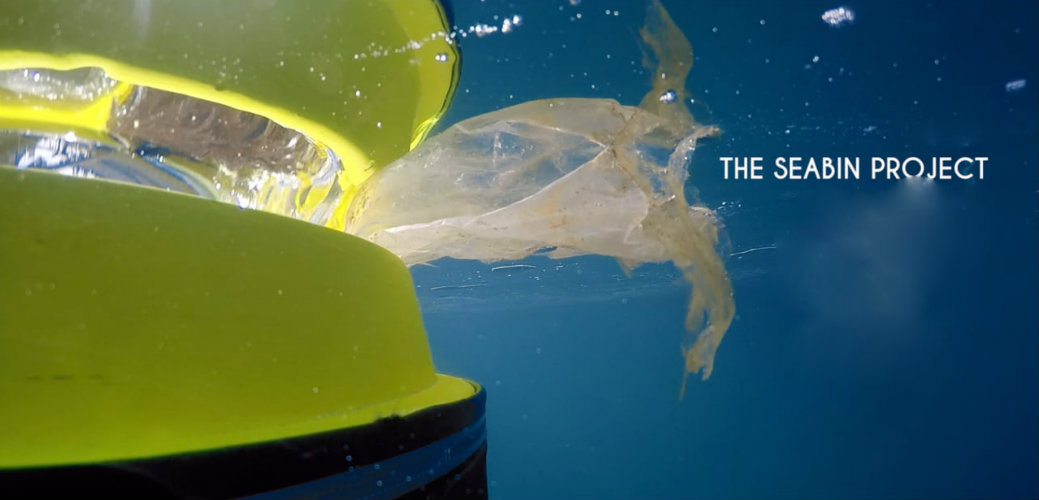
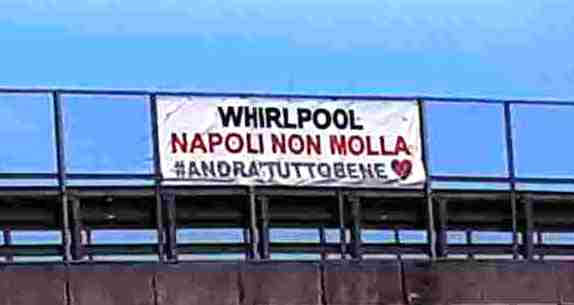
    In October 2019 Whirlpool EMEA, together with LifeGate, launched during the Milan Green Week the Seabin project. Seabind project involved 13 innovative “sea baskets” installed in the waters of Italian ports and yacht clubs. In about one year, 1.500 kg of floating waste was collected, a insignificant amount publicized as a great success according to Fridays For Future: “A further attempt (very clumsy) to be accredited as a responsible company in the collective imagination of its potential customers”. This accusation follows Whirlpool’s announcement in May that production of high-end washing machines in Naples was no longer profitable and that it intended to sell the factory. The factory that employs 450 workers in a region with some of the highest unemployment levels in Italy. The italian government granted Whirlpool 50 million Euros since 2014, with intent to have the company continue investing in Italy. .
    In conclusion, Whirlpool is intending to demonstrate via their ‘CARE’ campaigns that it is improving our future by empowering children and their parents. Also, that it is cleaning our oceans. However, the most important thing is that these programs should not be used to draw attention away from “unfriendly activities”such as Whirlpool’s US sexual harassment and racism, UK machine fires, and Italian massive layoffs.

    Since you’re here… Our mission is to monitor Advertising to make certain that companies obey ethical standards of trustworthiness and transparency while communicating their commitment to addressing the great challenges of the New Millennium. From climate emergency to social inequality through all the issues included in the Sustainable Development Goals Agenda, we monitor the consistency of their statements, if they are ‘walking the talk’. With rising misinformation and commercial ownership, independent information is more and more rare. We think citizens deserve access to accurate analyses with integrity at their heart, so we can all make critical decisions about our lives, health and enviroment – based on fact, not fiction. Our editorial independence means our content agenda is set only to voice our opinions, supported by in-depth research, free from any political and commercial bias, never influenced by interested owners or shareholders (which we don’t have). It means we can stand up to mainstream and give a voice to those less heard. We hope this will motivate you to make a contribution in support of our open, independent journalism. Every reader contribution, however big or small, is so valuable. Support BeIntelligent from as little as €5 – and it only takes a minute. Thank you.

    Support BeIntellgent

    Author: elena grinta

    I have been dealing with communication for 20 years, I have worked in marketing for large international and Italian companies and I know the mechanisms of advertising persuasion. I decided to invest my know-how and my skills to use the available resources of companies (budgets but also human capital) in positive transformation. Because to students from all over the world I teach at Purpose Brands in Catholic University I wish to give more and more examples of virtuous companies that have invested for the future, of everyone (and there are already many!). Because if we watch, without acting, without taking responsibility, we have no excuse.


    Purpose Brand / Trends
  • The Supermarket is Green!

    The Supermarket is Green!

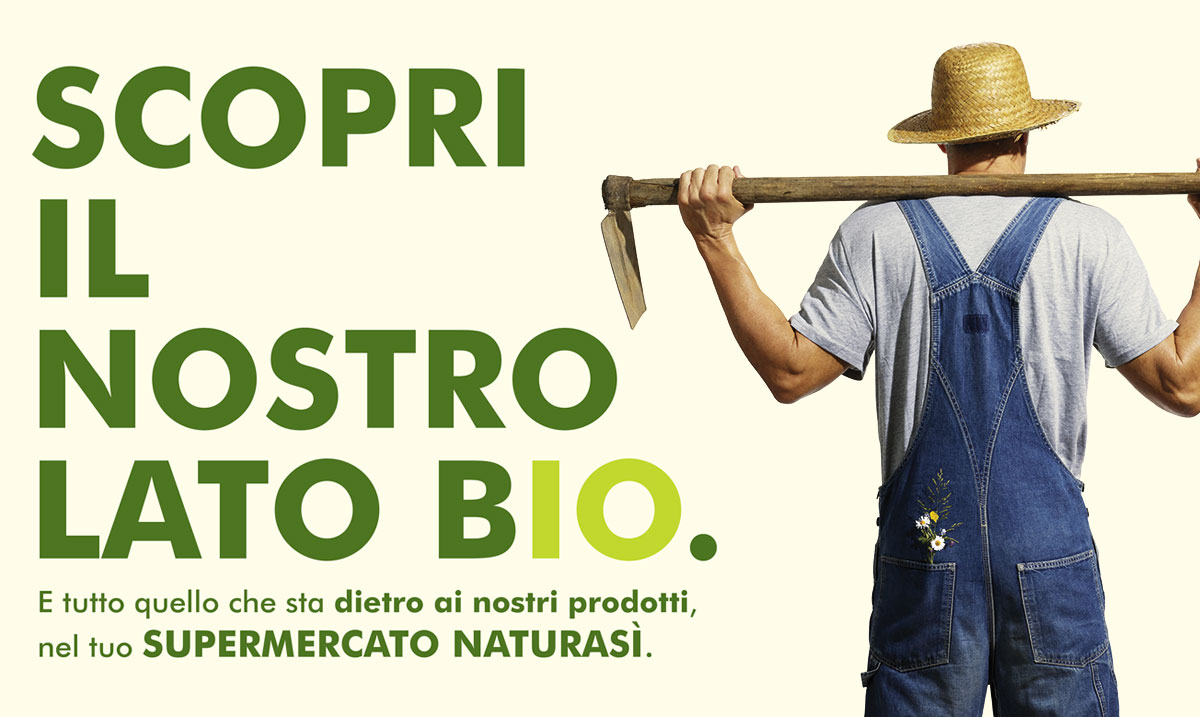
    The EcorNaturaSì Group distributes organic and biodynamic products in specialized stores and supermarkets in Italy. The brand holds a strong position in the national market for its ethical products and its many activities in support of organic agriculture and culture in general. Compared to other supermarket brands in the European region, NaturaSì does not see sustainability and responsibility for production and consumption as a marketing strategy tailored to the corporate vision. Rather, the brand has integrated its commitment to organic production into all its operations, offering healthy and quality products that promote human well-being. The company’s history is rooted in promoting the development of a healthy and balanced biodynamic agriculture and seems to incorporate these practices into everything it does. The ideas of the renewal of agriculture, social life, and the science of nutrition are borrowed from Rudolf Steiner, who inspired the founders of Ecor, some of whom today preside over the Free Anthroposophical Foundation Rudolf Steiner, the majority shareholder of EcorNaturaSì. Ecor has from the beginning supported its producers and shopkeepers, also through loan or gift logics (very close to the Steinerian ideology) [i] and applying the ‘right price’, that is a price that ‘responsibly’ takes into account the production costs, the value of a decent job, the externalities caused and that generates a margin that can be reinvested in research and in socially useful works. The right price is opposed to the deceptively low price – as well explained by Raj Patel in his ‘The Value of Things’, a price that seems low (such as we spend $4 for a burger at a fast food chain), but actually corresponds to 50 times as much. If we consider the state subsidies paid to farmers of maize used to feed the cattle that are raised on deforested land (often illicitly), the state aid paid to the employees (often precarious) who work in restaurants with insufficient minimum wages or even spending on healthcare to treat diseases related to eating disorders, we find that today we are paying $200 for a hamburger that costs $4 for fast food. It is not a simple sophism. Read also: From a trade mark to a change mark According to a study carried out by the London consultancy firm Europe Economics, the listing fees (quota of access to the shelf) that producers pay to distributors to be present in the sign amount to a figure between 30 and 40 billion euros are equal to half of the subsidies that the European Commission guarantees to EU farmers through the common agricultural policy (CAP). To be more explicit, the taxpayers’ money spent in the CAP only serves to innovate (perhaps in the direction of a lower ecological impact) and in part to support the production costs that the large-scale retail trade negotiates to ensure a turnover growth. The choice to cut internal labour costs contributes to this same goal, forcing employees and suppliers to sometimes extreme precarious conditions. In the collective imagination, the exploiters of the tomato fields are the “corporals” and the criminal organizations that organize these activities. On closer inspection, responsibility should be shared among all those who generate these mechanisms. In this market struggle, the promise of the ‘right price’ [ii] maintained for Ecor brand products is likely to be engulfed by two factors, one endogenous (the choice to market non-exclusive products) and the other exogenous (the perception of the ‘right’ in an arena today more competitive than ever). Let’s go in order: Is the promise of the right price sustainable for the range of products that can be found in NaturaSì stores, as well as in the GDO? This doubt is linked to a crucial choice factor for the consumer, relating to the formation of the final price of the products on the shelf: how long can the claim for a higher price remain legitimate, when other competitors propose a portfolio of organic and sustainable references at more affordable prices? Without consumer education, it will be difficult (potentially impossible) to counter the persuasive force of retailers who loudly proclaim their sustainability and face the scandals that have cracked consumer confidence in the entire organic supply chain. Recently Natursì has re-planned a campaign carried out in 2017 by the Milanese communication agency Rifattimale by Manfredi Marino and Ugo Berretta. A farmer from behind shows his B (Biodynamic) side and the payoff reads: “DISCOVER OUR B-IO SIDE.” A play on words to attract the attention of consumers and encourage them to adopt a more conscious lifestyle. Roberto Zanoni explains, General Manager of the brand: “Buying food at our supermarkets means recognizing the right price to farmers, facilitating the growth of organic and biodynamic agriculture that protects the land and its fertility. Here, paying a few cents more for the products makes sense. The consumer must understand and be aware of the fact that the purchase choice goes beyond his own portfolio, it is a real responsibility for us and for our children” [iii]. EcorNaturaSì enjoys an enormous competitive advantage and is now perceived as a leader in the ‘bio’ sector, but it is difficult to think that the attitude of consumers alone will change. To succeed in its purpose, Ecor should involve its competitors in the retail industry and turn them into accomplices by sharing knowledge and experience and guiding the transformation through the more widespread introduction on the market of biodynamic products made available to consumers of all income levels (and not only those who currently attend the Natursì stores). Ecor could incentivize the distribution of biodynamic products, guaranteeing potential growth for all producers thanks to the expansion of the network. To accelerate the change, it is the responsibility of companies with a utopian mission (and EcorNaturSì is fully committed) to conduct ‘battles’ at the sector level to create sustainable environmental practices through their own value leadership (and not just the market). [i] See, for example, the Adopt a Zolla23 project which invites (as a loan of money) parts of land on biodynamic farms. [ii] The promise “The products we distribute must contribute to improving human health, as well as the well-being of the soil and the environment in which we live.” [iii] “We want all consumers to be aware and make choices guided by awareness to protect human health, the environment and agriculture” explains Roberto Zanoni , General Manager of the brand. “NaturaSì has been committed for 30 years to supporting organic agriculture and farmers, for human and environmental health: buying food at our supermarkets means recognising the right price to farmers, facilitating the growth of organic agriculture and biodynamics that protect the Earth and it’s fertility. Here, paying a few cents more for the products makes sense. The consumer must understand and must be aware of the fact that the purchase choice goes beyond one’s wallet, it is a real responsibility for us and for our children because if we keep the land alive and fertile, here we can collect food that nourishes us and that does us good over time. This is our bio side: a commitment that we have put in place since the first day and that guides us even more today “.

    Since you’re here… Our mission is to monitor Advertising to make certain that companies obey ethical standards of trustworthiness and transparency while communicating their commitment to addressing the great challenges of the New Millennium. From climate emergency to social inequality through all the issues included in the Sustainable Development Goals Agenda, we monitor the consistency of their statements, if they are ‘walking the talk’. With rising misinformation and commercial ownership, independent information is more and more rare. We think citizens deserve access to accurate analyses with integrity at their heart, so we can all make critical decisions about our lives, health and enviroment – based on fact, not fiction. Our editorial independence means our content agenda is set only to voice our opinions, supported by in-depth research, free from any political and commercial bias, never influenced by interested owners or shareholders (which we don’t have). It means we can stand up to mainstream and give a voice to those less heard. We hope this will motivate you to make a contribution in support of our open, independent journalism. Every reader contribution, however big or small, is so valuable. Support BeIntelligent from as little as €5 – and it only takes a minute. Thank you.

    Support BeIntellgent

    Author: elena grinta

    I have been dealing with communication for 20 years, I have worked in marketing for large international and Italian companies and I know the mechanisms of advertising persuasion. I decided to invest my know-how and my skills to use the available resources of companies (budgets but also human capital) in positive transformation. Because to students from all over the world I teach at Purpose Brands in Catholic University I wish to give more and more examples of virtuous companies that have invested for the future, of everyone (and there are already many!). Because if we watch, without acting, without taking responsibility, we have no excuse.


    Purpose Brand / Trends
     
  • How To Gain Your Power Back. The Toyota Advertising Challange

    How To Gain Your Power Back. The Toyota Advertising Challange

    Key historical players that are crucial to the sustainable growth of the automotive industry are Toyota, Honda, and Volkswagen. With each company estimated worth in the billions they are considered to be in the ranking of the top twelve car companies. However,it’s Toyota who  produced the top selling hybrid model in history: the Prius.Toyota has always been a forerunner in the sustainability game within the car industry; it released the Prius 20 years ago, which revolutionized the car industry and brought sustainability within it to the conversation. The Prius “was the world’s first mass-produced petrol-electric hybrid vehicle” (Toyota 2015). The Prius made the possibility of more sustainable cars a reality.
    How hybrid vehicles are perceived

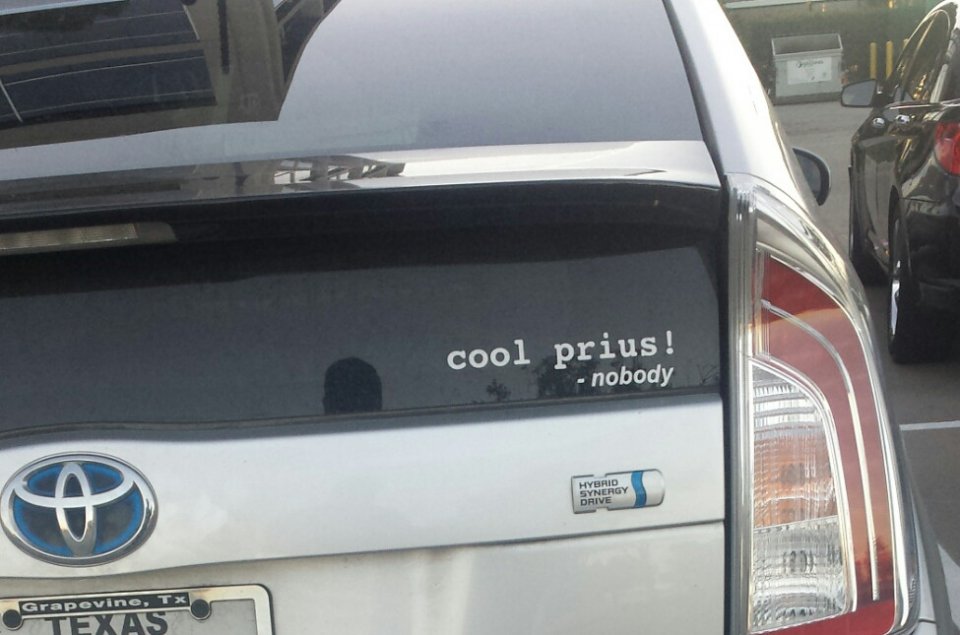
    Hybrid or electric cars are perceived as too expensive, as are most products that are considered sustainable. Even though Toyota released the Prius, which is considered a less expensive car, it is generally considered “uncool” to own one.
    Companies such as Tesla are beginning to alter this perception. Even with an expensive price tag the car is yearned for due to the sleek and sexy design. This starts the process of making sustainability a trend which is a key component in altering the public’s perception on the car industry and where they decide to invest their money. READ ALSO: Cars’ Shocking Future. It’s All About Green

    Toyota sustainable advertising

    On Earth Day in 2019, Toyota released a campaign that collaborated with Micheal Shainblum,  a landscape, timelapse and aerial photographer based in San Francisco, California. Michael first made a name for himself through his unique creativity and the ability to capture scenes and moments in his distinct style of surreal, visual story telling.
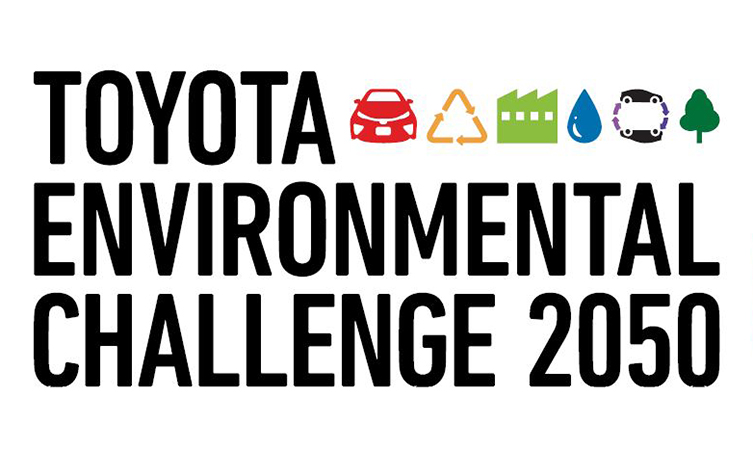
    The ‘Small differences make Big difference’ campaign encourages people to get outside and appreciate the world enough to protect it, set to the backdrop of beautiful destinations the photographer has traveled to with his Toyota. The caption on the post was “Today is Earth Day. Small difference makes a big change. Toyota will continue the environmental movement for the Earth” (Toyota Motor Europe 2019). The Toyota Environmental Challenge 2050 is a set of six challenges Toyota has set for itself to work towards furthering its sustainability efforts. The Toyota website describes the challenges : “announced in 2015, comprises six separate ‘challenges’ that cover every aspect of our business, our exploration of new products and technologies, and our role as an enabler for individuals and communities to learn about and improve the natural world around them” (Toyota Motor Europe 2019). The campaign’s strengths are that it is putting in effort into taking the necessary steps towards being more and more sustainable, but the weaknesses are that it doesn’t really advertise how passionate Toyota is about what they are doing; the consumer has to do some digging to see what the Toyota Environmental Challenge 2050 actually is and why it is important to keep doing better, year after year.
    In 2020 Toyota confirms its commitment to the 2050 challenge but they renounced (maybe amid covid19 pandemic) to advertise their message. Instead they announced on their webiste that next year, they will begin constructing Woven City, a prototype city of the future powered by clean energy produced through hydrogen fuel cells, located at the base of Mount Fuji in Japan. They also affirmed that in 2019 they switched to 100% renewable electricity to run their operations, “leading to significant progress towards the Environmental Challenge 2050”.

    What People Should Know About Toyota’s Sustainability

    Toyota claims to be a brand that commits to sustainable development while also aiming for superior quality. As pioneers in the hybrid car niche, Toyota faced and still face issues of performance and safety which reflects upon the overall credibility and quality of the brand. With this, the Prius has been recalled quite a few times. In 2018 one million hybrid cars were recalled due to a potential fire risk. This recall damaged Toyota’s brand claim by being perceived as less credible in the eyes of the consumer. This led to an open space in the growingly competitive green market. However, what is most tragic about this situation is the impact on the green industry as a whole. It gives those skeptical about climate change a reason to separate themselves from their wallets due to their proven conception that green is a marketing “scam.” In a 2008 article by Wired Magazine it was revealed that making a Prius contributes more carbon to the atmosphere then in the making of a Hummer. This is due to the 30 pounds of nickel in the cars battery which has a great environmental cost. Once the car is on the road for a prolonged amount of time the superior fuel economy will pay off, but the production of the vehicle is suspected to be far from sustainable. from then on this is a kind of regular controversial conversation about how green are green vehicles While Toyota does have issues, they do have good intentions in some respects. For example, they took on a role as an environmentalist leader by creating a set of green guidelines for the 500 suppliers that provide materials for the automaker. With this they are staying true to their brand claim by setting an environmental commitment beyond its own processes and trying to create a sustainable supply chain.

    What Toyota Could Do To Better Advertise

    Because other companies are beginning to have sustainability on their radar, Toyota is not often reported on because they aren’t necessarily the most relevant or groundbreaking car company sustainability-wise anymore. When the Prius came out, it was revolutionary so media outlets were constantly reporting on environmental pioneer Toyota in the early 2000s. But now, in 2020, Toyota’s title of environmental car forerunner has been taken over by other car companies, such as Tesla, especially as Tesla works towards moving into a more affordable price bracket, Audi and even Porche which are more and more engaging in their marketing approach. READ ALSO: Cars’ Shocking Future. It’s All About Green It’s time to lead from behind and be at the forefront in advertising, exactly as for their top luxury brand, Lexus (do you remember LStudio?, unfortunately they stopped their operations 2 years ago), which is joining the ever-expanding list of all-electric vehicles in 2020 with the UX300e
    A 500 all’ora sulla Luna, il concept a zero gravità di Lexus
    “Zero Gravity”, concept design ED2 Lexus, Karl Dujardin
    They should stress their ‘affordable innovation’ but both focusing on their “green” behavior AND renewing their appeal. So that people would stop jokes like : Q:What is the smallest part of an Toyota? A: The owners brain (source: http://www.jokes4us.com/ ) Photo credits: Wallpaper

    Since you’re here… Our mission is to monitor Advertising to make certain that companies obey ethical standards of trustworthiness and transparency while communicating their commitment to addressing the great challenges of the New Millennium. From climate emergency to social inequality through all the issues included in the Sustainable Development Goals Agenda, we monitor the consistency of their statements, if they are ‘walking the talk’. With rising misinformation and commercial ownership, independent information is more and more rare. We think citizens deserve access to accurate analyses with integrity at their heart, so we can all make critical decisions about our lives, health and enviroment – based on fact, not fiction. Our editorial independence means our content agenda is set only to voice our opinions, supported by in-depth research, free from any political and commercial bias, never influenced by interested owners or shareholders (which we don’t have). It means we can stand up to mainstream and give a voice to those less heard. We hope this will motivate you to make a contribution in support of our open, independent journalism. Every reader contribution, however big or small, is so valuable. Support BeIntelligent from as little as €5 – and it only takes a minute. Thank you.

    Support BeIntellgent

    Author: elena grinta

    I have been dealing with communication for 20 years, I have worked in marketing for large international and Italian companies and I know the mechanisms of advertising persuasion. I decided to invest my know-how and my skills to use the available resources of companies (budgets but also human capital) in positive transformation. Because to students from all over the world I teach at Purpose Brands in Catholic University I wish to give more and more examples of virtuous companies that have invested for the future, of everyone (and there are already many!). Because if we watch, without acting, without taking responsibility, we have no excuse.


    Purpose Brand / Trends