Author: admin

  • The Technological Push.


    The Technological Push.

    We need technology. This is what Big Tech Companies have been telling us continuously for years: we need it. Of course, the image of the FAAMG  (Facebook, Apple, Amazon, Microsoft and Google) has recently suffered some blows, but who could have imagined that the “techlash” would be solved by a virus
    While Big Tech’s misdeeds are still apparent, their actual deeds now matter more to us. We’re using Facebook to comfort ourselves while physically bunkered and social distancing. Google is being conscripted as the potential hub of one of our greatest needs—Covid-19 testing. Our personal supply chain—literally the only way many of us are getting food and vital supplies—is Amazon Who knew the techlash was susceptible to a virus? STEVEN LEVY 03.20.2020 WIRED
    In times like this, under the siege of COVID-19, everything we do is exclusively online. We need digital tools to shop, work, exercise, learn, and stay in touch with friends and family. Online technologies have always been telling us that they will save us, and now, in this difficult time, their prophecy comes true. The great question facing our world right now is this: Is the image of technological rescuers, delivered through their own advertising campaigns, as “good” as they claim to be?

    Technology has always helped to take care of our loved ones

    It takes care through child learning, mindfulness, and relationships as this Mashable native advertising film. for Amazon, where psychotherapist Elizabeth Winkler  explains that technology is a “way to nurture relationships.” Elsewhere, the protagonist of this commercial assists in care for the elderly with the help of Alexa. In times of COVID, charitable messages have been shared across all product categories, and BigG does not to miss the opportunity .
    Thank you, Google for acknowledging those who serve, volunteer, and donate!

    Technology always improves our performance

    It saves time, catalyzes creativity, and optimizes the efforts of individual members of a team. Performance is enhanced by using different devices in unison (from Apple in this case) and our dreams come true with the ease of portable devices (Samsung this time).
    In the midst of this pandemic, when even working changes one’s ritual, it is necessary to manage stress and anxiety, maintain a constant sleep schedule, and give priority to “self-care” at a deeper level. Netflix has launched a weekly series on Instagram to focus on mental health and self-care while under ‘house arrest’. Luckily there is Netflix, someone to turn to in these difficult times!

    Technology has always connected and united us.

    It helps people understand each other at different levels: friendship, religion, love … as shown by Google Translate in the 2019 Super Bowl commercial. Even during social distancing, thanks to Facebook we have the opportunity to be interconnected and not to remain isolated from loved ones “
    Fortunately, there is Facebook, which allows us to be “close even if far”!

    Technology has always made us have fun.

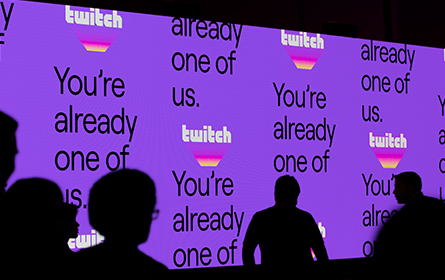
    Thanks to Microsoft disabled children can play video games with their peers. If, on the other hand, it is our ‘normalcy’ that bores us, Netflix can make us feel immersed in another world, much more exciting and frenetic. With the spread of the epidemic, the traffic of video game sites has had a surge: Twitch, the leading site for streaming games, has recorded a 20% increase. After all, when Twitch launched their first ad campaign last fall, it was stated “You’re already one of us”. I now don’t know whether to read as a prophecy or a threat.
    Everyone Needs Rest in the Middle of a Storm

    The dilemma is not whether or not these companies should innovate and be part of Human Progress. The point is that they lied in their empathetic, exciting, moving commercials. They show us their support in this period when national health services are collapsing, but for example they are not paying taxes in our country, depriving us of the resources to feed Public Health. Advertisers should honestly represent their efforts, giving greater emphasis to the results achieved, rather than the bombastic and unattainable goals they give themselves. READ ALSO: Challenging IT. Does Technology Make Us More Alone?

    Since you’re here… Our mission is to monitor Advertising to make certain that companies obey ethical standards of trustworthiness and transparency while communicating their commitment to addressing the great challenges of the New Millennium. From climate emergency to social inequality through all the issues included in the Sustainable Development Goals Agenda, we monitor the consistency of their statements, if they are ‘walking the talk’. With rising misinformation and commercial ownership, independent information is more and more rare. We think citizens deserve access to accurate analyses with integrity at their heart, so we can all make critical decisions about our lives, health and enviroment – based on fact, not fiction. Our editorial independence means our content agenda is set only to voice our opinions, supported by in-depth research, free from any political and commercial bias, never influenced by interested owners or shareholders (which we don’t have). It means we can stand up to mainstream and give a voice to those less heard. We hope this will motivate you to make a contribution in support of our open, independent journalism. Every reader contribution, however big or small, is so valuable. Support BeIntelligent from as little as €5 – and it only takes a minute. Thank you.

    Support BeIntellgent

    Author: elena grinta

    I have been dealing with communication for 20 years, I have worked in marketing for large international and Italian companies and I know the mechanisms of advertising persuasion. I decided to invest my know-how and my skills to use the available resources of companies (budgets but also human capital) in positive transformation. Because to students from all over the world I teach at Purpose Brands in Catholic University I wish to give more and more examples of virtuous companies that have invested for the future, of everyone (and there are already many!). Because if we watch, without acting, without taking responsibility, we have no excuse.


    PAPERS / Trends
     
  • How To Gain Your Power Back. The Toyota Advertising Challange

    How To Gain Your Power Back. The Toyota Advertising Challange

    Key historical players that are crucial to the sustainable growth of the automotive industry are Toyota, Honda, and Volkswagen. With each company estimated worth in the billions they are considered to be in the ranking of the top twelve car companies. However,it’s Toyota who  produced the top selling hybrid model in history: the Prius.Toyota has always been a forerunner in the sustainability game within the car industry; it released the Prius 20 years ago, which revolutionized the car industry and brought sustainability within it to the conversation. The Prius “was the world’s first mass-produced petrol-electric hybrid vehicle” (Toyota 2015). The Prius made the possibility of more sustainable cars a reality. 

    How hybrid vehicles are perceived 

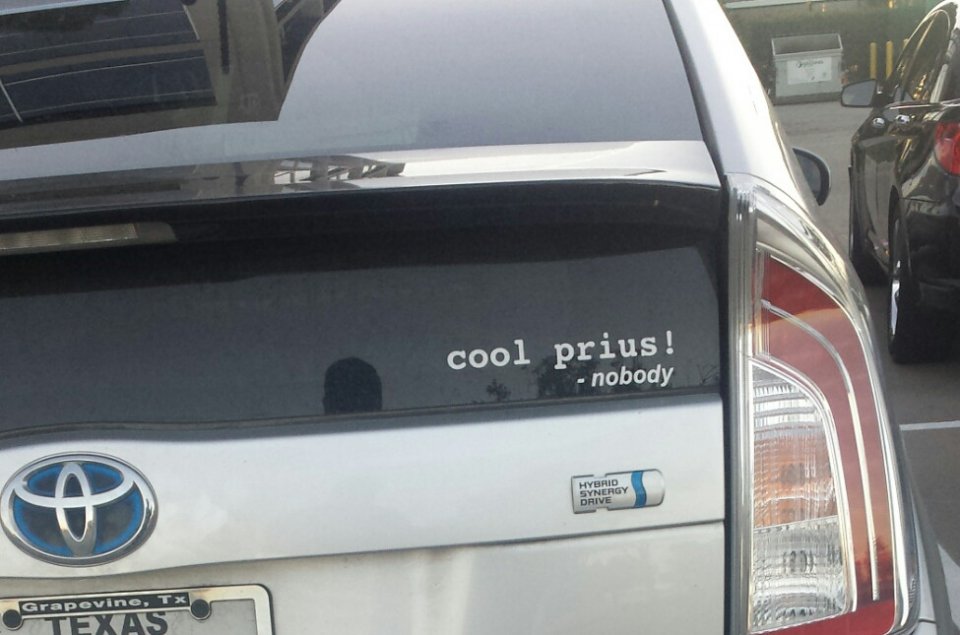
    Hybrid or electric cars are perceived as too expensive, as are most products that are considered sustainable. Even though Toyota released the Prius, which is considered a less expensive car, it is generally considered “uncool” to own one. 

    Companies such as Tesla are beginning to alter this perception. Even with an expensive price tag the car is yearned for due to the sleek and sexy design. This starts the process of making sustainability a trend which is a key component in altering the public’s perception on the car industry and where they decide to invest their money.

    READ ALSO: Cars’ Shocking Future. It’s All About Green

    Toyota sustainable advertising

    On Earth Day in 2019, Toyota released a campaign that collaborated with Micheal Shainblum,  a landscape, timelapse and aerial photographer based in San Francisco, California. Michael first made a name for himself through his unique creativity and the ability to capture scenes and moments in his distinct style of surreal, visual story telling.

    The ‘Small differences make Big difference’ campaign encourages people to get outside and appreciate the world enough to protect it, set to the backdrop of beautiful destinations the photographer has traveled to with his Toyota. The caption on the post was “Today is Earth Day. Small difference makes a big change. Toyota will continue the environmental movement for the Earth” (Toyota Motor Europe 2019).

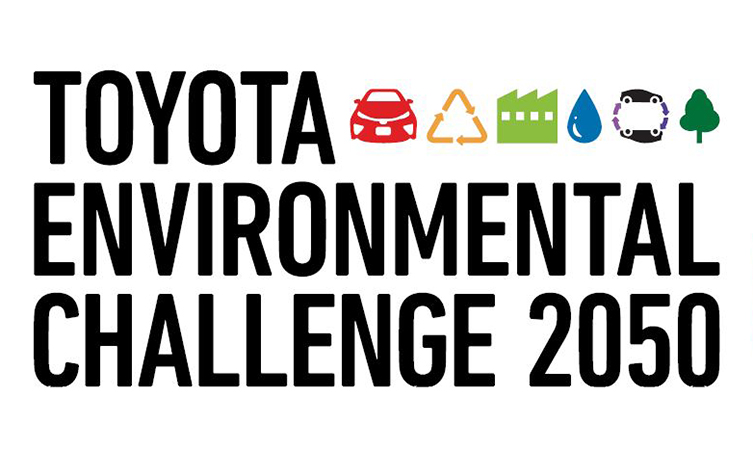
    The Toyota Environmental Challenge 2050 is a set of six challenges Toyota has set for itself to work towards furthering its sustainability efforts. The Toyota website describes the challenges : “announced in 2015, comprises six separate ‘challenges’ that cover every aspect of our business, our exploration of new products and technologies, and our role as an enabler for individuals and communities to learn about and improve the natural world around them” (Toyota Motor Europe 2019).

    The campaign’s strengths are that it is putting in effort into taking the necessary steps towards being more and more sustainable, but the weaknesses are that it doesn’t really advertise how passionate Toyota is about what they are doing; the consumer has to do some digging to see what the Toyota Environmental Challenge 2050 actually is and why it is important to keep doing better, year after year.

    In 2020 Toyota confirms its commitment to the 2050 challenge but they renounced (maybe amid covid19 pandemic) to advertise their message. Instead they announced on their webiste that next year, they will begin constructing Woven City, a prototype city of the future powered by clean energy produced through hydrogen fuel cells, located at the base of Mount Fuji in Japan. They also affirmed that in 2019 they switched to 100% renewable electricity to run their operations, “leading to significant progress towards the Environmental Challenge 2050”.

    What People Should Know About Toyota’s Sustainability

    Toyota claims to be a brand that commits to sustainable development while also aiming for superior quality. As pioneers in the hybrid car niche, Toyota faced and still face issues of performance and safety which reflects upon the overall credibility and quality of the brand. With this, the Prius has been recalled quite a few times. In 2018 one million hybrid cars were recalled due to a potential fire risk. This recall damaged Toyota’s brand claim by being perceived as less credible in the eyes of the consumer. This led to an open space in the growingly competitive green market. However, what is most tragic about this situation is the impact on the green industry as a whole. It gives those skeptical about climate change a reason to separate themselves from their wallets due to their proven conception that green is a marketing “scam.” 

    In a 2008 article by Wired Magazine it was revealed that making a Prius contributes more carbon to the atmosphere then in the making of a Hummer. This is due to the 30 pounds of nickel in the cars battery which has a great environmental cost. Once the car is on the road for a prolonged amount of time the superior fuel economy will pay off, but the production of the vehicle is suspected to be far from sustainable. from then on this is a kind of regular controversial conversation about how green are green vehicles 

    While Toyota does have issues, they do have good intentions in some respects. For example, they took on a role as an environmentalist leader by creating a set of green guidelines for the 500 suppliers that provide materials for the automaker. With this they are staying true to their brand claim by setting an environmental commitment beyond its own processes and trying to create a sustainable supply chain. 

    What Toyota Could Do To Better Advertise 

    Because other companies are beginning to have sustainability on their radar, Toyota is not often reported on because they aren’t necessarily the most relevant or groundbreaking car company sustainability-wise anymore. When the Prius came out, it was revolutionary so media outlets were constantly reporting on environmental pioneer Toyota in the early 2000s. But now, in 2020, Toyota’s title of environmental car forerunner has been taken over by other car companies, such as Tesla, especially as Tesla works towards moving into a more affordable price bracket, Audi and even Porche which are more and more engaging in their marketing approach.

    READ ALSO: Cars’ Shocking Future. It’s All About Green

    It’s time to lead from behind and be at the forefront in advertising, exactly as for their top luxury brand, Lexus (do you remember LStudio?, unfortunately they stopped their operations 2 years ago), which is joining the ever-expanding list of all-electric vehicles in 2020 with the UX300e

    A 500 all’ora sulla Luna, il concept a zero gravità di Lexus
    “Zero Gravity”, concept design ED2 Lexus, Karl Dujardin

    They should stress their ‘affordable innovation’ but both focusing on their “green” behavior AND renewing their appeal. So that people would stop jokes like : Q:What is the smallest part of an Toyota? A: The owners brain (source: http://www.jokes4us.com/ )

    Photo credits: Wallpaper

    Since you’re here…
    Our mission is to monitor Advertising to make certain that companies obey ethical standards of trustworthiness and transparency while communicating their commitment to addressing the great challenges of the New Millennium. From climate emergency to social inequality through all the issues included in the Sustainable Development Goals Agenda, we monitor the consistency of their statements, if they are ‘walking the talk’. With rising misinformation and commercial ownership, independent information is more and more rare. We think citizens deserve access to accurate analyses with integrity at their heart, so we can all make critical decisions about our lives, health and enviroment – based on fact, not fiction.
    Our editorial independence means our content agenda is set only to voice our opinions, supported by in-depth research, free from any political and commercial bias, never influenced by interested owners or shareholders (which we don’t have). It means we can stand up to mainstream and give a voice to those less heard. We hope this will motivate you to make a contribution in support of our open, independent journalism. Every reader contribution, however big or small, is so valuable. Support BeIntelligent from as little as €5 – and it only takes a minute. Thank you.

    Support BeIntellgent

    Author: elena grinta

    I have been dealing with communication for 20 years, I have worked in marketing for large international and Italian companies and I know the mechanisms of advertising persuasion. I decided to invest my know-how and my skills to use the available resources of companies (budgets but also human capital) in positive transformation. Because to students from all over the world I teach at Purpose Brands in Catholic University I wish to give more and more examples of virtuous companies that have invested for the future, of everyone (and there are already many!). Because if we watch, without acting, without taking responsibility, we have no excuse.


    Purpose Brand / Trends
  • Expert Interview: Mr. Goodvertising

    Expert Interview: Mr. Goodvertising

    Thomas Kolster is a man on a mission, one of the early pioneers in the do-good space coining the term Goodvertising to describe the changing advertising landscape that’s become a movement in itself. As a seasoned advertising professional counting more than 16 years he’s a vocal voice for advertising and brands as a force for good and his book “Goodvertising” is a must to have book to explore communication for good. Thomas is a globally recognized keynote speaker featured at events like SXSW, TEDx, Eurobest, D&AD, Epica, ad:tech & Sustainable Brands, a columnist for Adweek, The Drum, the Guardian and several other publications and a regular judge at international award shows. We interviewed Thomas and launched a partnership for all our members! Thomas what do you think is the most effective style for companies to express their commitment to the environment or social causes? Any good example? I don’t get most companies sustainability communication. It’s like listening to a child that just cleaned his or her room – look dad what I have done! But hey, dear company, you did all the mess in the first place. More cleaning up after yourself, less bragging. With my coming book The Hero Trap (Routledge, May 2020), I’ve done a study comparing commercials from brands that take the usual navel-gazing, purpose approach “This-is-what-we-do-as-a-company” and compare to an approach that inspires and transforms people and ultimately unlocks better lives:  “Who-can-we-help-you-become?”. Two examples of commercials from the test would be a classic purposeful one: Budweiser “Wind Never Felt Better” compared to an enabling and transformative one from Sport England: “This Girl Can”. The transformative commercials made the test participatns feel l29.5% more motivated to act on on the messaging and on average +29,6% more willing to pay a premium price (WPPP).

    Just as every brand in the 1990s was all about lifestyle, brands today are firmly about the social and environmental issues bandwagon like bees around a honey pot. (And yes, those diminishing bee populations are seriously a cause we should worry about.) When every brand talk about doing good and claim to have a big role to play in your life as their burning “why,” but it really comes down to one thing: if you can’t see or feel the outcome, it’s simply just another broken promise or patronising corporate purpose. That’s why it’s so pivotal to focus on enabling change as a brand by asking: Who can you help people become? Which specific topic in the large spectrum of sustainability companies should embrace in the near future? Depends on the risks and opportunities facing that specific company. It’s dangerous to treat sustainability as a trend – like every brand these days desperately trying to have a voice when it comes to oceans plastic or food waste.
    You might be interested in reading the Results on Brands Advertising Green here:  Communication For Good. 2019 Italy Trends 
    People are not dumb and can see through the insincerity. Just because you shout: “I care” from every room top, doesn’t make it believable. That said, in these Corona-times employment is moving front and centre of every discussion. How do you weigh your sustainability efforts against maybe having to lay-off staff? What are the opportunities and associated risks for companies that embrace the new trend of “goodvertising”? There are tons of exciting opportunities when it comes to product and service innovation – or creating a more meaningful marketing mix, that doesn’t simply interrupt and push wants, but really try to solve personal and societal needs.  Most companies today are firmly on the social and environmental issues bandwagon from oceans plastic to diversity. People are increasingly distrustful towards these efforts viewed as cheap marketing stunts meant to wow people into buying more. The warning in my new book is clear: “Try to fly like a superman, and you will come down like a tin of soup.” It’s time brands stop pretending to be the world-saving super heroes but instead put people in charge of their own lives and the change that need to happen. Do you think companies have ridden on the wave of emotion now that environmentalism and social causes have become popular ? Oh yes, for sure, they have. A new approach is needed that’s much more about putting people first and enabling better living. Do you think Advertising is contributing to the diffusion and at the same time understanding of conscious consumerism? Yes, advertising is a powerful tool, but it can also be used to create important and meaningful conversations like e.g. promoted by the Unstereotype Alliance that’s hosted by UN Women and brings some of the world’s biggest brands together. The Alliance is a thought and action platform that seeks to eradicate harmful gender-based stereotypes in all media and advertising content. Is there a solution for the ADV industry? Sustainability has come out of the tree-hugging, do-good closet. The possibilities for brands and businesses (as well as people and planet) are fuelling a creative renaissance to make things better rather than a beauty contest based on incremental or advertised made-up differences.

    Webinar: sustainability as a creative wrecking ball

    BeIntelligent is proud to partner with Thomas and invite the Intelligent Community on April 30th to learn how to expand the creative canvas and put into play environmental, health, social and other tangible, world-bettering factors that can be an earthquake under well established, but oblivious brands. Through global examples Thomas will show how brands are turning challenges into success stories where profit goes hand in hand with people and planet, but you’ll also get the clever hacks that help you create effective, yet impactful campaigns. Understand what it takes to do marketing today, or prepare your epitaph – because if you aren’t moving with us, you’re dead in the water. Date: April 30th (2 PM CET/9 AM EST) – Duration: 60 mins and 15 mins Q&A Audience The workshop is for everyone working in the cross-section of sustainability and marketing from brand, agency, non-profit or consultancy side. There will be a strong focus on communication and campaigns. You’ll learn • Why sustainability matters and the mega trends driving the change • How to create effective, yet impactful sustainability campaigns • Understanding and unlocking the three-steps from saying, doing to enabling

    Since you’re here… Our mission is to monitor Advertising to make certain that companies obey ethical standards of trustworthiness and transparency while communicating their commitment to addressing the great challenges of the New Millennium. From climate emergency to social inequality through all the issues included in the Sustainable Development Goals Agenda, we monitor the consistency of their statements, if they are ‘walking the talk’. With rising misinformation and commercial ownership, independent information is more and more rare. We think citizens deserve access to accurate analyses with integrity at their heart, so we can all make critical decisions about our lives, health and enviroment – based on fact, not fiction. Our editorial independence means our content agenda is set only to voice our opinions, supported by in-depth research, free from any political and commercial bias, never influenced by interested owners or shareholders (which we don’t have). It means we can stand up to mainstream and give a voice to those less heard. We hope this will motivate you to make a contribution in support of our open, independent journalism. Every reader contribution, however big or small, is so valuable. Support BeIntelligent from as little as €5 – and it only takes a minute. Thank you.

    Support BeIntellgent

    Author: elena grinta

    I have been dealing with communication for 20 years, I have worked in marketing for large international and Italian companies and I know the mechanisms of advertising persuasion. I decided to invest my know-how and my skills to use the available resources of companies (budgets but also human capital) in positive transformation. Because to students from all over the world I teach at Purpose Brands in Catholic University I wish to give more and more examples of virtuous companies that have invested for the future, of everyone (and there are already many!). Because if we watch, without acting, without taking responsibility, we have no excuse.


    INTERVIEWS / Trends
     
  • augmented-reality-to-promote-brands-sustainability

  • Interview with Marina Spadafora

    Interview with Marina Spadafora “Only 12% of International Fashion Brands Can Be Considered Sustainable”

  • Could Communication Make Us Happy?

    Could Communication Make Us Happy?

  • Fast Fashion VS. Conscious Consumerism


    Fast Fashion VS. Conscious Consumerism

    Fast fashion has captivated consumers for over 20 years. The affordable on-trend pieces are produced in limited quantities creating a sense of urgency to purchase. Eco-friendly watch groups and informed consumers continue to shed light on the fast fashion industry; an industry known for their pollution and waste and for a low control of their supply chain As a result, many in the fast fashion industry are advertising new sustainability practices and green efforts. But is it true or simply greenwashing?

    What is Fast Fashion and Why is it a Problem?

    Merriam-Webster  states that the term “fast fashion” has been in existence since 1977, yet most sources credit the term to a New York Times article from the 1990s. As Spanish apparel retail Zara entered the US market, the New York Times coined the term to acknowledge how quickly the company designed, produced, and sold catwalk-inspired trendy clothing. There are many signs to spot a fast fashion brand. If the clothing is quickly released after being seen on the catwalk or influencer, if clothing is produced within large factories in countries with poor work regulations (eg. Bangladesh and Vietnam), if customers are pressured to purchase clothing available for a limited time in limited quantities, and if inferior quality and high polluting materials are utilized, you are probably buying from a fast fashion brand.

    Fast Fashion Environmental Impact

    In a 2014 report by the World Bank, in collaboration with the International Finance Corporation (IFC) & the Natural Resources Defense Council (NRDC), it is stated that 20% of water pollution globally is caused by textile processing. The water may contain toxic substances such as lead, mercury, and arsenic. Greenpeace launched its Detox campaign in 2011 challenging the fashion industry to reduce the discharge of hazardous chemicals to zero by 2020. As a result, the global community of ZDHC was formed to create a “roadmap to zero” and allow collaboration between global brands, chemical suppliers, and manufacturers.  ZDHC currently consists of over 150 contributors, including Adidas Group, C&A, Target, H&M, Inditex, Levi Strauss & Co., NIKE, Inc., and PUMA. ZDHC released its first Manufacturing Restricted Substances List (ZDHC MRSL) in 2014.  The list is comprised of chemical substances that are banned in textile factories. A more comprehensive list, ZDHC MRSL 2.0, is currently being phased in. ZDHC Executive Director Frank Michel states “We haven’t yet accomplished everything we set out to achieve back in 2011, but we are going to continue with an increasing number of brands, a rapidly growing community, and a firm commitment to advance towards zero discharge.”

    Fast Fashion Social Issues

    Garment manufacturing in Bangladesh has increased over the past few years as prices increased in China, the largest textile producer and exporter with 37.6% market share.  MM Akash, a Professor of Economics of Dhaka University estimates that Bangladesh employees truly need at least 28,620 takas ($341) per month as a reasonable living wage. The actual minimum wages for entry-level jobs in the textile industry is 5 times less. In addition to unrealistic wages, the fast fashion industry exploits child labor and forced labor in Argentina, Bangladesh, Brazil, China, India, Indonesia, Philippines, Turkey, Vietnam. Nonprofit organization Remake is trying to shed light on the employees of the garment industry. The organization tells stories of young women between 18 and 24 years-old that make 80% of all apparel. “I work 12 hours a day. My entire life is the factory. I live in the dorms with three roommates, work all day only stopping to eat at the cafeteria.”

    Retailers Response to Climate Change and Exploitation of Workers

    In 2018, the UN convened stakeholders in the fashion industry to establish the Fashion Industry Charter for Climate Action. to the charter include, among others, H&M, Target, and Inditex (parent company of Zara). The vision of the charter is to “achieve net-zero emissions by 2050”. WRAP https://www.wrap.org.uk (Waste and Resources Action Programme) supports the Sustainable Clothing Action Plan (SCAP 2020 Commitment). SCAP partners are working to reduce carbon, water, and waste. Over 90 supporters, representing more than 48% of UK retail sales, have made the commitment. Analysis of the SCAP 2020 actions completed by the Ethical Consumer ascertains that the initiative falls short of meeting the necessary reductions in greenhouse gas emissions to control global heating as identified by the UN in 2018. The exploitation of people making clothes for major global brands and retailers has led to the emergence of various supply chain initiatives, such as the Ethical Trading Initiative (ETI). Research participants in a study conducted by the Non-Judicial Human Rights Redress Mechanisms Project confirmed that ETI addresses violations of rights better than industry-controlled initiatives. However, the study identified a significant accountability gap, specifically human rights violations, that the ETI is unable to rectify. ETI members felt that pursuing human rights grievances were deemed as “time-consuming” and “commonly resulted in “agreement to disagree”. Read also: Fast Fashion Greenwashing

    What Can Consumers Do?

    Every consumer has a role to play in making a change in the fashion industry. As the customer, we must demand company accountability and full transparency. What is advertised must match what is behind the scenes. Change can also occur by altering our shopping habits and mindset
    • Shop in thrift stores or charity shops. This could be a lot of fun!
    • Share and swap clothes with friends. Ethical Influencers hosted a clothing swap to celebrate Fashion Revolution Week.
    • Rent or Re-use clothes for special occasions. Sustainable Fashion was on the Red Carpet at the 2020 Academy Awards. Celebrities wore reclaimed fabric, vintage dresses, and some even wore their previous Oscar attire.
    A group of people posing for the camera Description automatically generated
    Jon Kopaloff/FilmMagic/Jon Kopaloff/WireImage courtesy of Insider.com
    However, if you must purchase a new garment, shop sustainable clothing brands. Purchase higher quality pieces with longer life. Shop for sustainable fabrics with the least negative environmental impact such as recycled or organic material. When shopping for viscose fabrics, a wood-based fiber, look for those labeled as lyocell, Tencel or Monocel. Rayon and bamboo-derived viscose currently involve a high pollution manufacturing process. Below is a shortlist of good, sustainable clothing companies. View more brands on EthicalConsumer and GoodOnYou.

    Know The Origin

    Launched in 2016 by Charlotte Instone, Know the Origin has avoided advertising spending and focused on organic growth. Products are hand manufactured to reduce carbon footprint. KTO uses only 100% Global Organic Textile Standard (GOTS) organic cotton.

    MUD Jeans

    PETA-approved 100% vegan products and  GOTS certified organic makes MUD Jeans  a stand-out eco-friendly company. MUD Jeans audits all parts of the supply chain to ensure fair labor.

    GRAMMAR

    GRAMMAR is a GOTS certified organic cotton manufacturer. The final stage of production takes place in the United States to reduce its carbon footprint and ensure labor rights. Living wages are provided across the entire supply chain. Since the days of Adam and Eve, clothing has been deemed a necessity. That will never change. Consumers though have the power to drive the actions of fast fashion brands. Demand environmentally and socially responsible behaviors. Request transparency in the entire supply chain. Make educated conscious purchases. Photo Credits: Jose A. Bernat Bacete, Getty Images, Copyright:© 2014 Jose A. Bernat

    Since you’re here… Our mission is to monitor Advertising to make certain that companies obey ethical standards of trustworthiness and transparency while communicating their commitment to addressing the great challenges of the New Millennium. From climate emergency to social inequality through all the issues included in the Sustainable Development Goals Agenda, we monitor the consistency of their statements, if they are ‘walking the talk’. With rising misinformation and commercial ownership, independent information is more and more rare. We think citizens deserve access to accurate analyses with integrity at their heart, so we can all make critical decisions about our lives, health and enviroment – based on fact, not fiction. Our editorial independence means our content agenda is set only to voice our opinions, supported by in-depth research, free from any political and commercial bias, never influenced by interested owners or shareholders (which we don’t have). It means we can stand up to mainstream and give a voice to those less heard. We hope this will motivate you to make a contribution in support of our open, independent journalism. Every reader contribution, however big or small, is so valuable. Support BeIntelligent from as little as €5 – and it only takes a minute. Thank you.

    Support BeIntellgent

    Author: elena grinta

    I have been dealing with communication for 20 years, I have worked in marketing for large international and Italian companies and I know the mechanisms of advertising persuasion. I decided to invest my know-how and my skills to use the available resources of companies (budgets but also human capital) in positive transformation. Because to students from all over the world I teach at Purpose Brands in Catholic University I wish to give more and more examples of virtuous companies that have invested for the future, of everyone (and there are already many!). Because if we watch, without acting, without taking responsibility, we have no excuse.


    PAPERS / Trends
     
  • report-di-beneficio-comune-2019

    Common Benefit Report 2019

  • Common Benefit Report 2019

    Common Benefit Report 2019

  • Report Common Good 2020

    Report Common Good 2020